Inca Trail - Day 2
Greg slept very badly in the tent: the night was cold, and he struggled to get comfortable in the sleeping bag. Altitude and the swollen hand may have affected sleep, too. Wake-up call was at 5:00 am, when one of the guides brought a cup of coca tea to each hiker. The tea is supposed to help energize hikers and reduce the effects of the altitude. Greg refused it since he’s quite sensitive to caffeine, and coca tea is even stronger. (Ever heard of cocaine?) Breakfast was served in the dining tent at 5:30 am, and we started to hike at 6:15 am, right at sunrise.
The Inca Trail crosses two mountain passes. Our schedule for day 2 was to cross the first pass, then camp for the night in the valley between the mountain passes. Due to the high elevation, we would not stop for lunch until we reached the campsite, around 2:30 pm. We were warned that this second day of hiking would be challenging.
At breakfast, our guide Bryan explained that there were no Inca sites to visit on this day’s hike. He said that the trail was easy to follow, and we were welcome to hike ahead and wait at the rest stops. From this point, the trail was completely paved with large stones at least as large as a foot (a human foot, not just the measurement unit). The climbs became stone staircases. And these stones were not polished; they were built centuries ago by the Incas. This was very different from the forested trails we hike in the western US. The stone path is irregular and requires concentration to maintain balance.
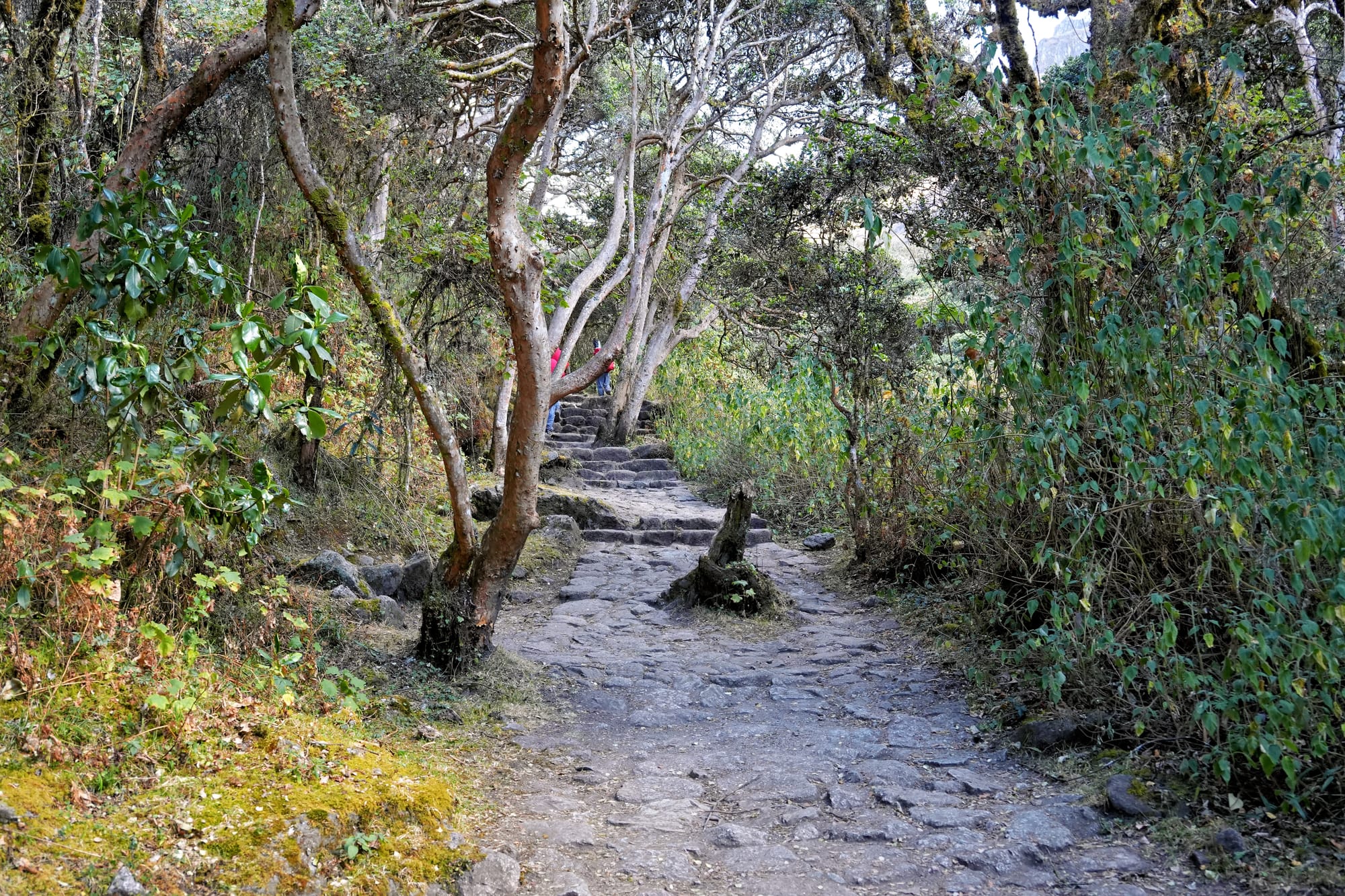
For the first section, Greg and Ash took off quickly, easily hiking the steep climb and reaching the first rest stop about 15 minutes ahead of the rest of the tour.
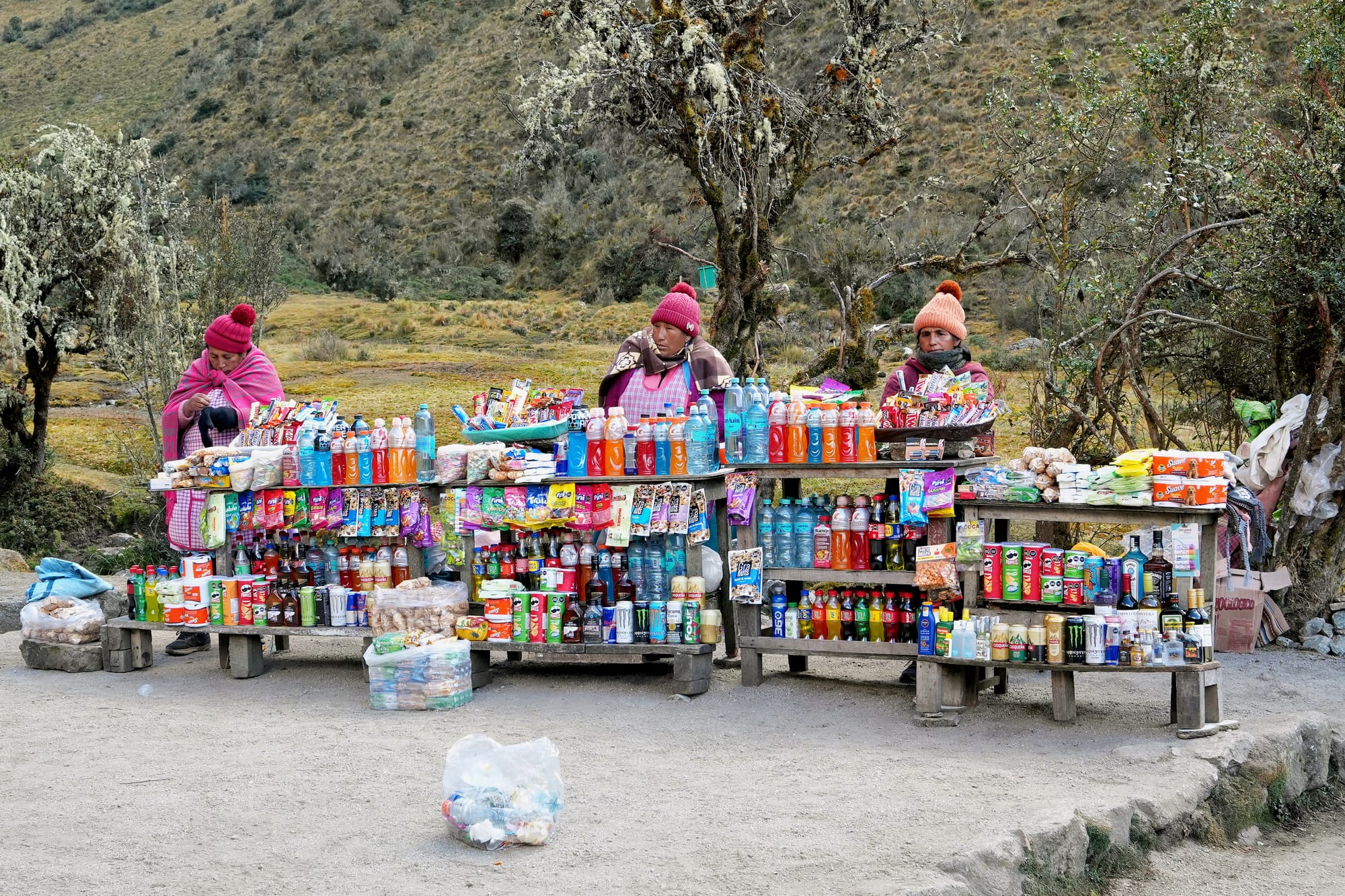
After the first break, Greg and Ash started to hike ahead of the rest of the tour. About halfway through the second segment, Greg started to get tired, so he told Ash to continue without him while Greg slowed down. About 15 minutes later, the rest of the tour caught up and passed Greg. At this point, Greg had gone from the front to the back of the pack. The guides Bryan and Carla stayed with Greg to make sure he would be OK.
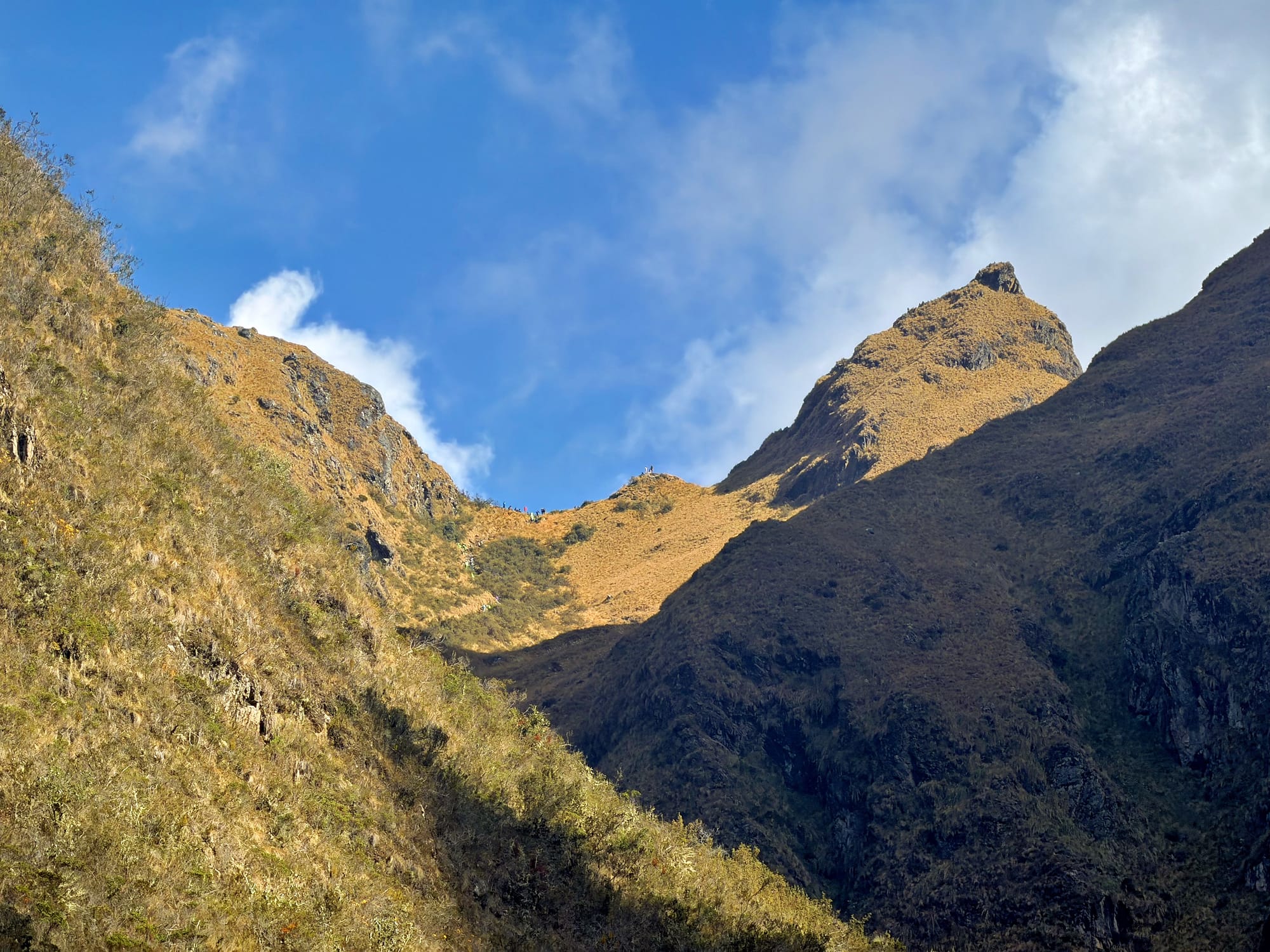
Porters and hikers were now regularly passing Greg, while Greg struggled to move forward. They had passed “the point of no return”, so there was no choice but to continue to hike towards Machu Picchu. With each step, Greg’s heart was racing. He would climb one step, then have to wait for 10-15 seconds for his heart rate to recover enough to climb another step. Other times, Greg would take a break for a couple of minutes. After the break, he could climb maybe 10 steps before his heart was racing again. Bryan and Carla remained with Greg and were very supportive, but Greg started to get discouraged. How could this happen? Greg was sure he was in great cardiovascular shape, since he still runs almost every day and even ran a half-marathon this spring faster than he had done in nearly 10 years.
Eventually, Greg realized that this wasn’t exactly an issue with his heart. It was an issue with the limited oxygen at high elevation. The heart was racing to supply oxygen to the body, while Greg was working hard to carry his body and gear up the steps. At one break, Bryan took out a pulse oximeter device to measure Greg’s blood oxygen. (Greg tried to use the blood oxygen sensor in his Apple Watch, but it wasn’t working, probably since there was no data network). Greg’s oxygen levels were fine when he was resting. Now Greg started to understand the problem: he was using oxygen faster than his body could supply it. Put in running terms, he was hiking at an anaerobic pace without a recovery phase. The solution: to hike at a very slow and regular pace, so that he would be hiking at an aerobic pace. This didn’t work well: to maintain an aerobic pace, he was hiking extremely slowly, about one step every 3 seconds or so. The next idea was to focus on breathing: to consciously increase his respiratory rate. In other words, to hyperventilate intentionally. Greg started to breathe rapidly while he climbed the stone steps. Now his heart rate lowered to the same level as a training run. Success! He wasn’t hiking as fast as he did with Ash, but he could hike at the same pace as the rest of the tour. He reached Dead Woman’s Pass, the highest point on the Inca Trail, about 15 minutes behind the rest of the tour and about 45 minutes behind Ash.
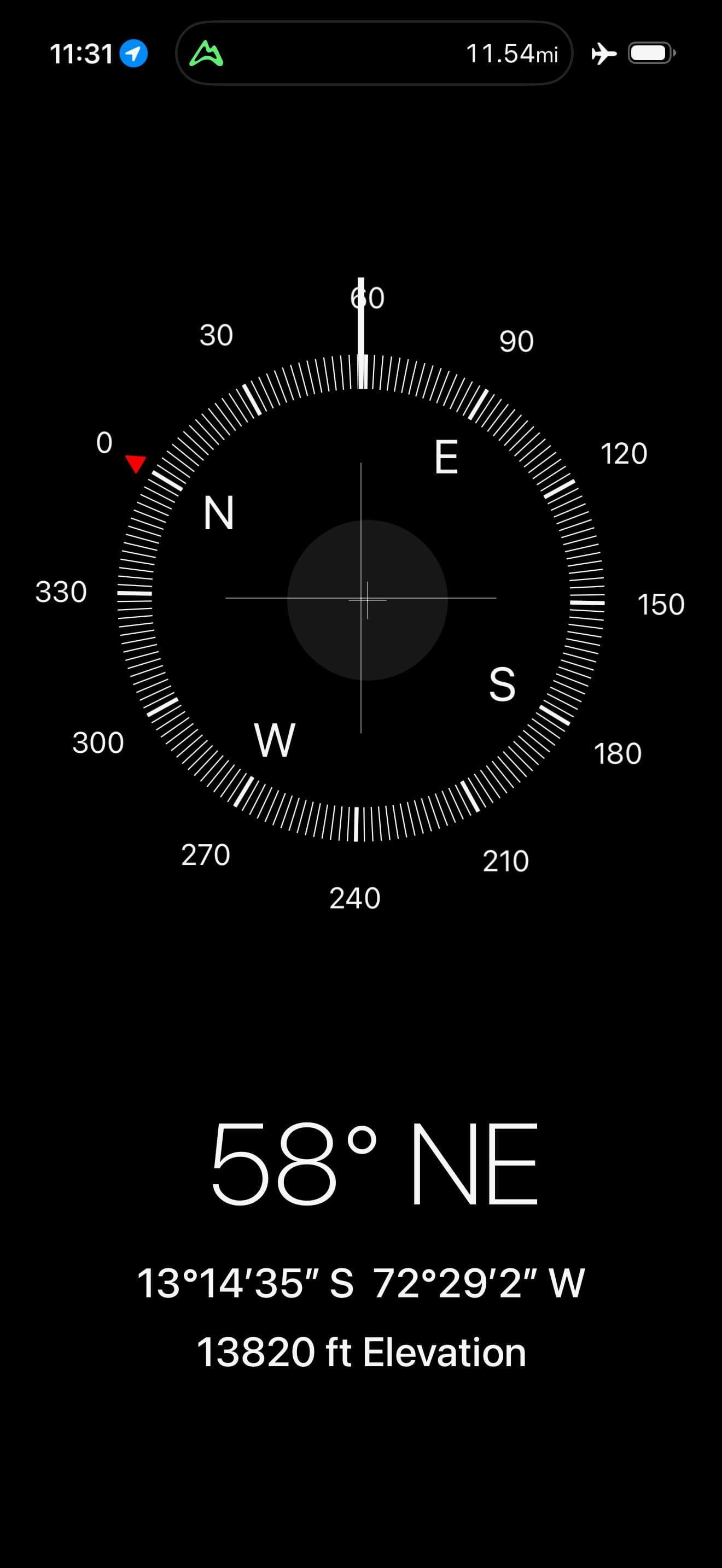
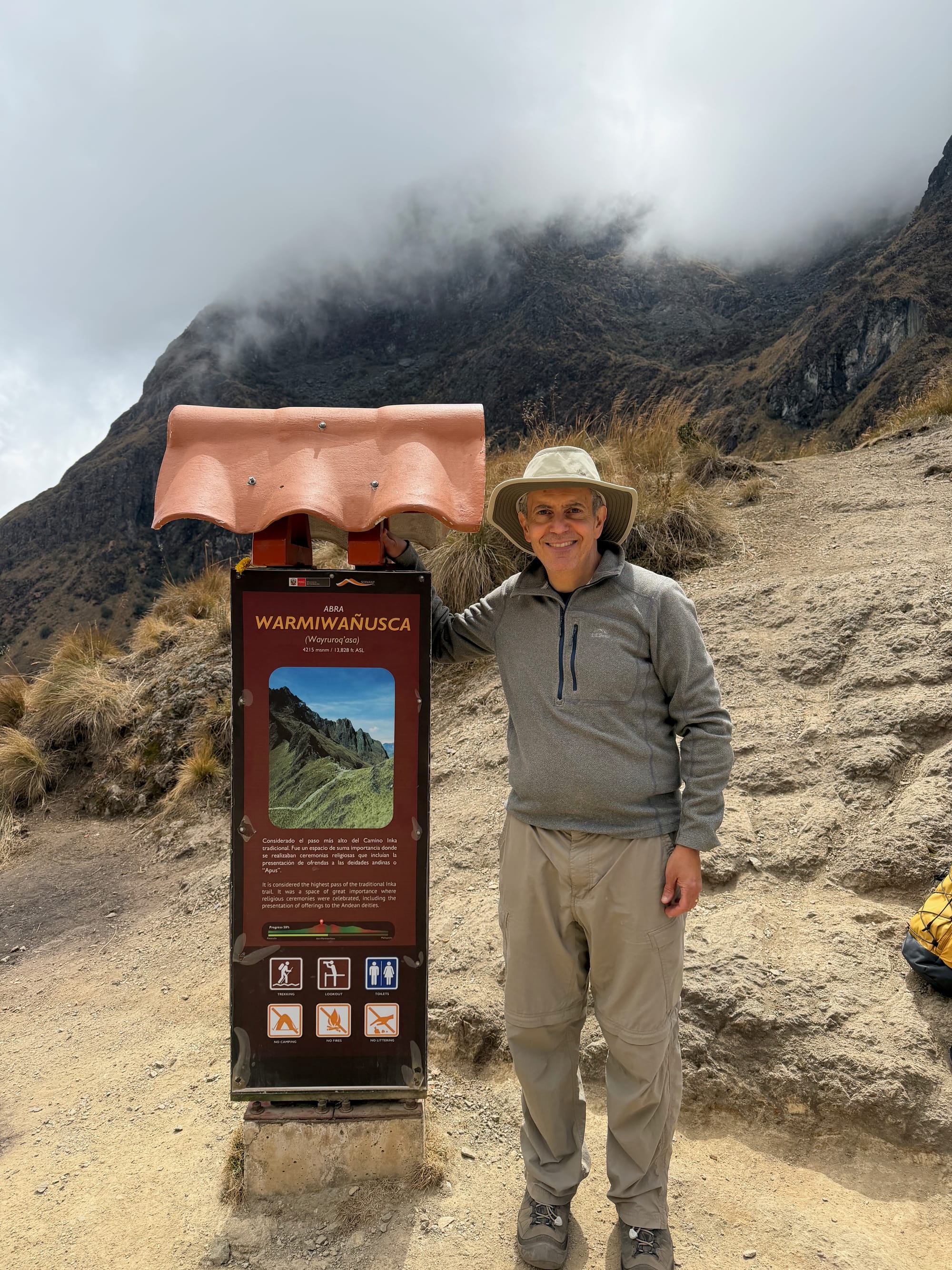
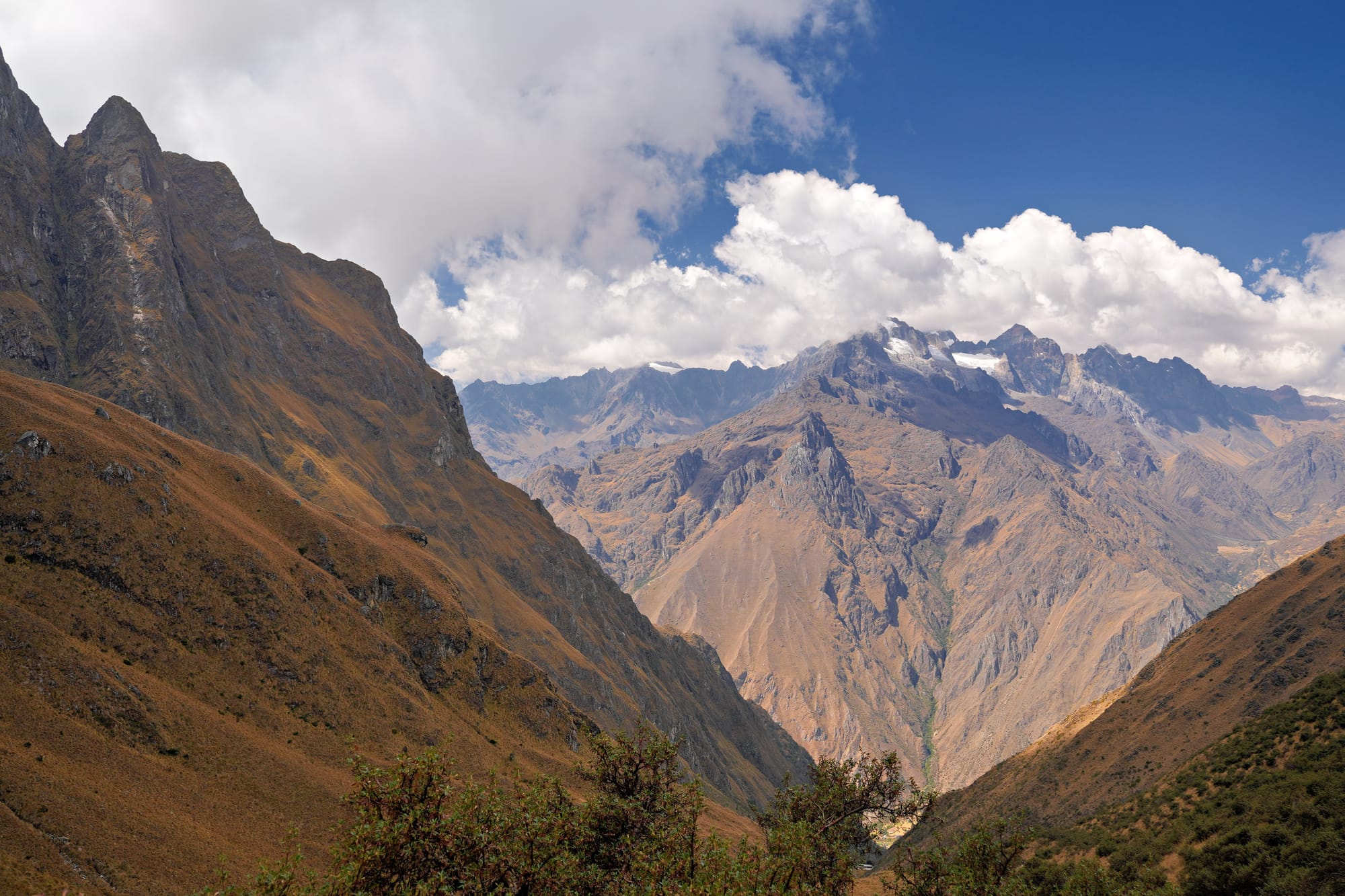
Views from the summit
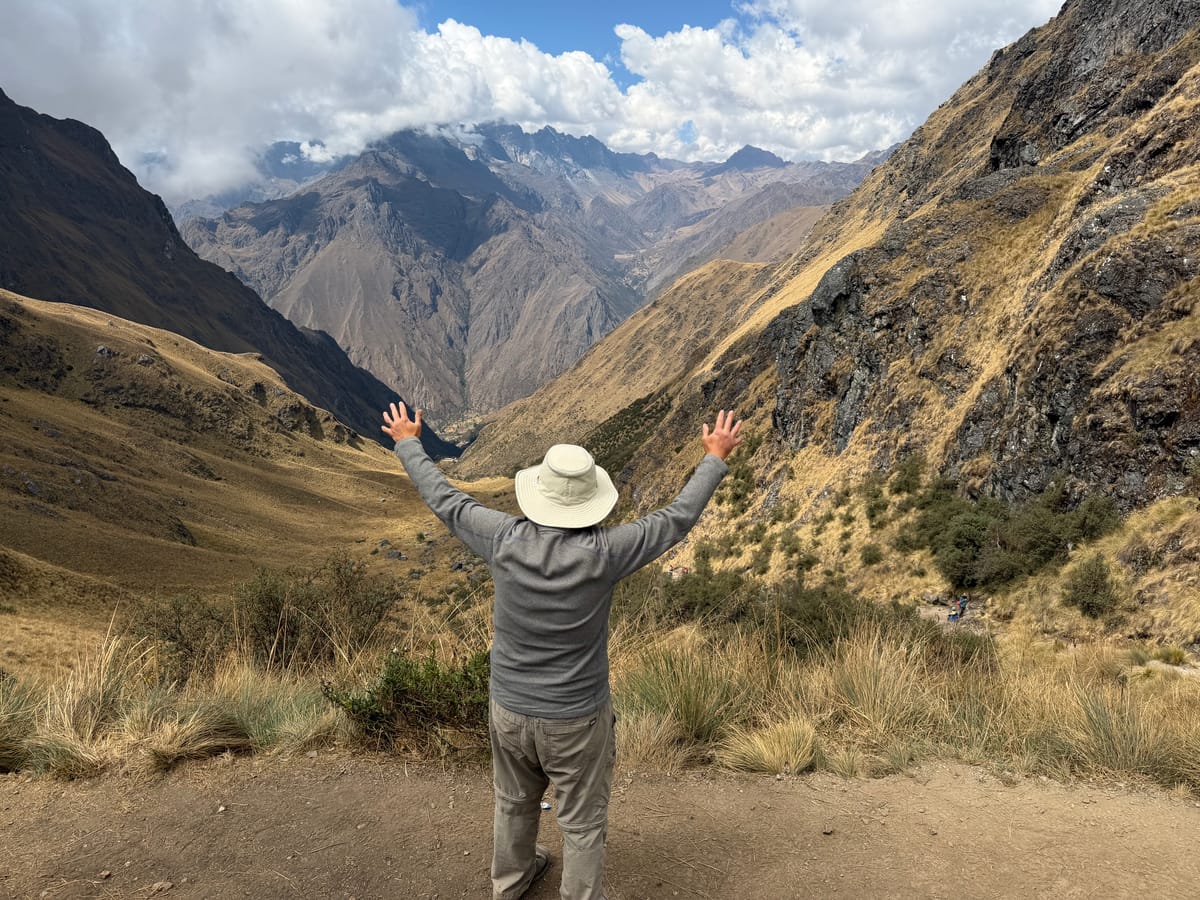
When Greg reached the summit of Dead Woman’s Pass, he was still smiling. However, he was also nauseated, another symptom of altitude sickness. It was cold at the summit, so everyone put on jackets while we rested. Then we started the descent down to the valley. The lower elevation would be helpful, but not enough to make the symptoms disappear completely. We reached the campsite around 2:30 pm, right on time. Lunch was ready, but Greg had no appetite and did not feel well, so he went directly to nap in the tent. Around 5 pm, Greg felt a bit better, so he joined the group for tea and dinner.
Day 2 was pretty scary, but fortunately this was only a mild case of altitude sickness. Running turned out to be helpful, but not in the way that Greg expected. The physical training did not prepare him for the extreme altitude. But the mental lessons of distance running helped him figure out how to adapt to the high elevation.
Statistics
Distance: 12 km / 7.2 mi
Elevation gain: 1734 m / 5690 ft