Crop circles and salt mines
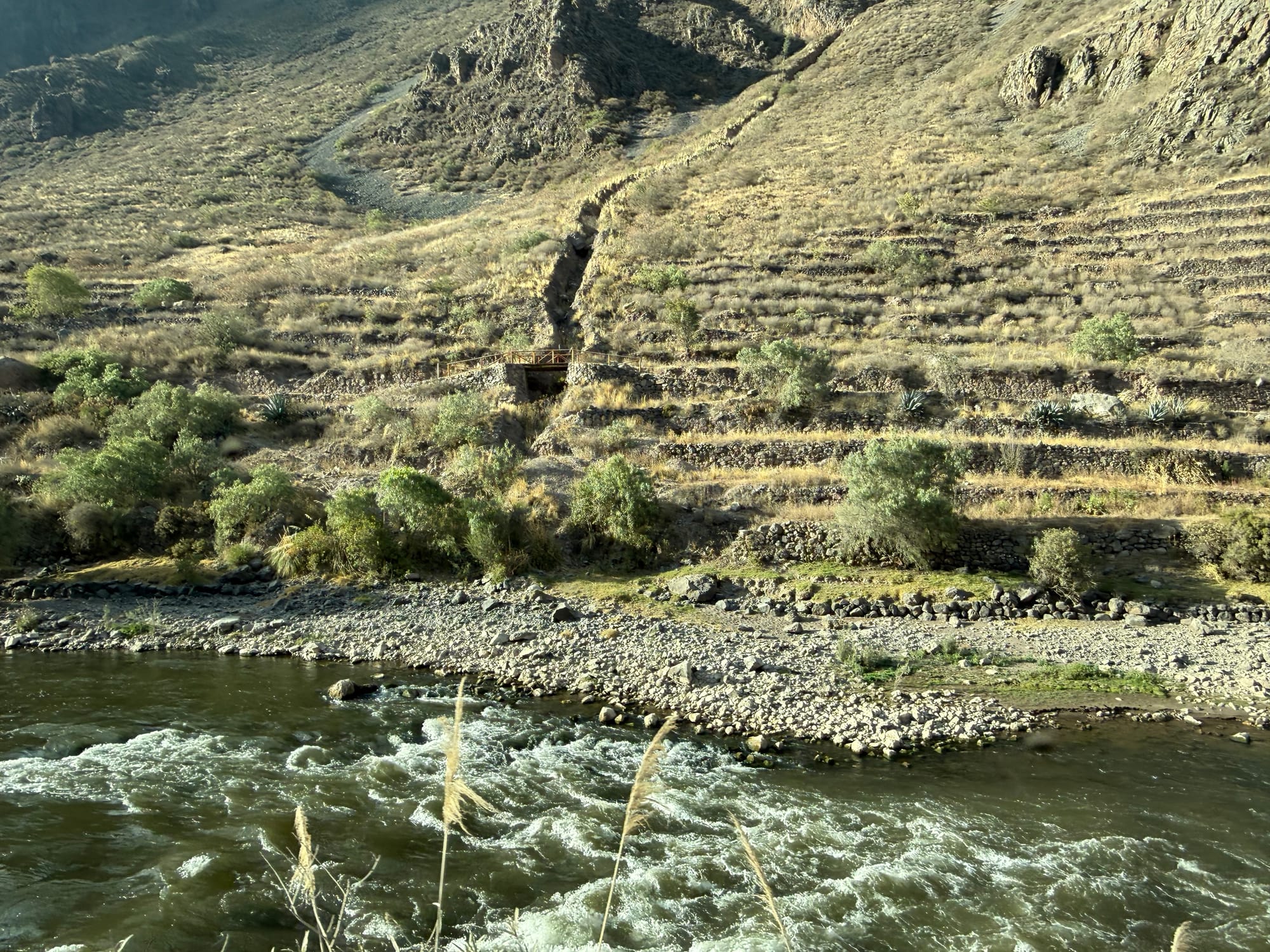
Today Amy explored the area near the Sacred Valley. This is the part that Greg will miss out on. On our drive out of town we saw part of the Inca Trail which leads to Machu Picchu.
We had to change the order of our site visits today because of the Pachamama (earth day) celebration. Starting at 10 there was going to be a huge ceremony at Maray and we would not be allowed to visit. On the positive side, the trail was empty because we were so early.
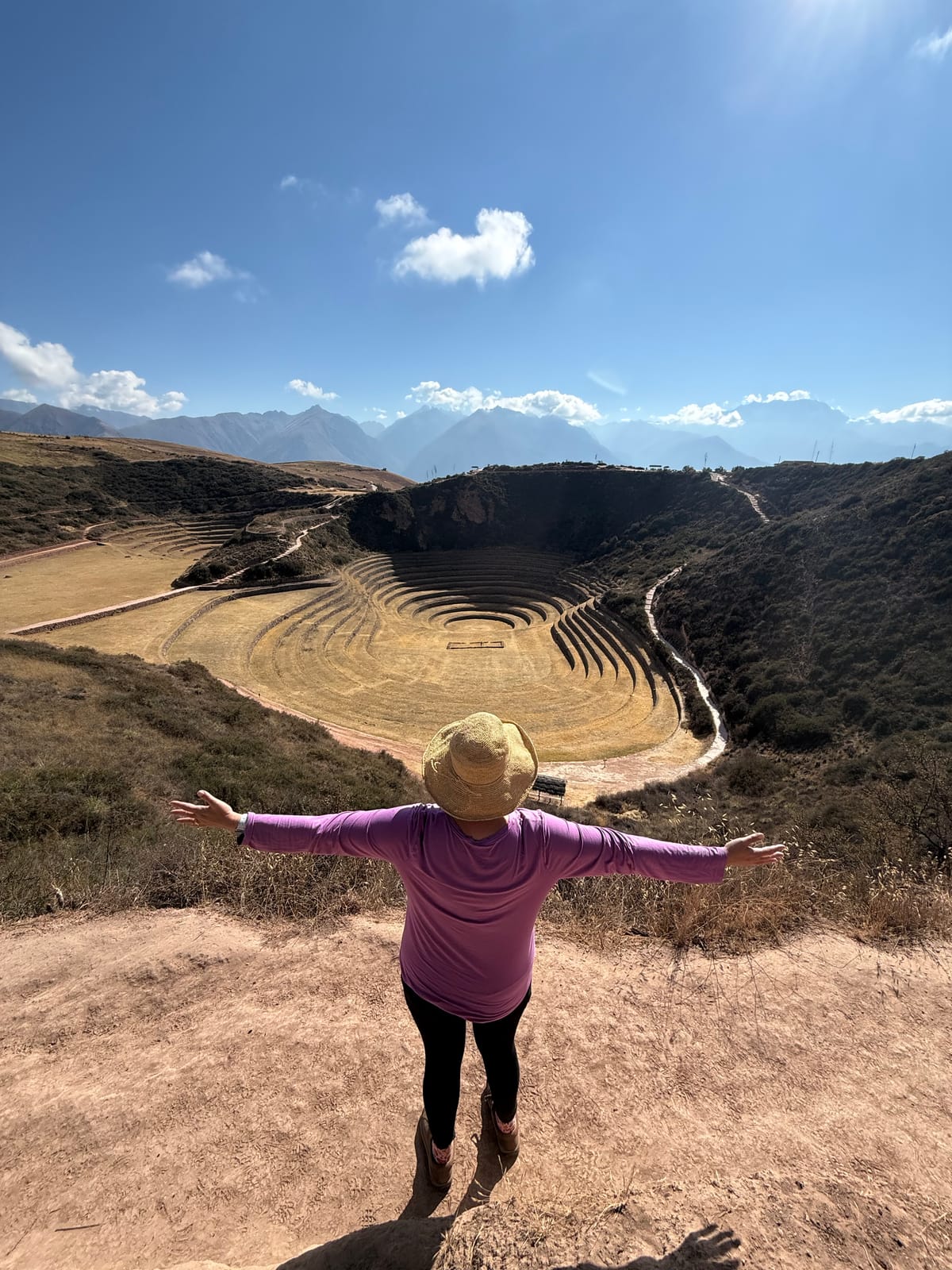
Maray was an Incan site that was used for testing of crop hybrids. Peruvians have 3500 varieties of potatoes now, thanks to this experimentation. They also tested corn and quinoa varieties. The Peruvian quinoa is also amazing- much more flavorful than what we get at home. We can thank this experimentation for the amazing food that we’ve had on this trip!
The crop circles all have 7 tiers. This is because of the view of Pleiades (7 sisters constellation) that is aligned during the fall solstice.
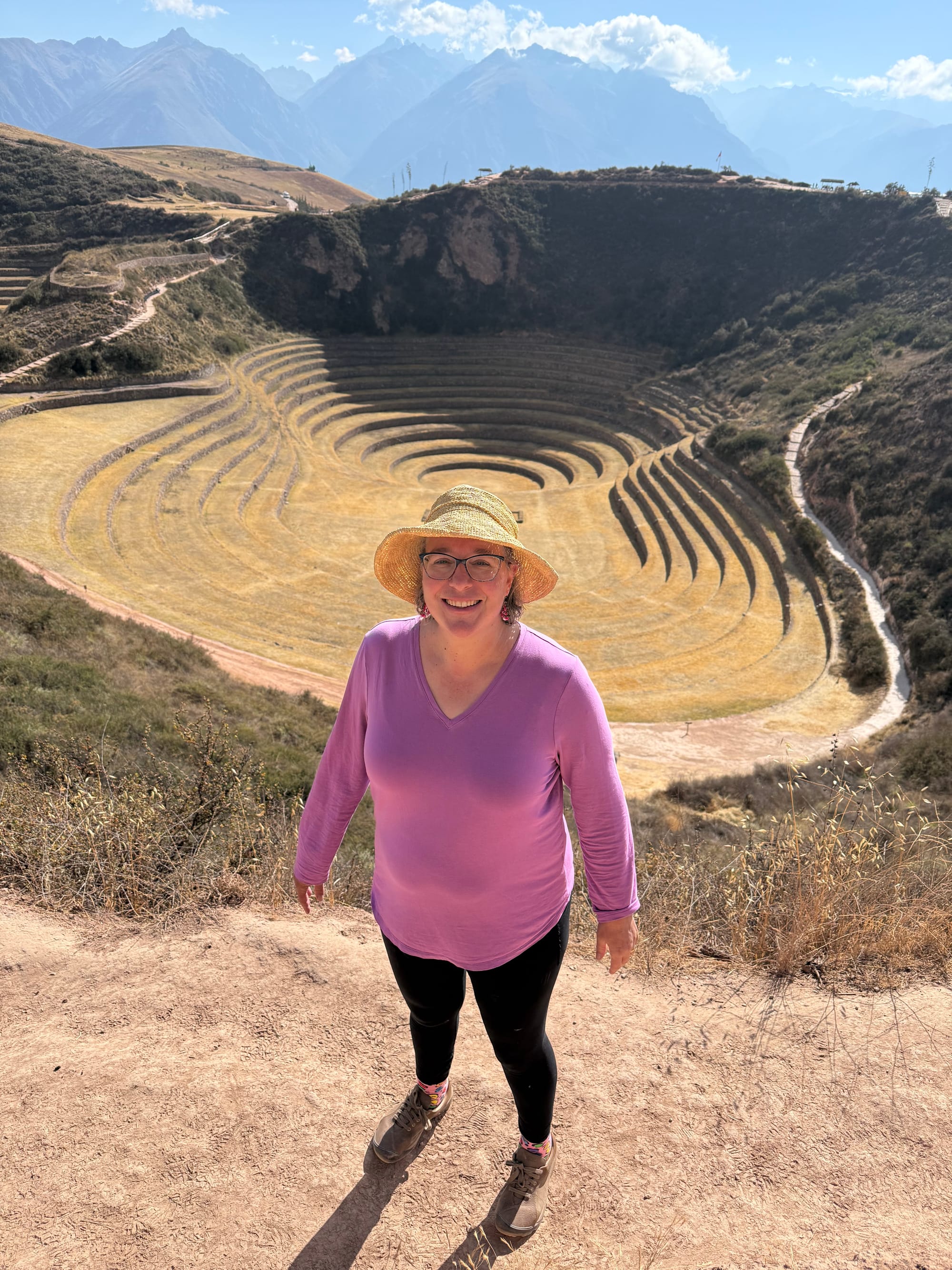
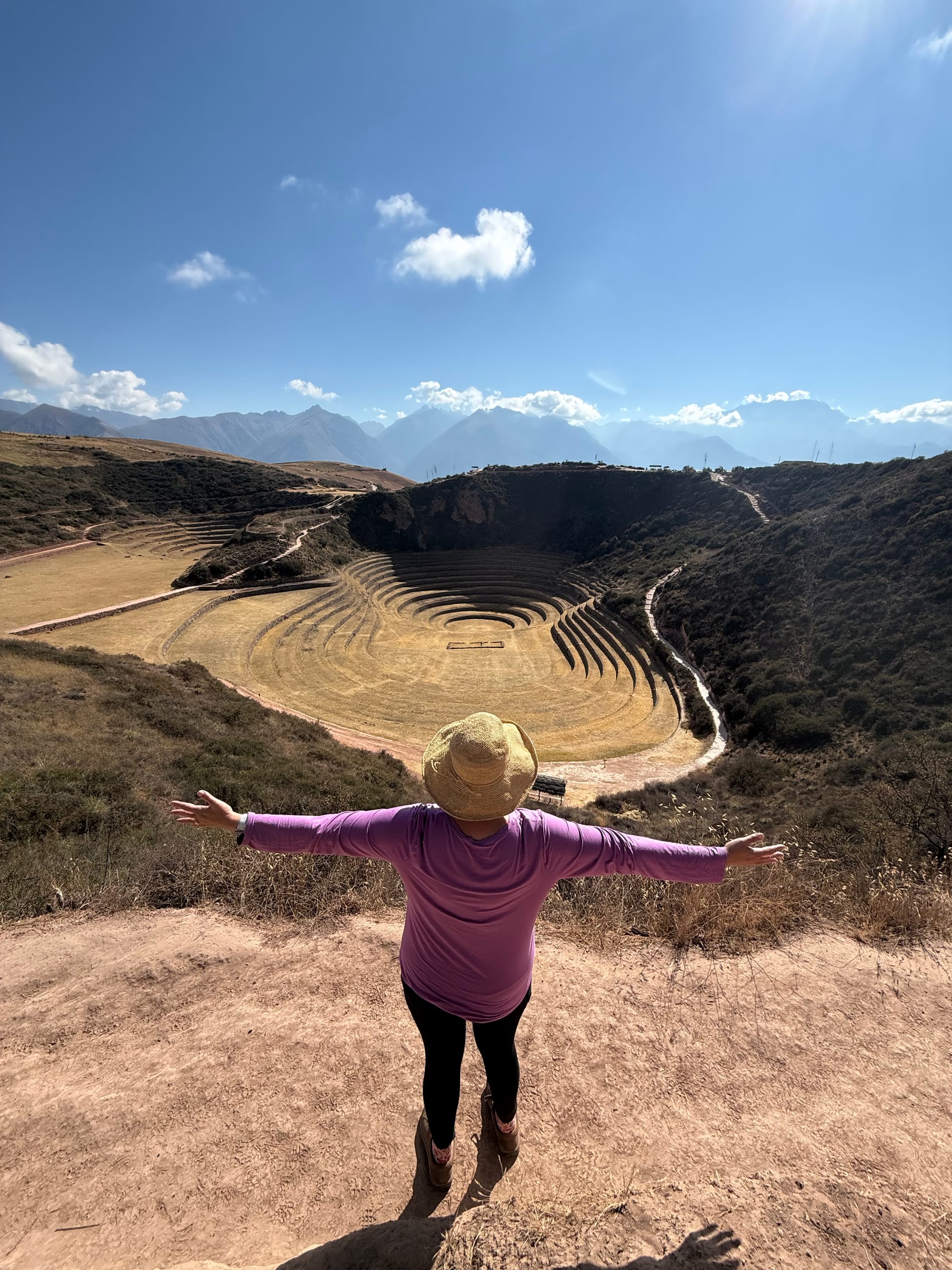
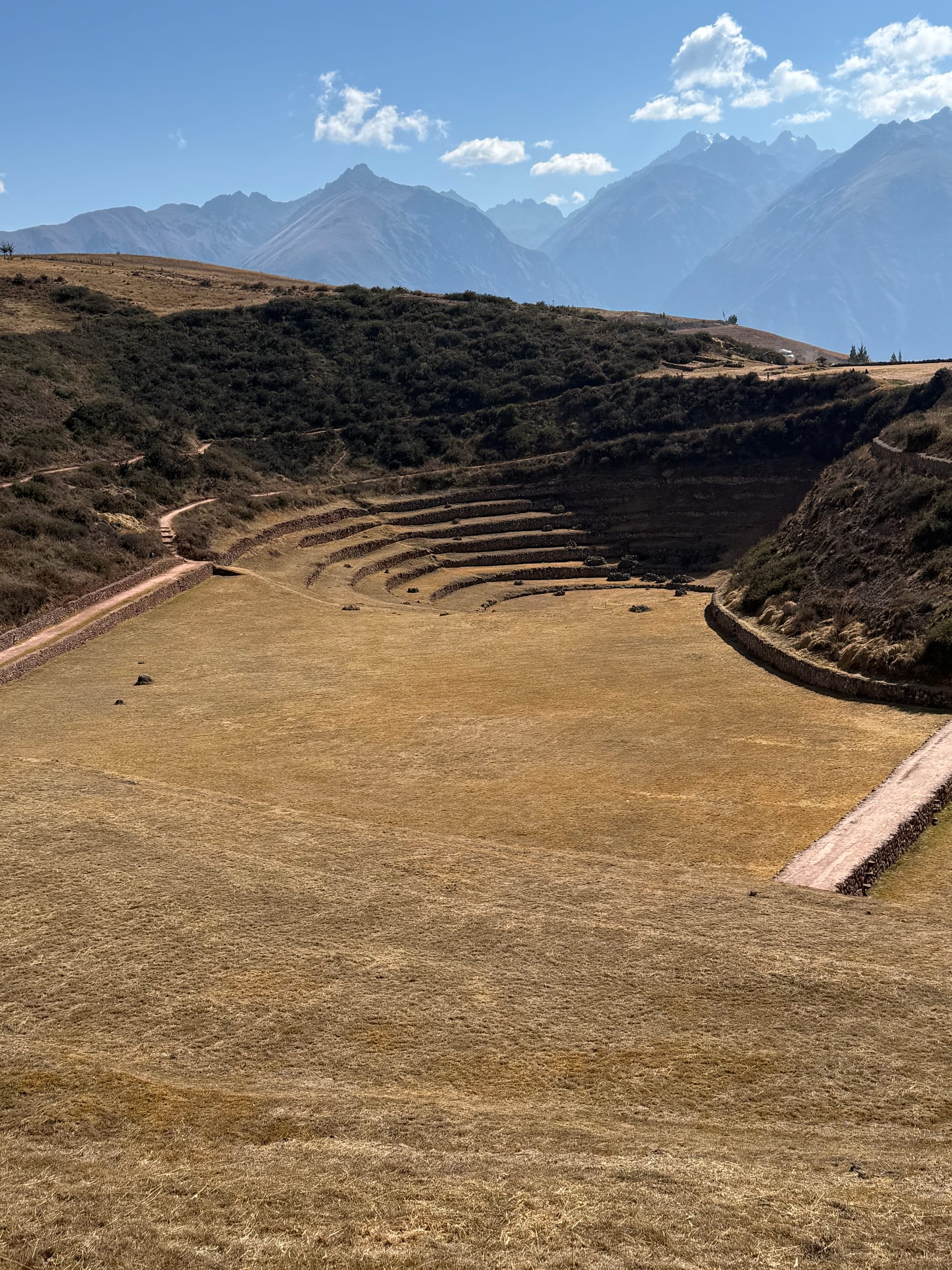
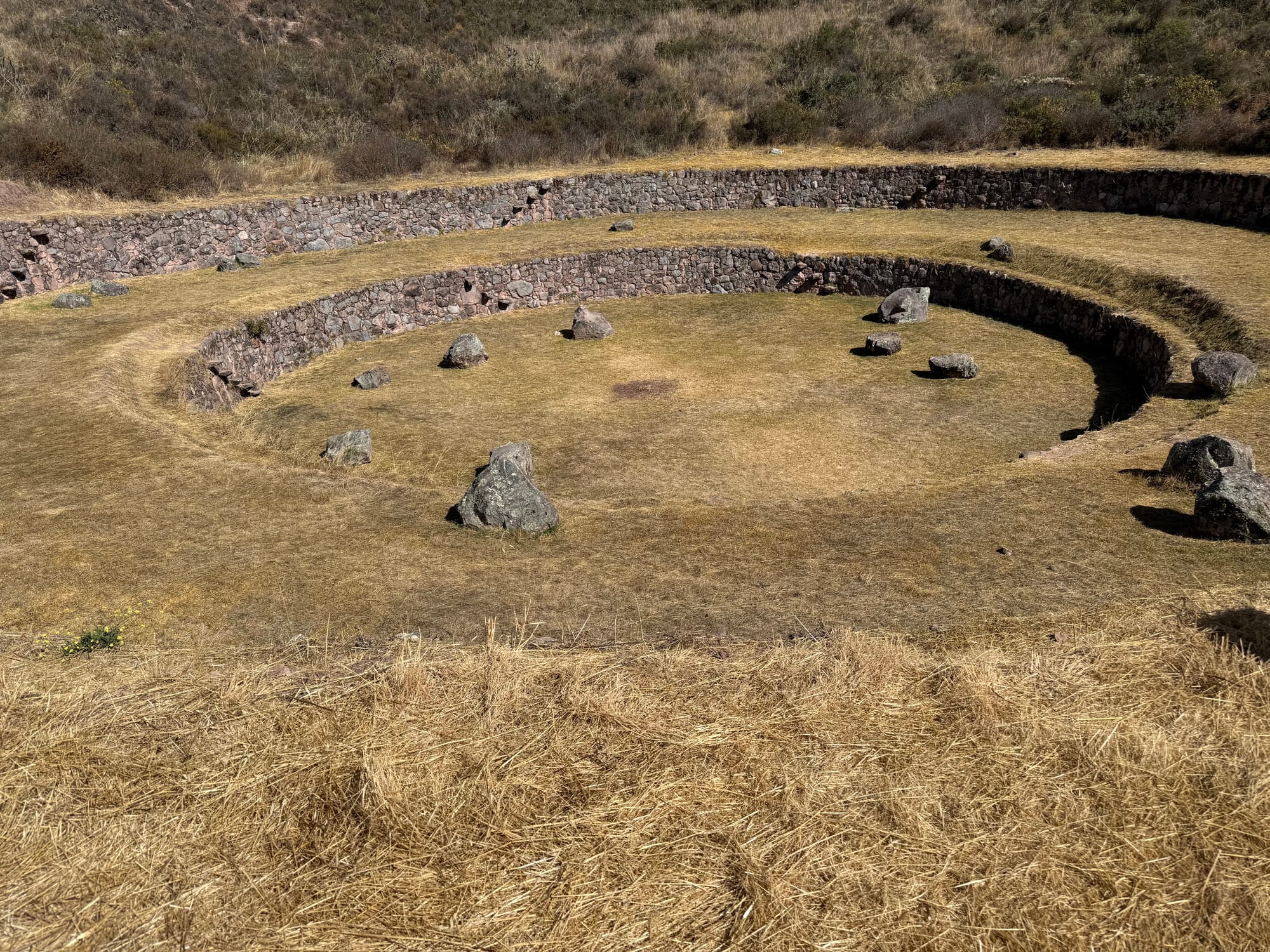
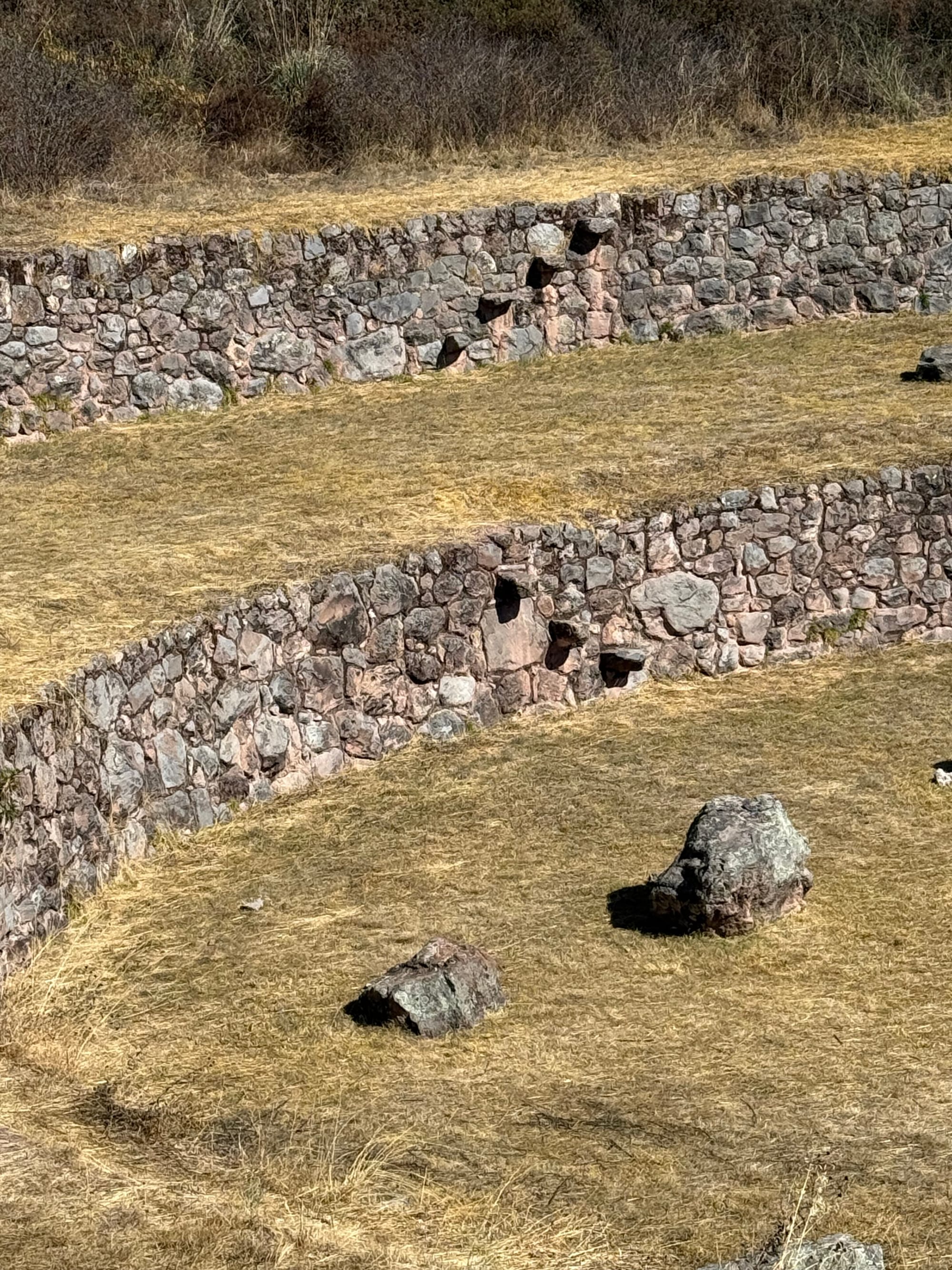
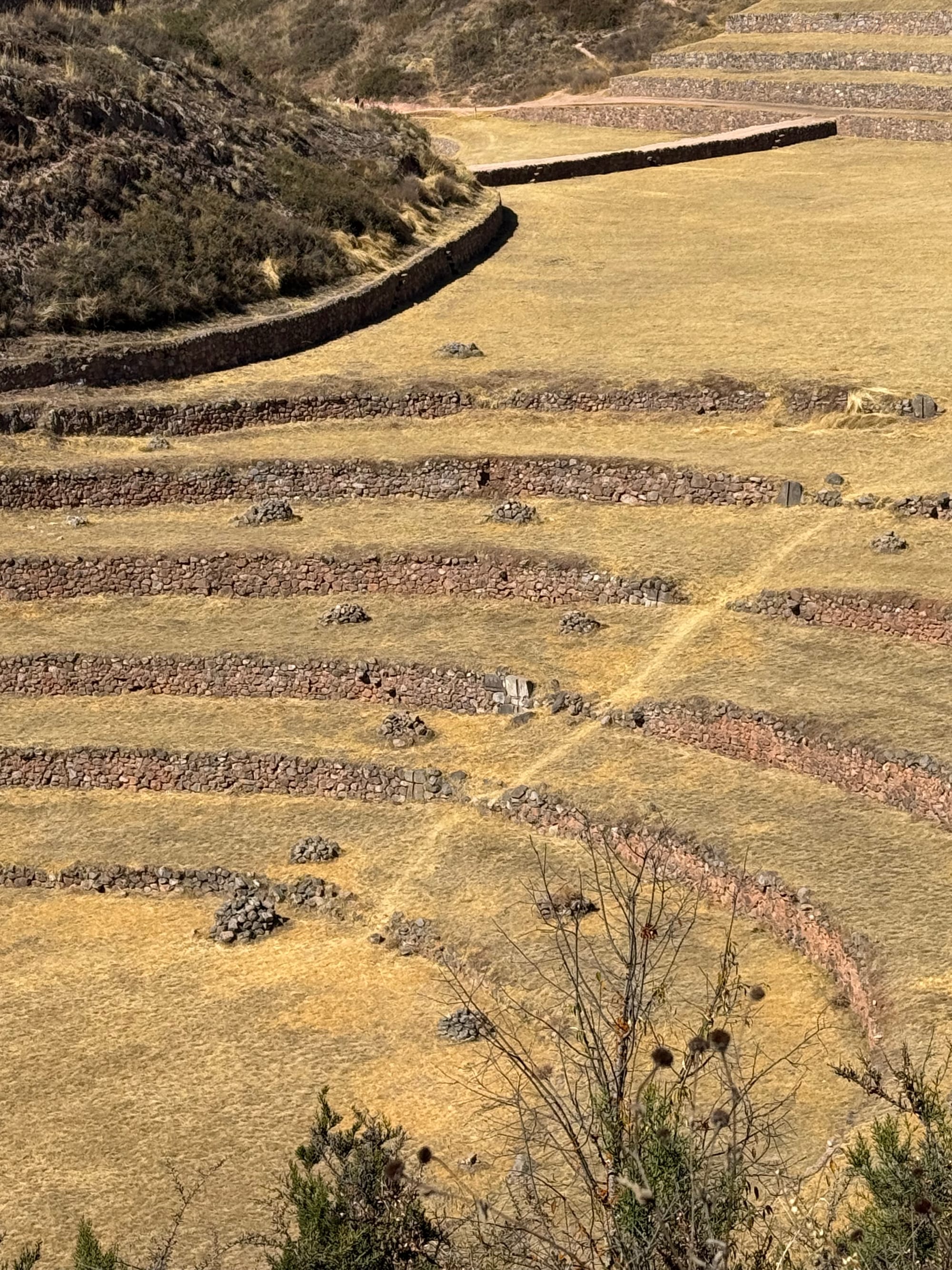
The crop tiers
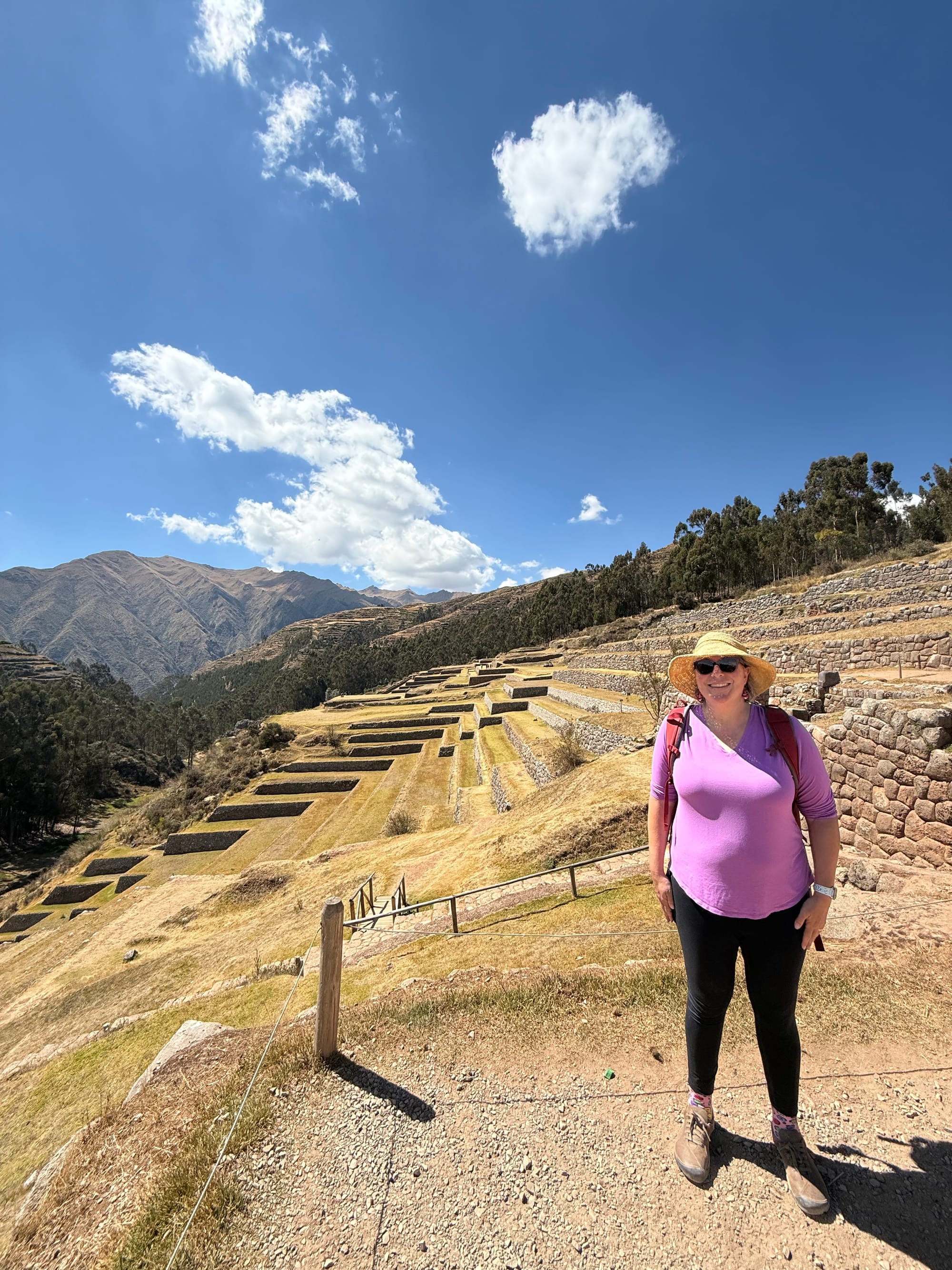
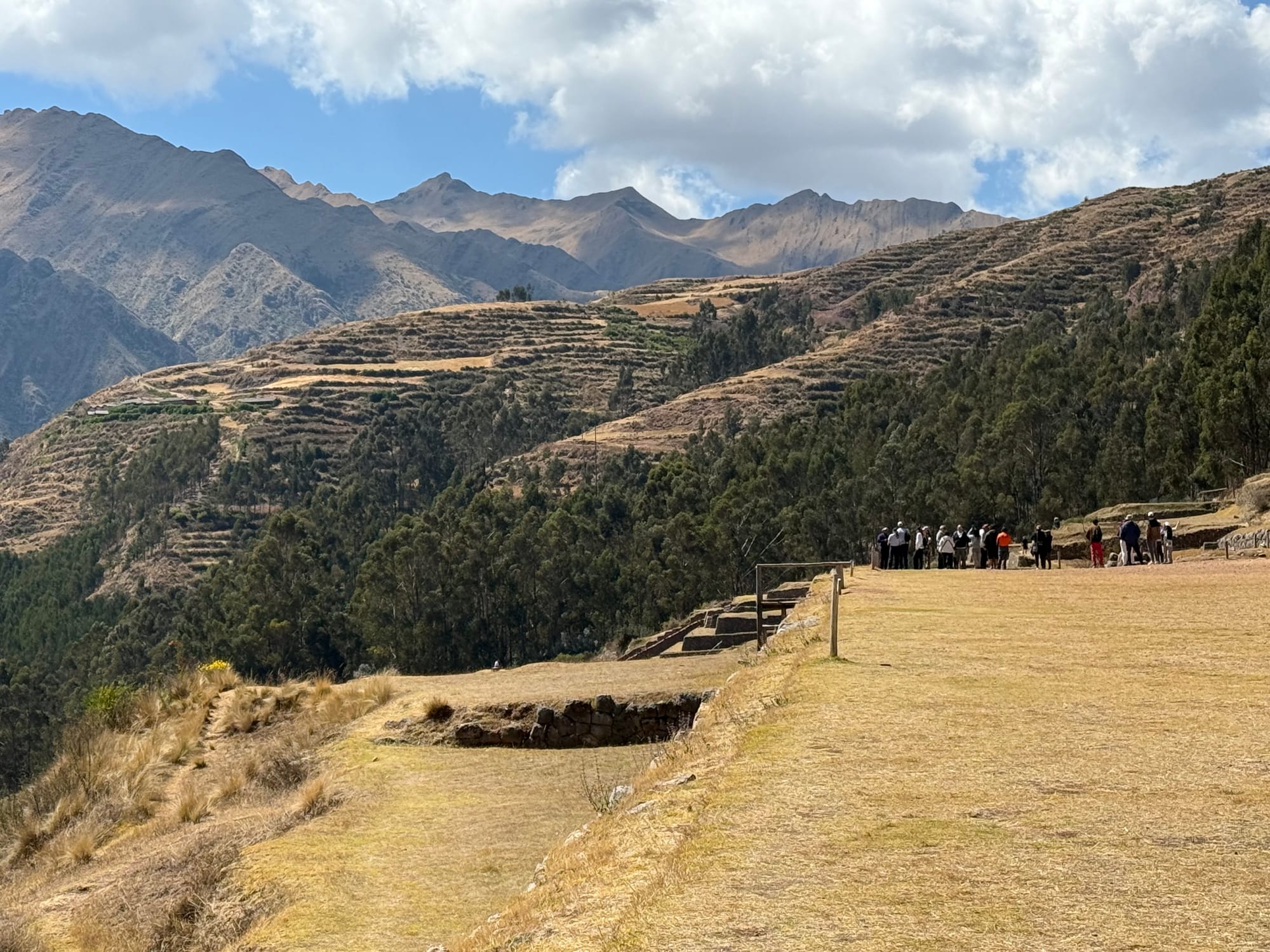
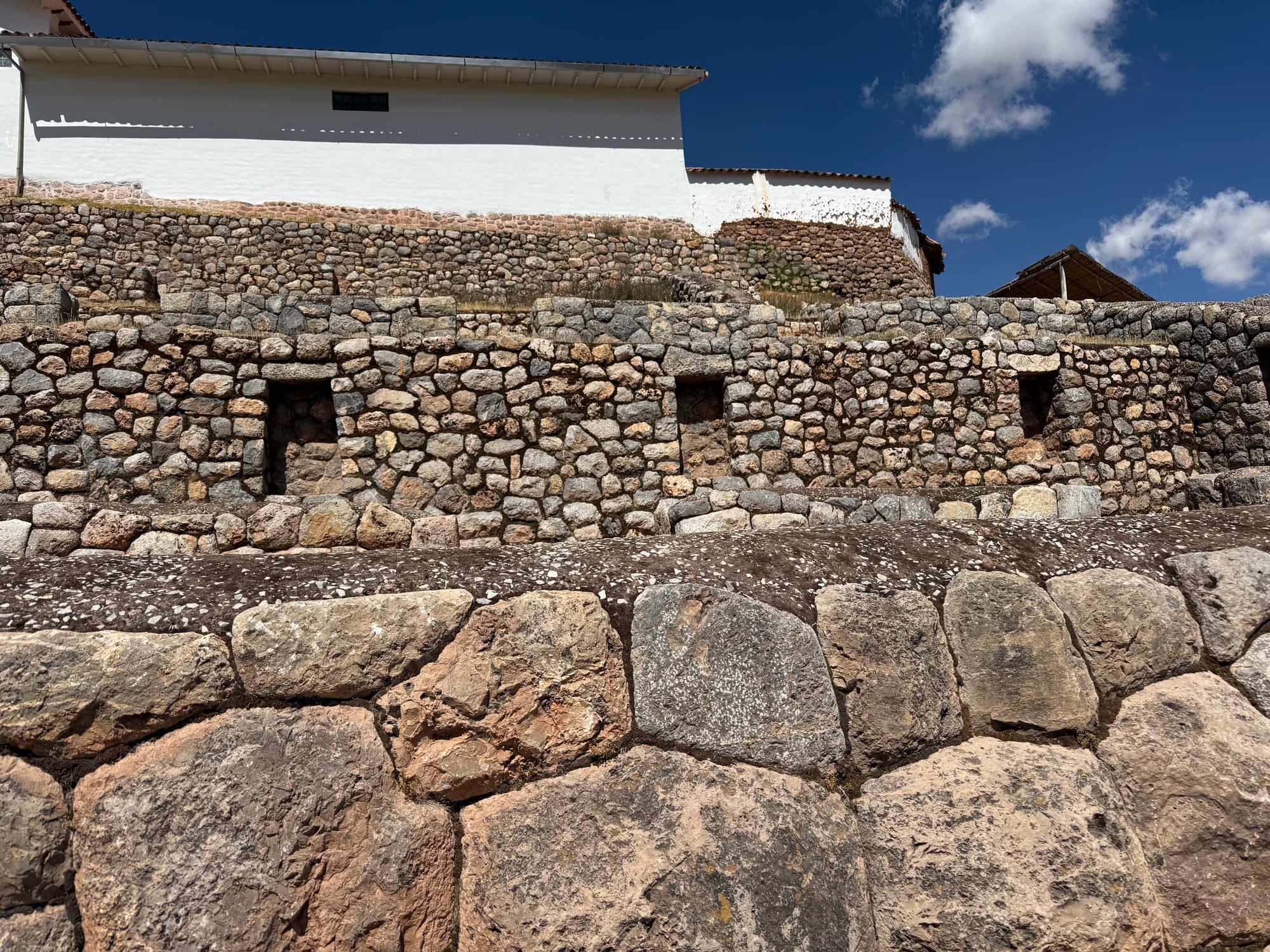
Our next stop was Chinchero, another Incan site that the Spanish built a church on top of. Since it was Pachamama and Sunday, the church was very busy with Mass. We wandered around the grounds and saw more farming tiers.
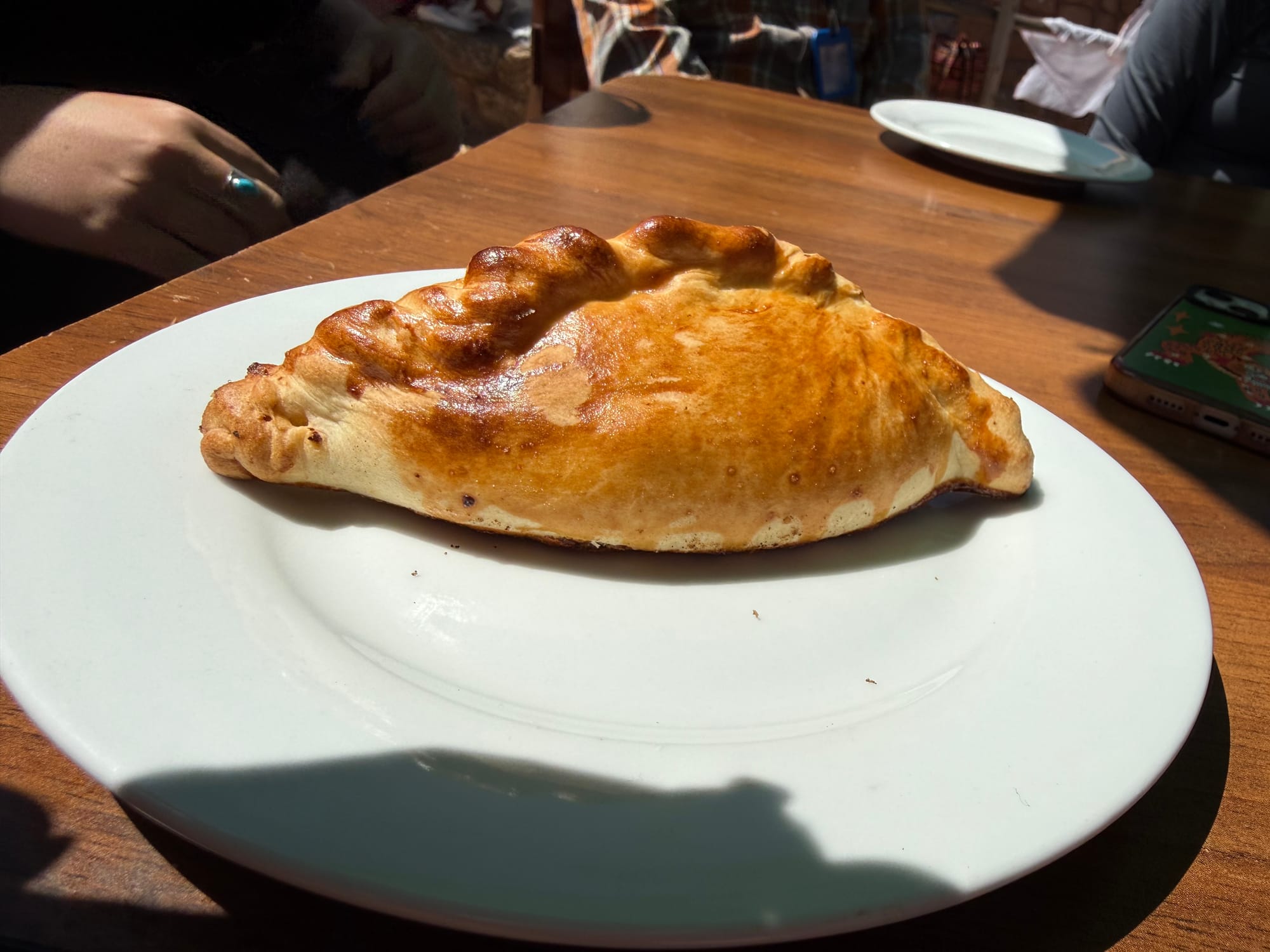
On our way back to the van we stopped for coffee and empanadas. It was delicious. The Brits in our group were very happy to have a taste of home. They thought the empanadas were just like pasties.
We stopped for lunch at a restaurant that was training employees in service and in English. We had a three part lunch. Mine had trout, chicken and beef. The sweet potatoes were even better than the regular potatoes, if that is possible! Amy also ordered another chica moreada. The food here just keeps impressing!
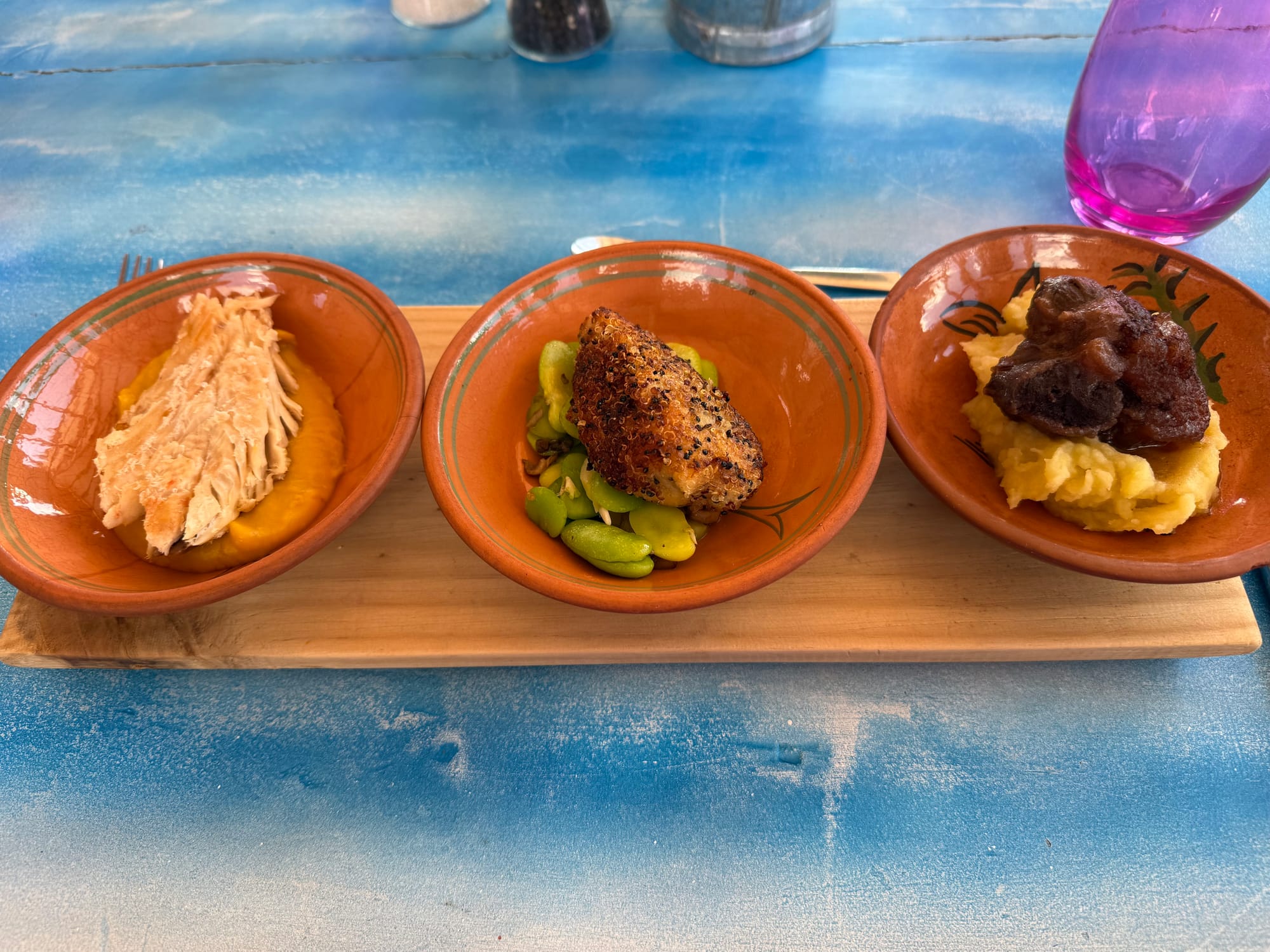
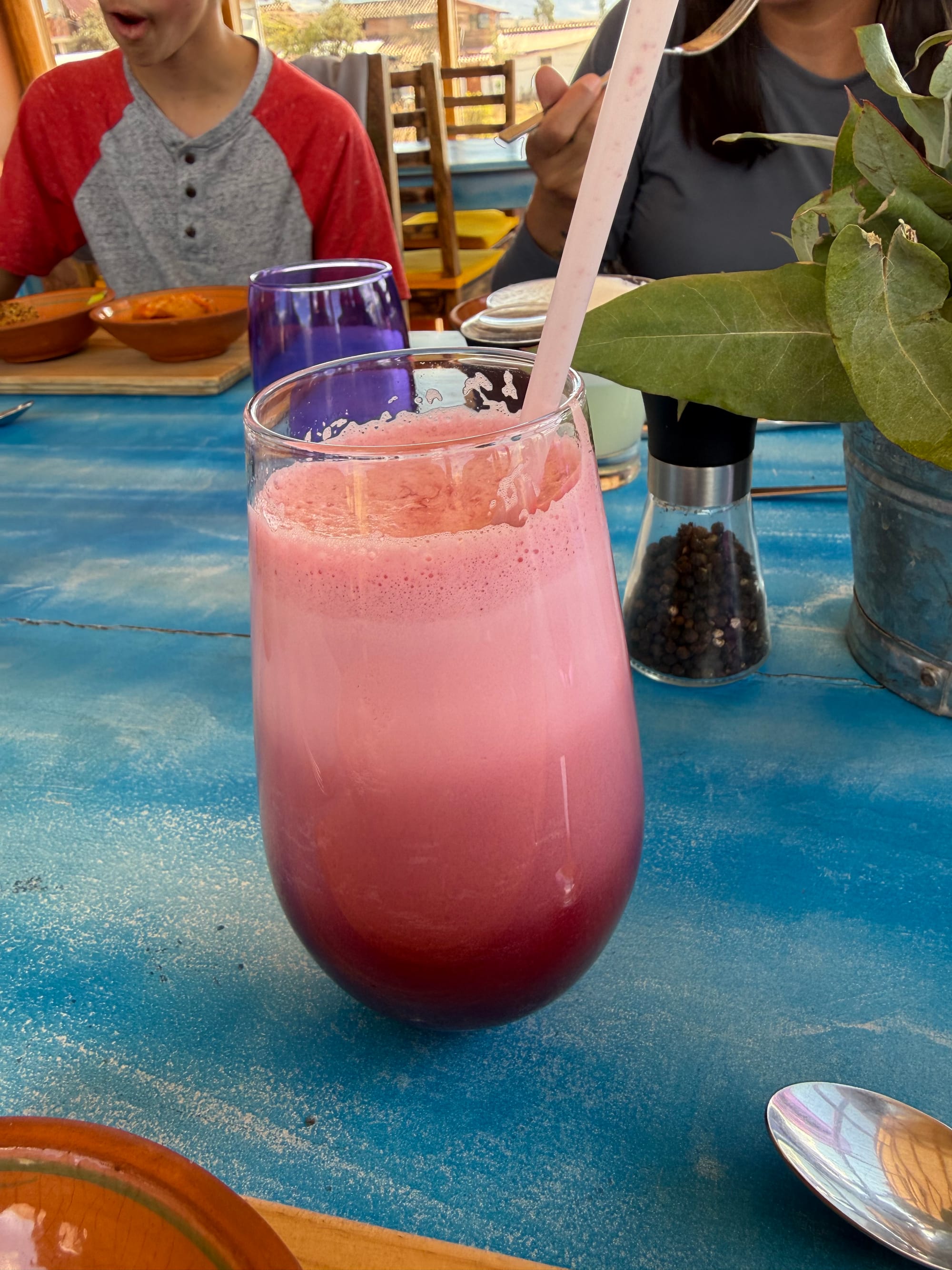
Lunch
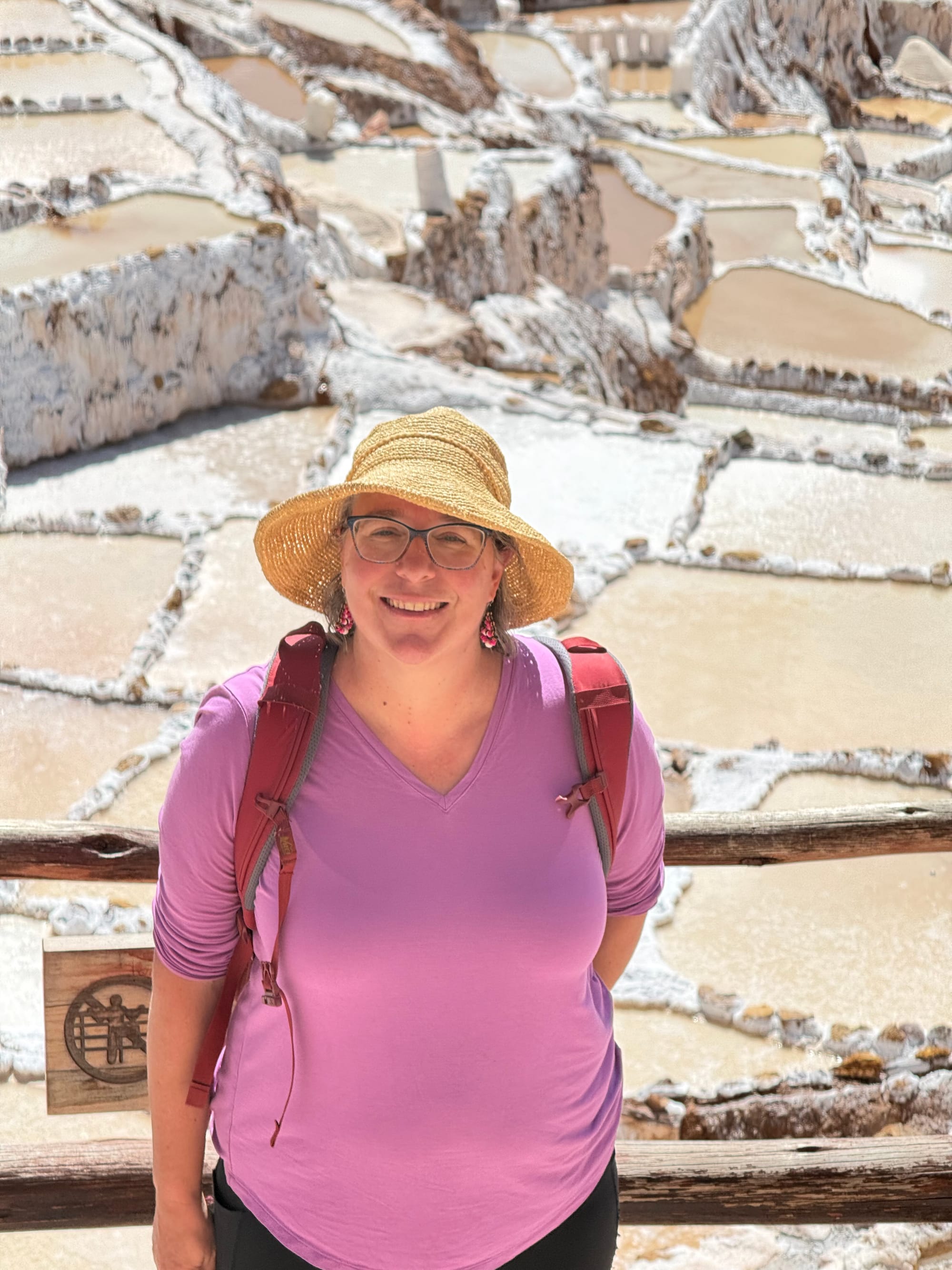
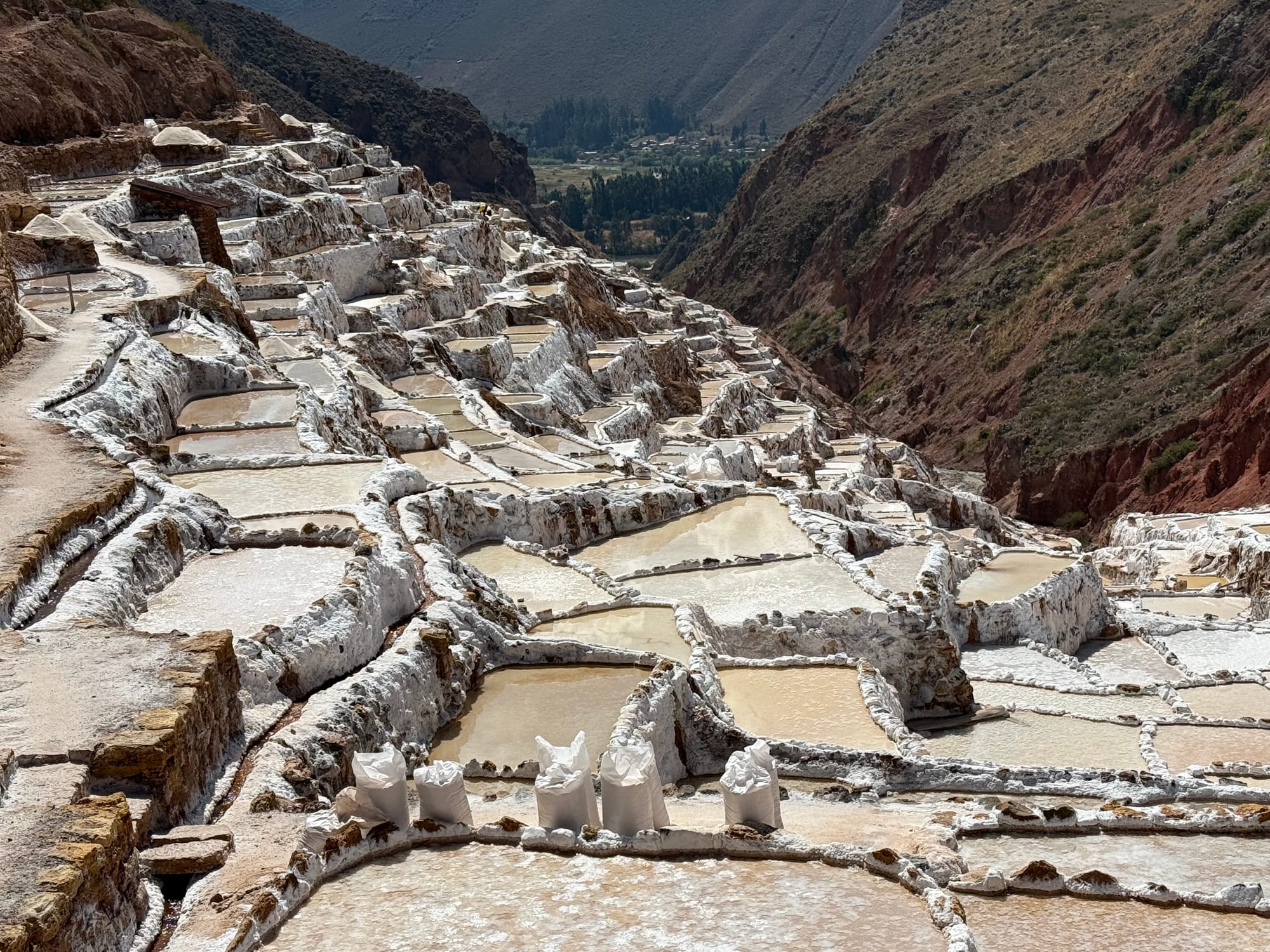
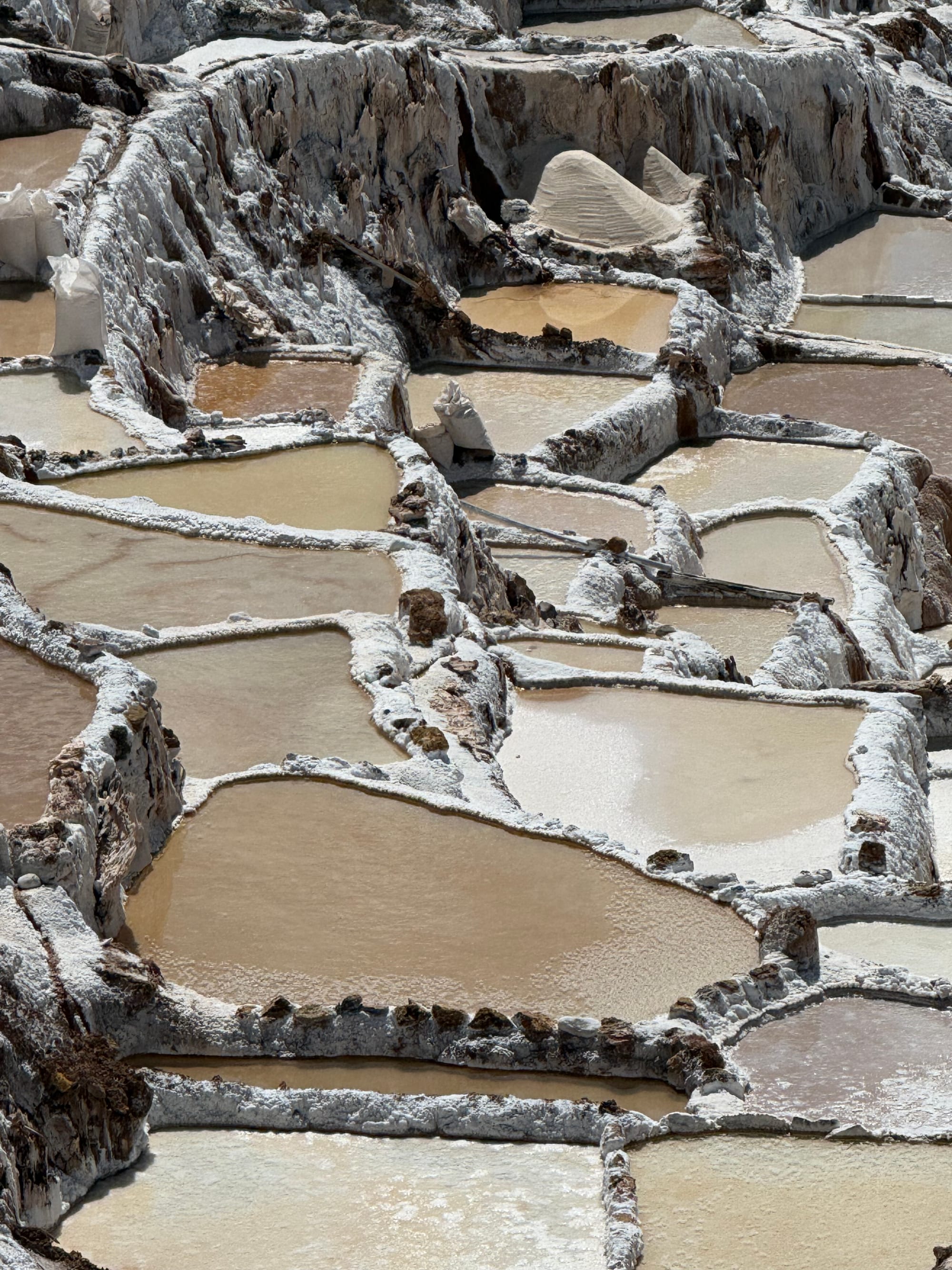
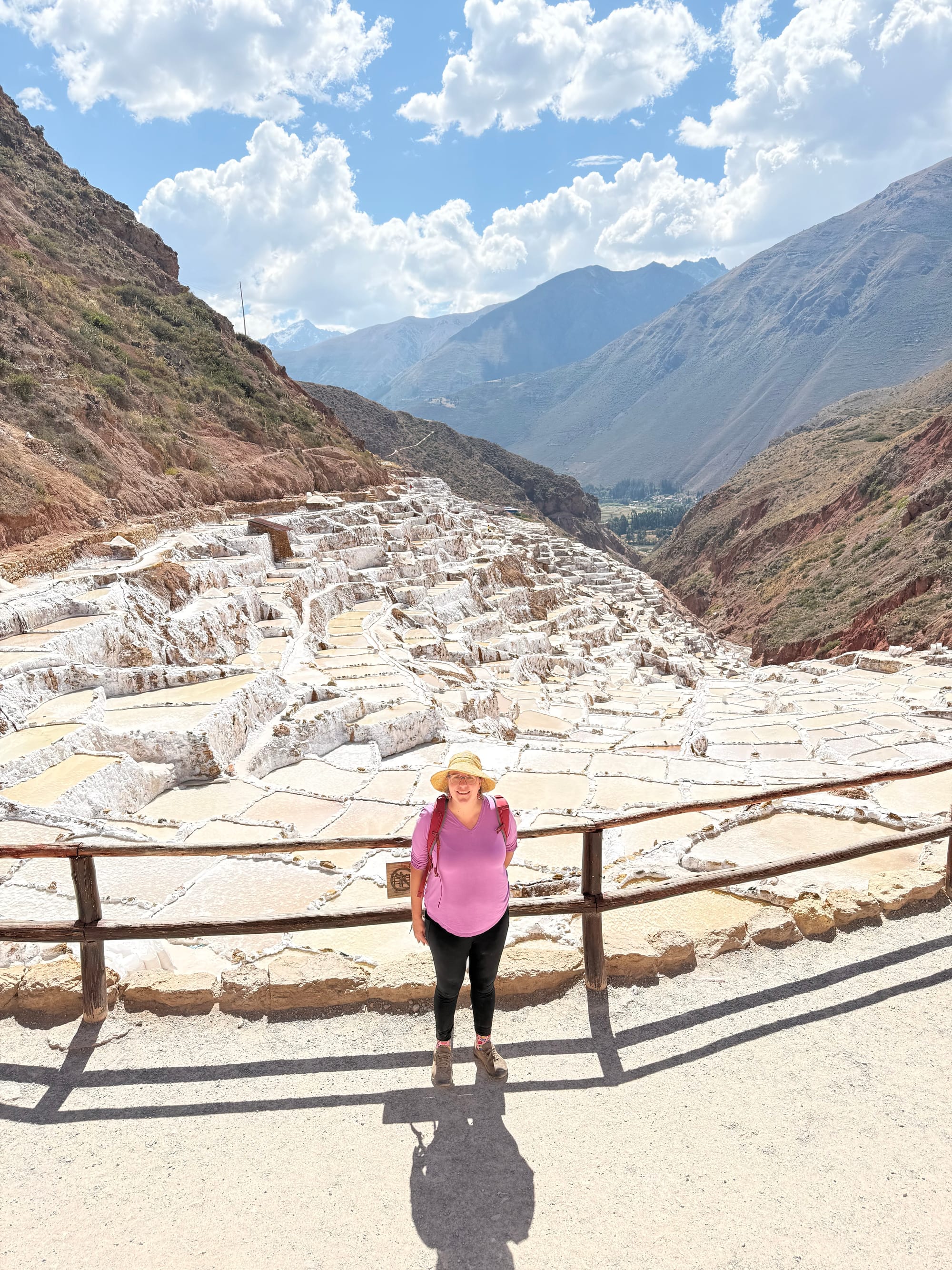
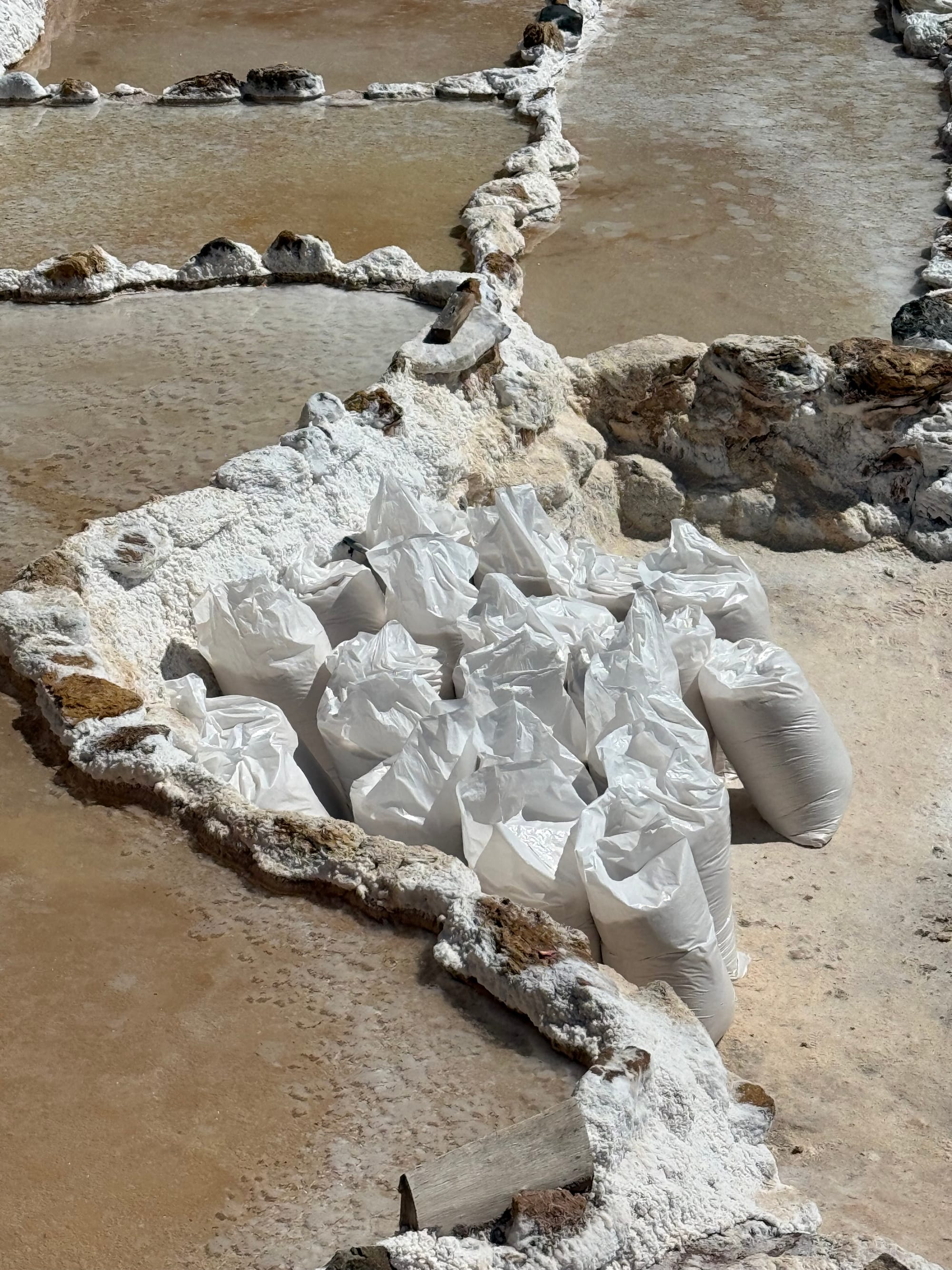
After lunch we went to the Salt Mines of Maras. This is a private enterprise. Local families each have a plot. They put salt water that comes from a stream from the mountain. The water is super salty and the weather is hot, so the water evaporates every 5 weeks and they harvest the salt. It sells at a premium because of the purity.