Inca Trail - Day 3
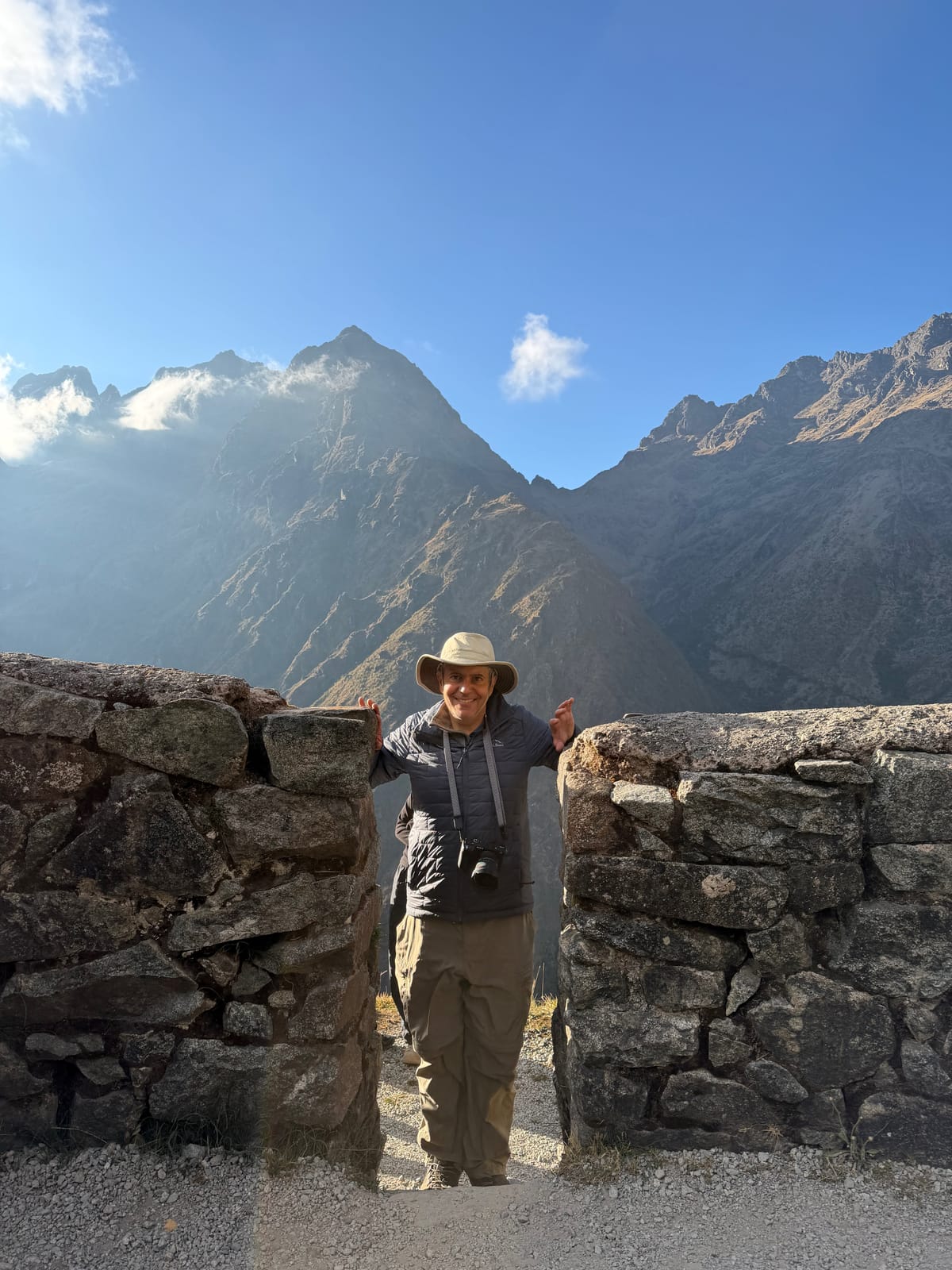
Altitude sickness also affects sleep. Although Greg slept better than the first night, it was much less sleep than normal. So it was now clear that Greg was suffering from altitude sickness. And his feet and muscles were very sore, similar to after running a race. But overall, he started day 3 feeling better than the end of day 2.
Over breakfast, we learned that another hiker from the tour now was also suffering from altitude sickness, though her symptoms seemed more mental and less cardiovascular. Our guide Bryan explained that we were free again today to hike at our own pace, so Greg decided he would leave about 15 minutes ahead of the group, just in case his pace was much slower than the rest. He reached the first rest stop about 15 minutes ahead of the others, so his pace was about the same as the group. Greg took advantage of his early arrival to take photos of the others from the tour as they took the final steps to the first rest stop. We were able to look back towards Dead Woman’s Pass, and our guide Bryan showed us how the mountain peaks form a silhouette of a woman, which is how it got its name.
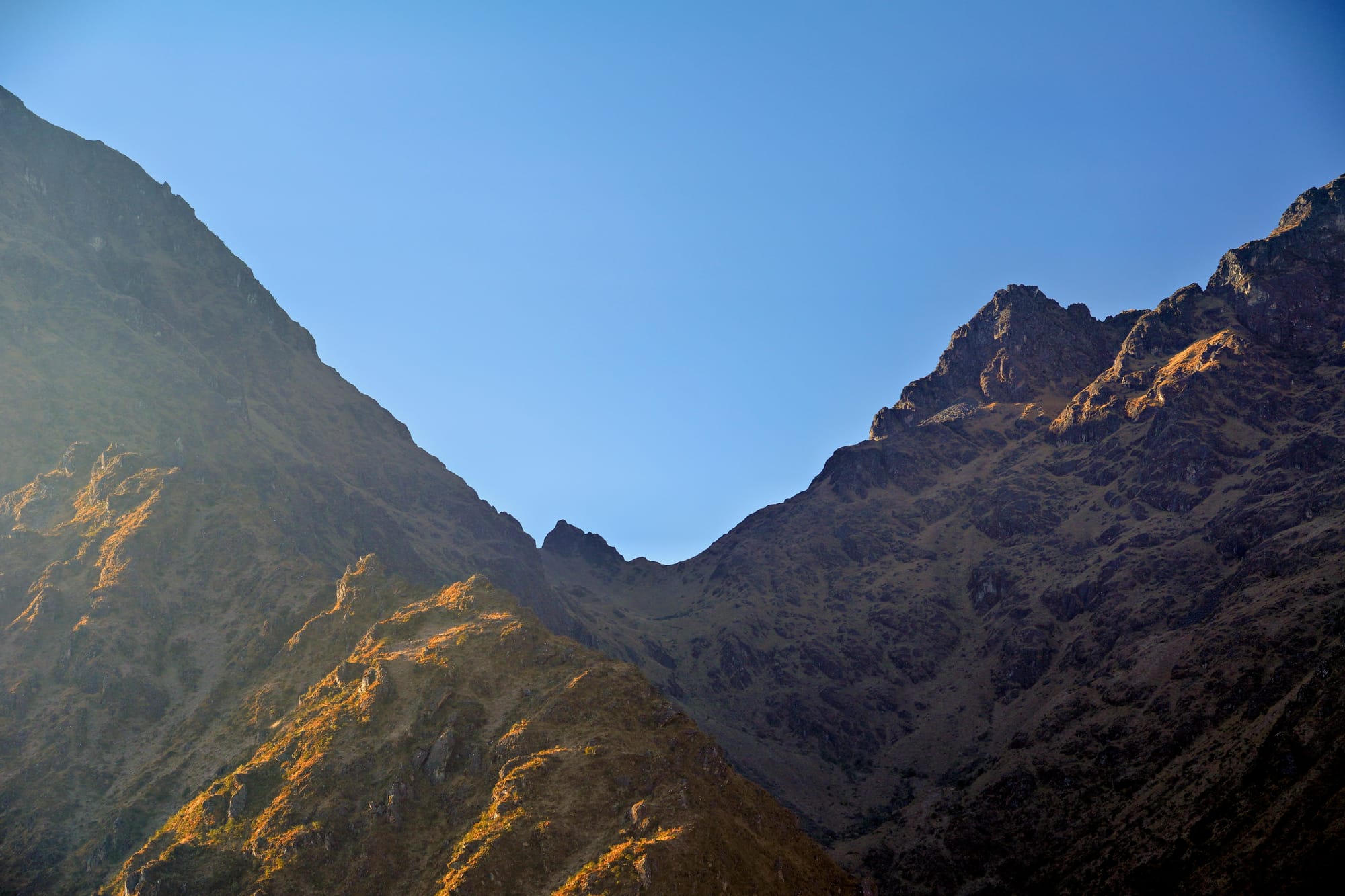
The next segment was another climb to another mountain pass nearly as high as yesterday. Greg was nervous but the new breathing technique was working. The group eventually caught up with Greg, but he was able to continue with the group, and they reached the summit together. This summit was not as picturesque as Dead Woman’s Pass. During this break, our guides explained that the downhill segment would be a set of very steep steps. Oh boy.
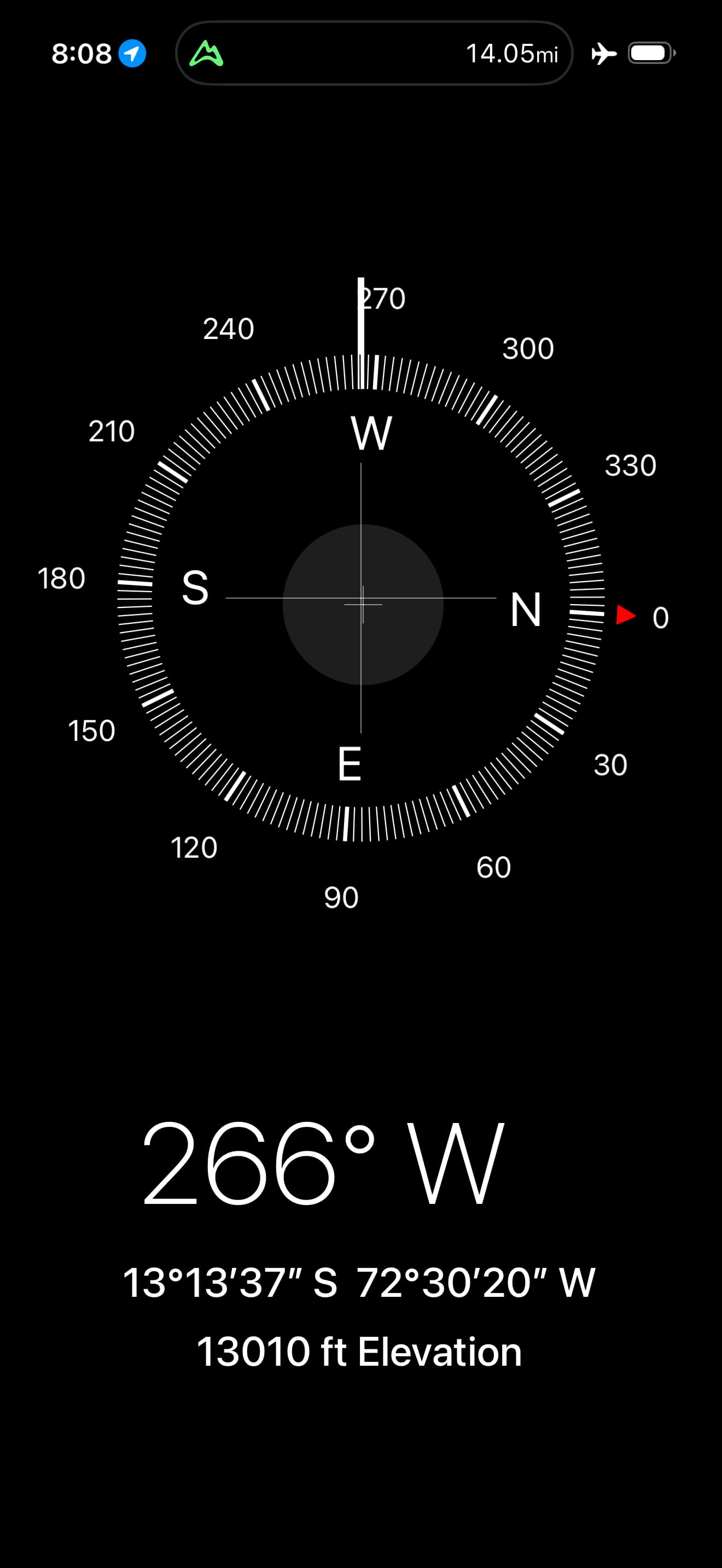
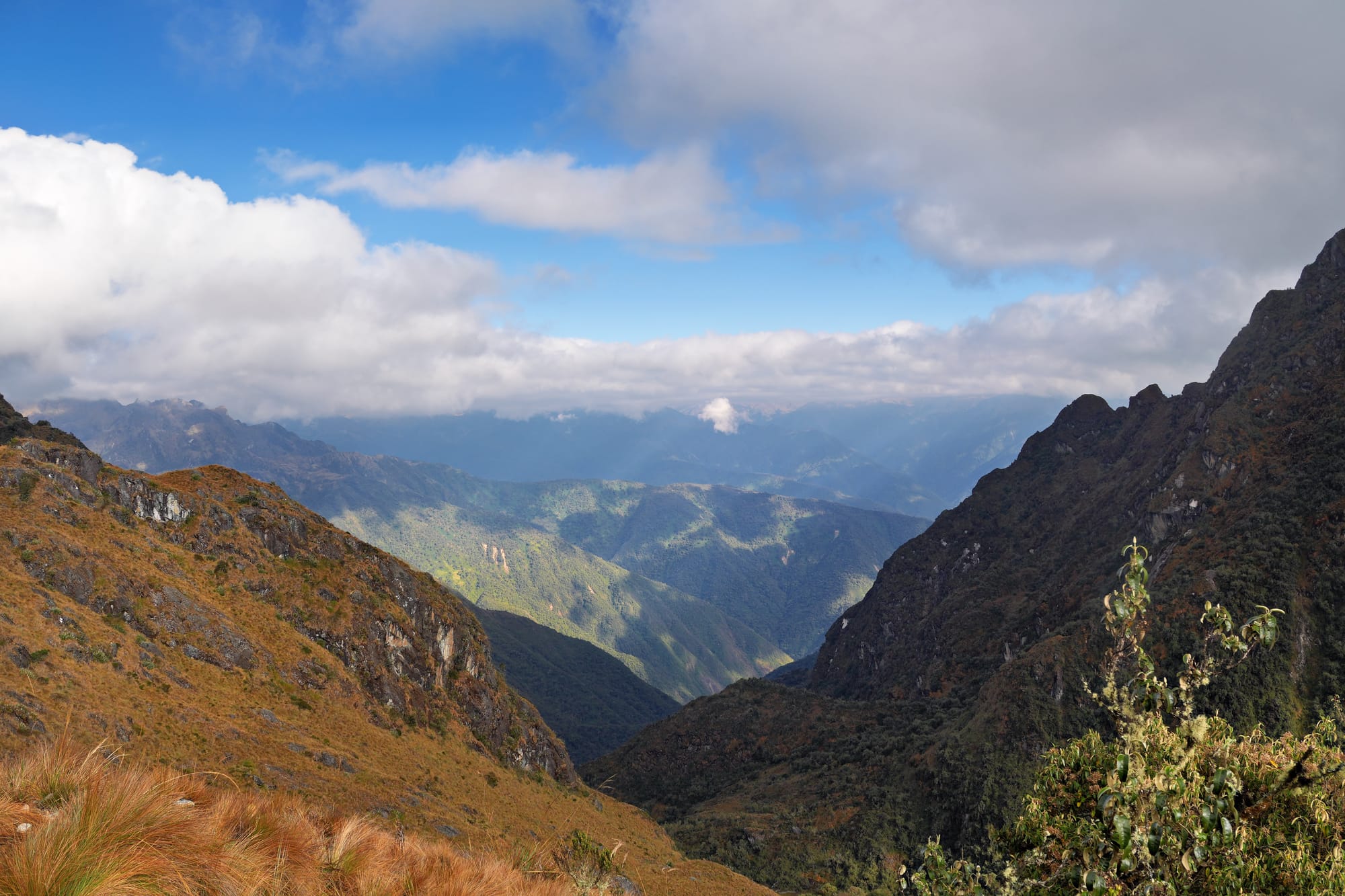
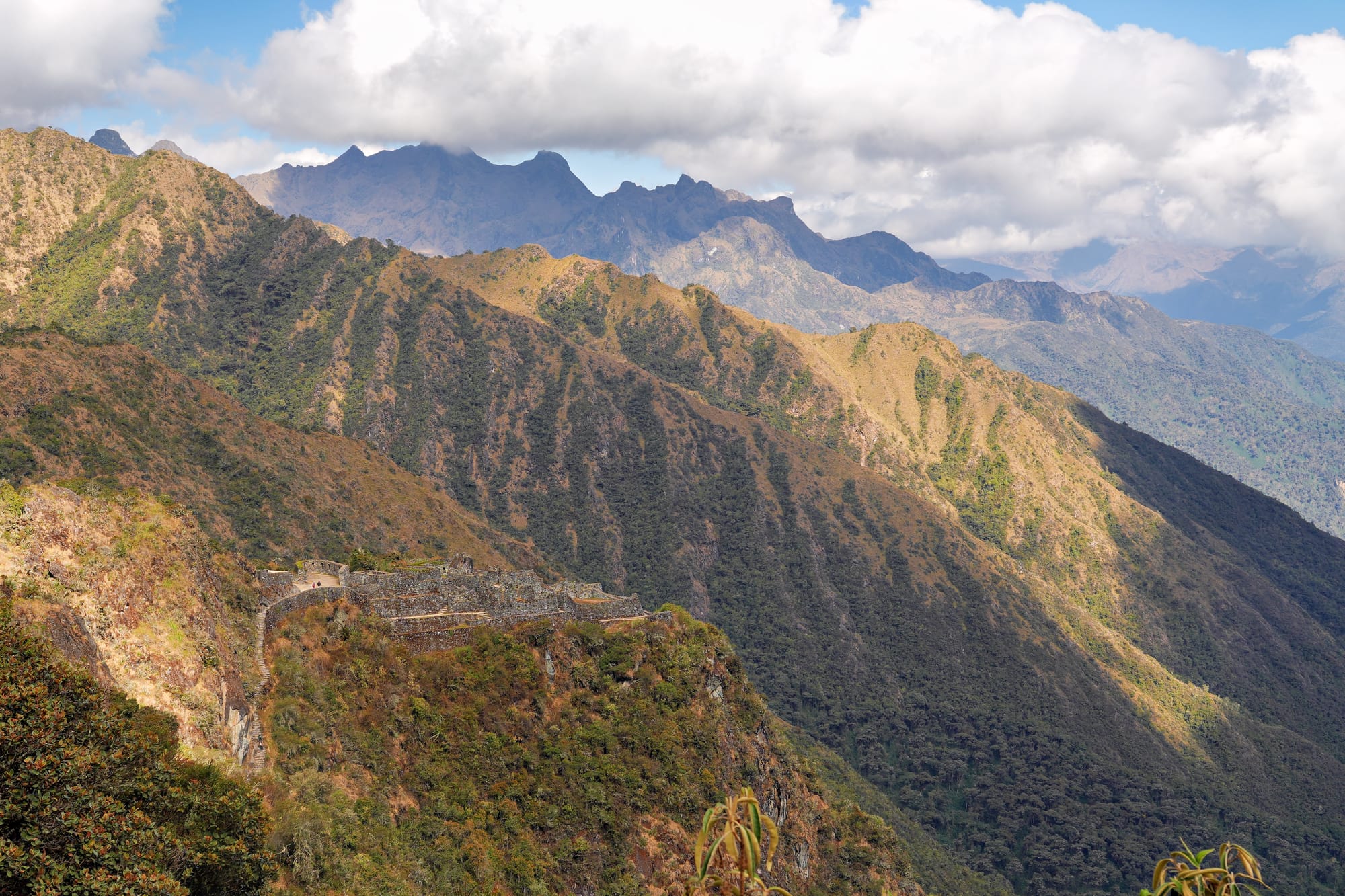
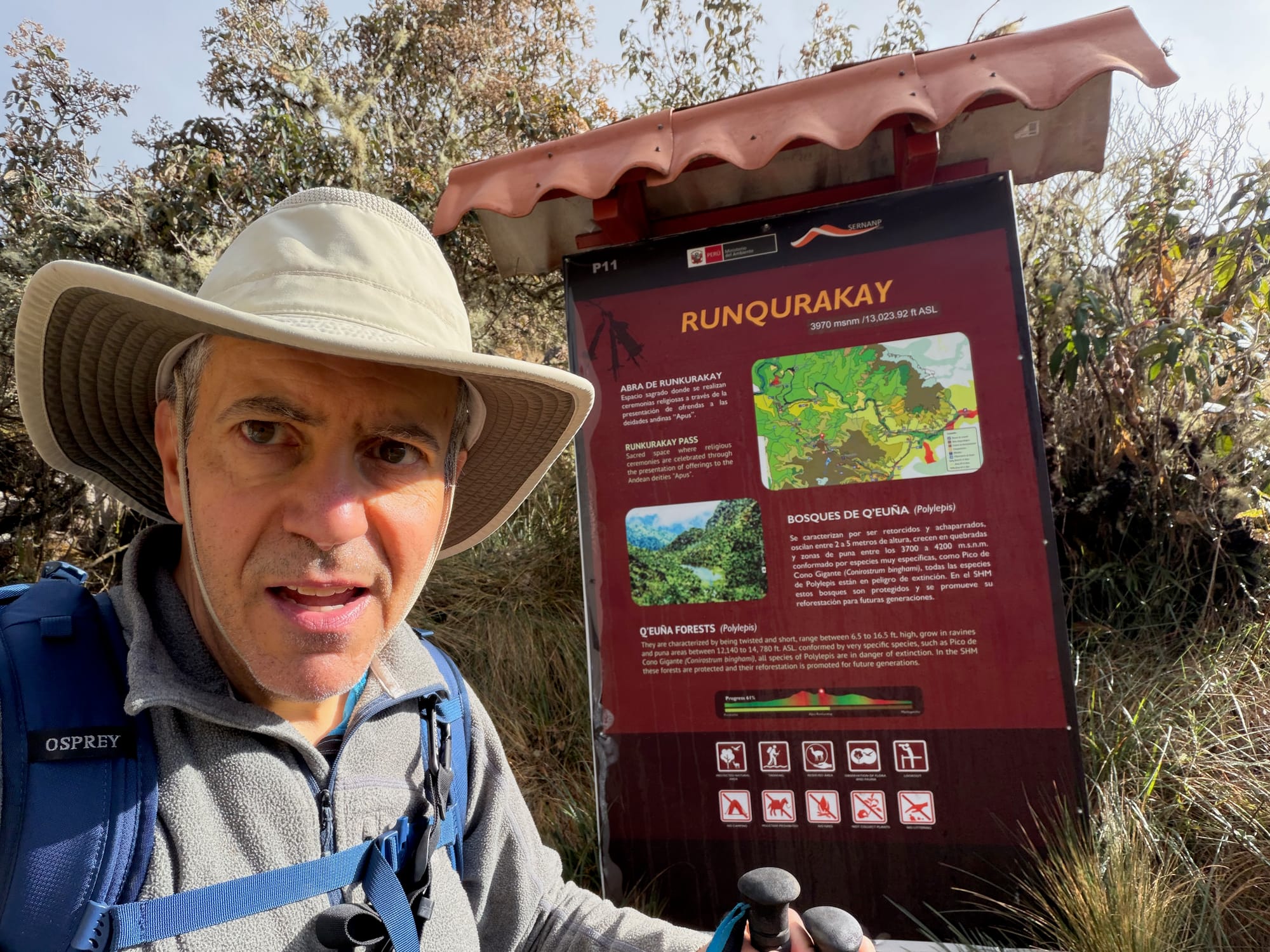
Views from the second summit
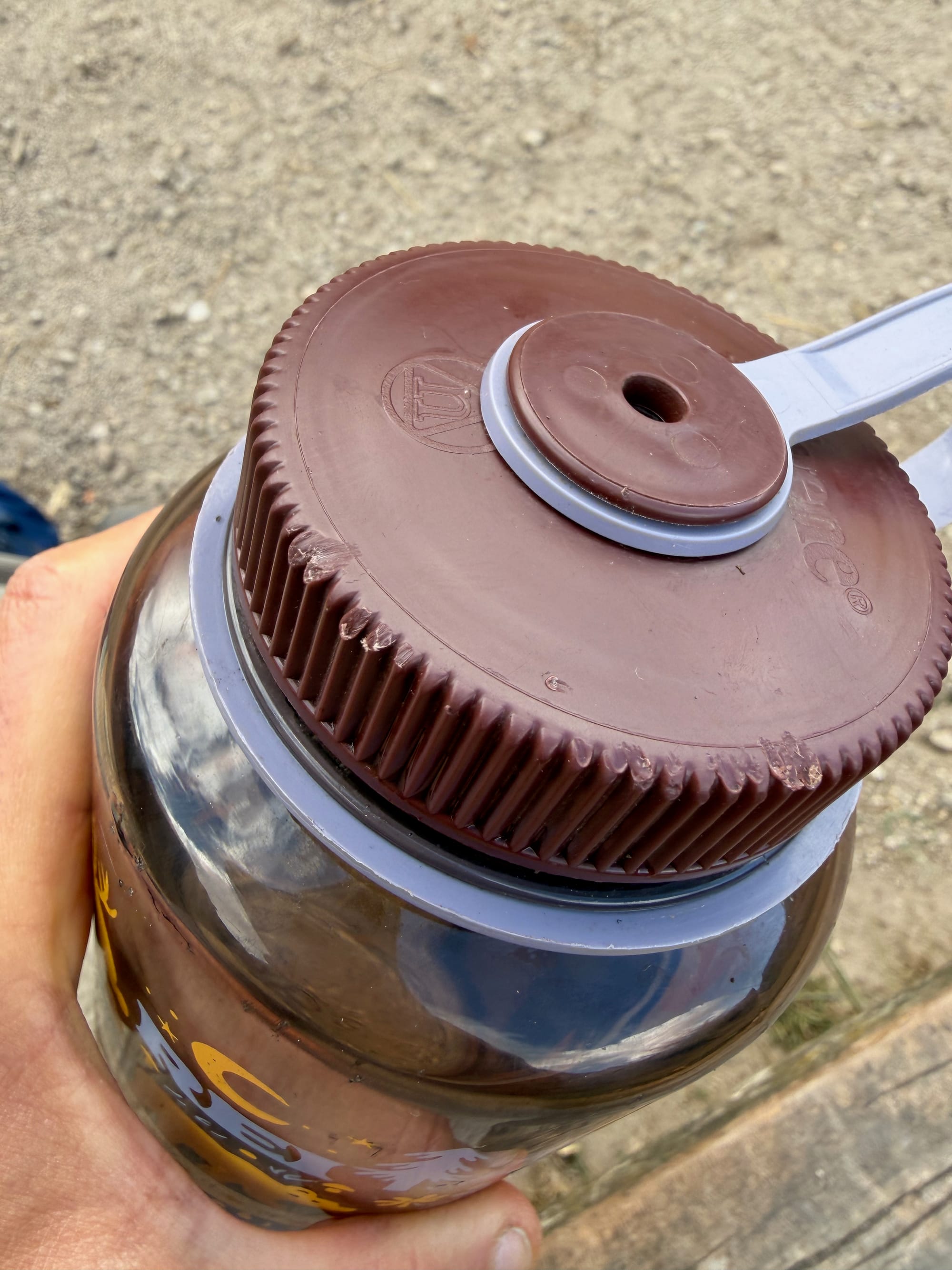
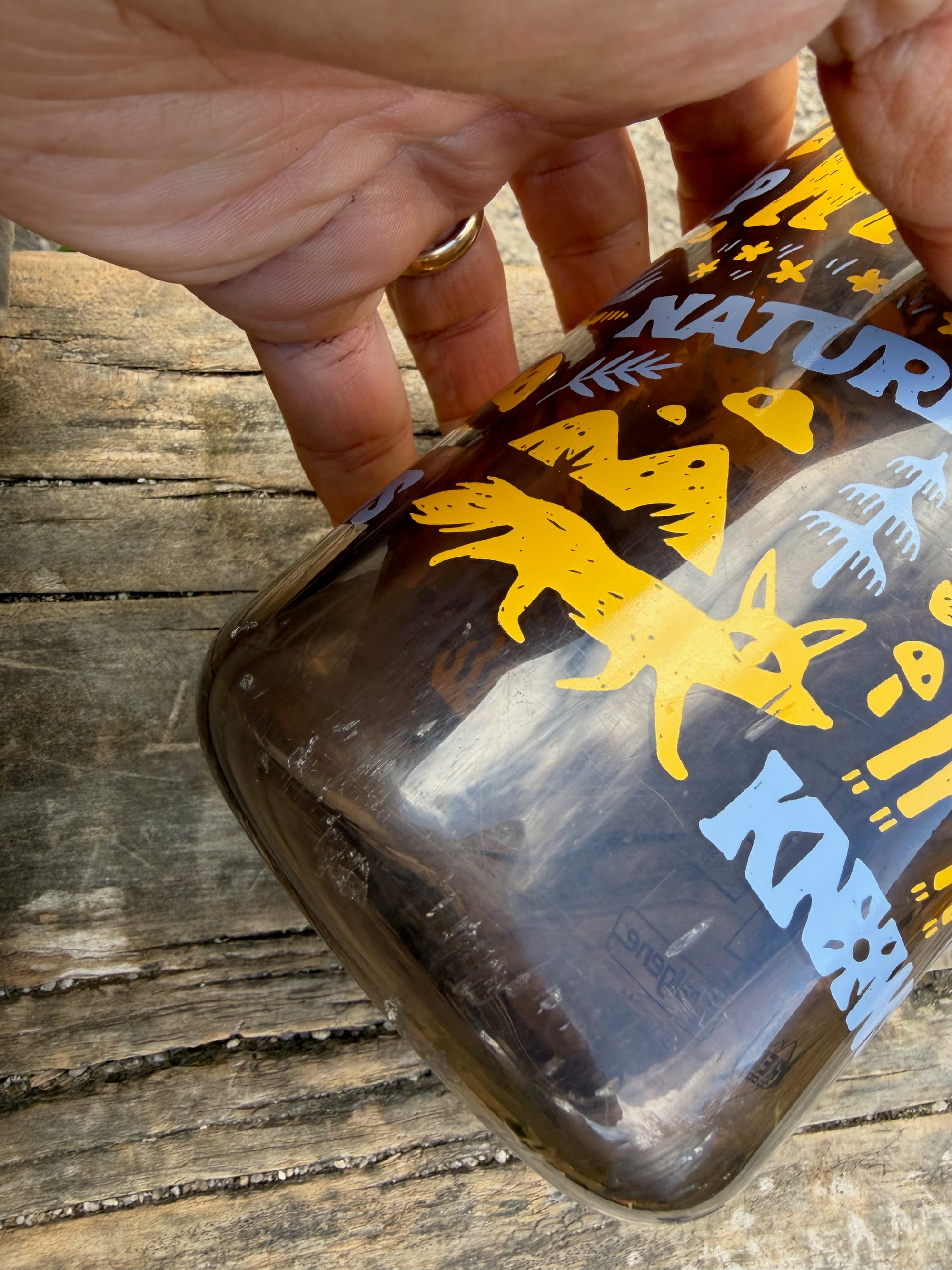
Again, Greg started ahead of the rest. On this side of the pass, we left the desert and entered the jungle: it got warmer and more humid. After descending about 100 steps, Greg’s water bottle fell out of his backpack and tumbled down another 40 steps into a patch of thick grass. It took about 5 minutes to find it. He stashed it back in the elastic holder of the backpack and continued down more steps. And the bottle fell out again. And then again. Finally, he put the water bottle inside a zippered compartment of the backpack. A bit more hassle but less than watching the bottle fall down a cliff. Now the new bottle has character.
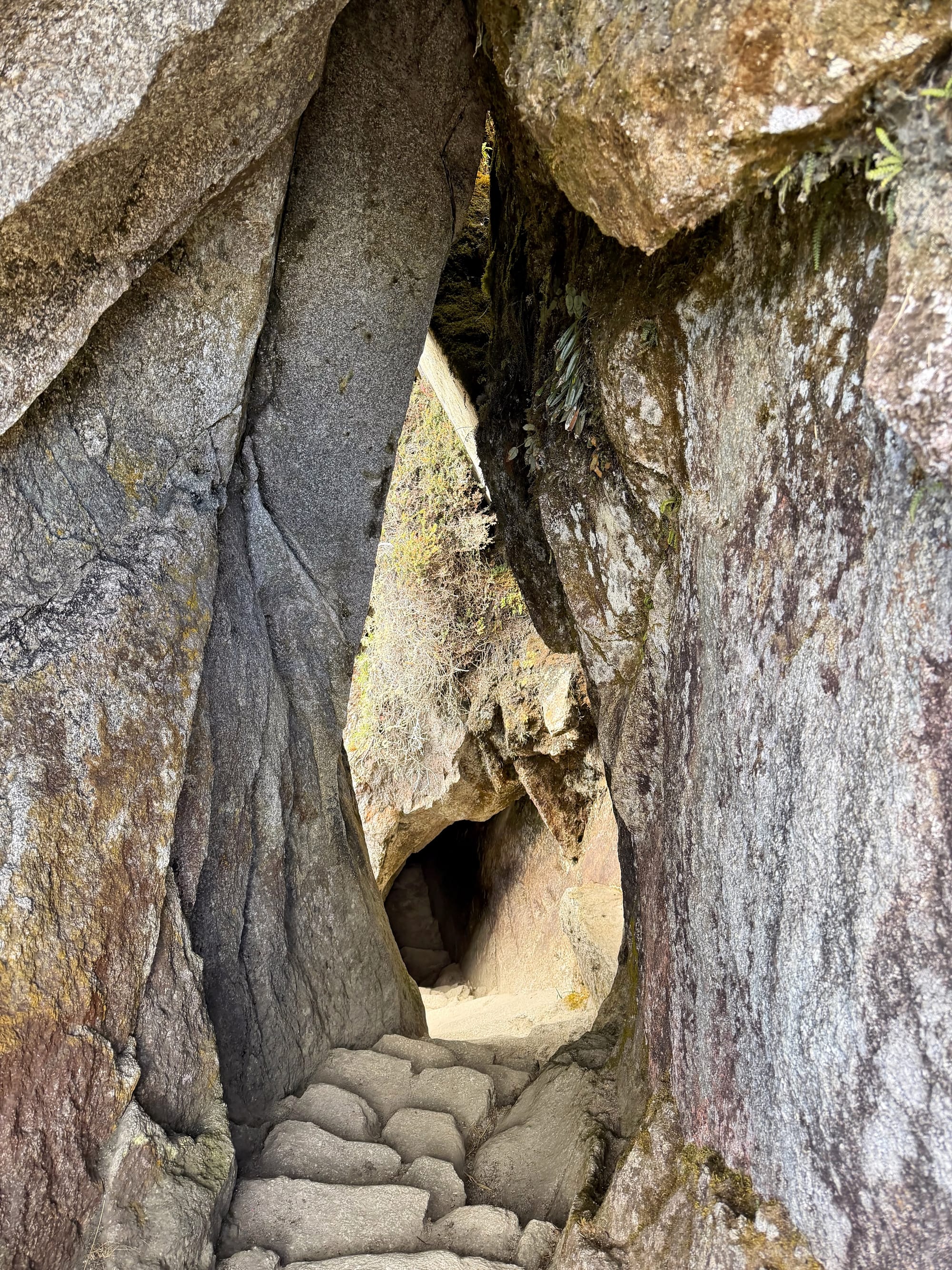
Next, the trail went through a pair of short caves. This was a really nice change of scenery. The descent continued to be challenging: the rocky stairs were uneven, and you had to use hiking poles carefully to avoid falling. Flatter sections were only slightly better: you still had to be careful not to sprain an ankle. Eventually, the group caught up with Greg, and they hiked together to the lunch camp.
We got several bonuses at the lunch camp. First, the support team prepared the biggest feast of the trip: several different preparations of chicken, yuca fritters, quinoa, potatoes, and more. And a cake! Greg is still puzzled that they were able to bake a cake in the primitive camping kitchen. And enclose that cake in gelatin. (They probably set the gelatin via the “natural refrigerator” outdoors overnight).
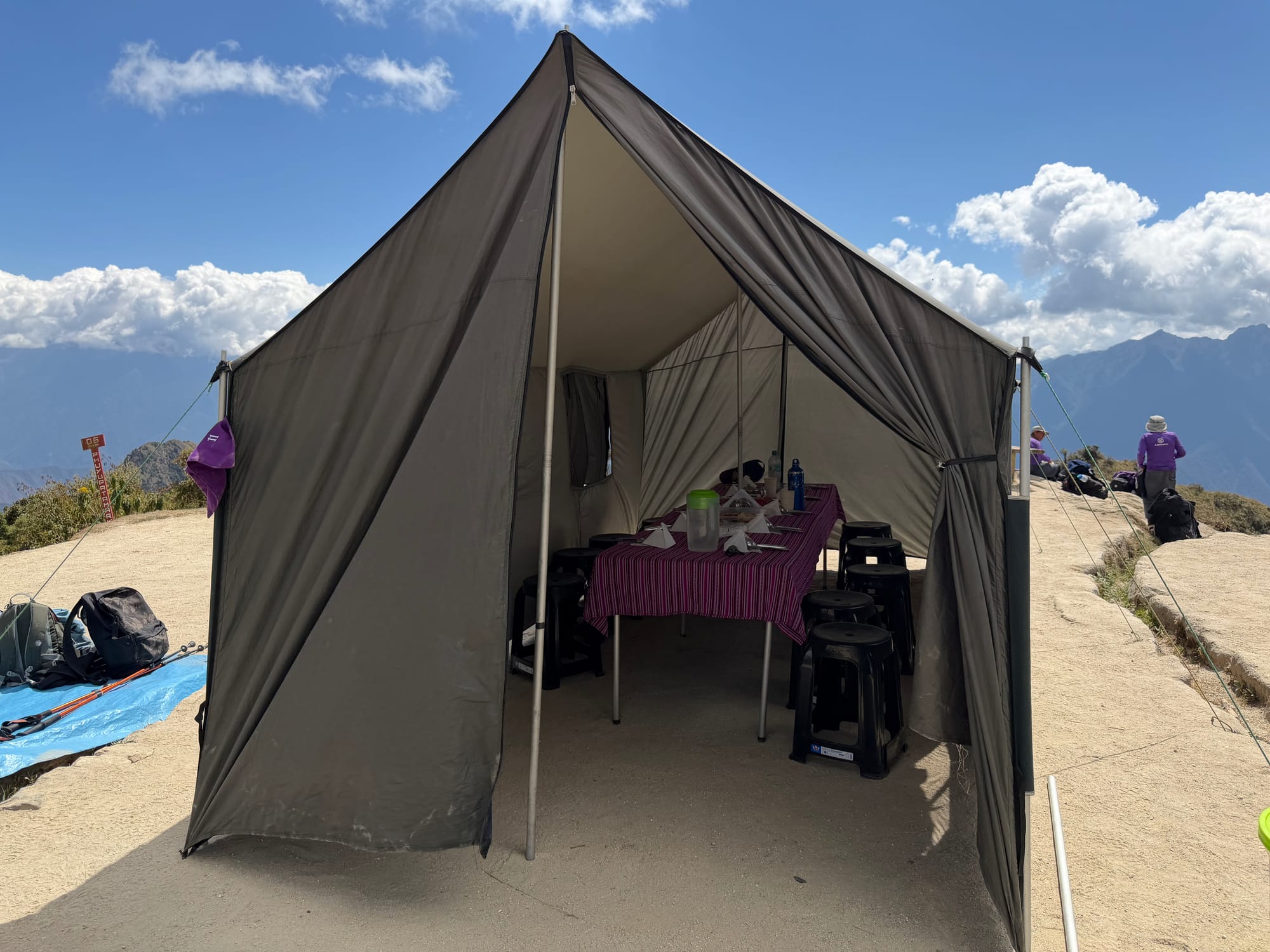
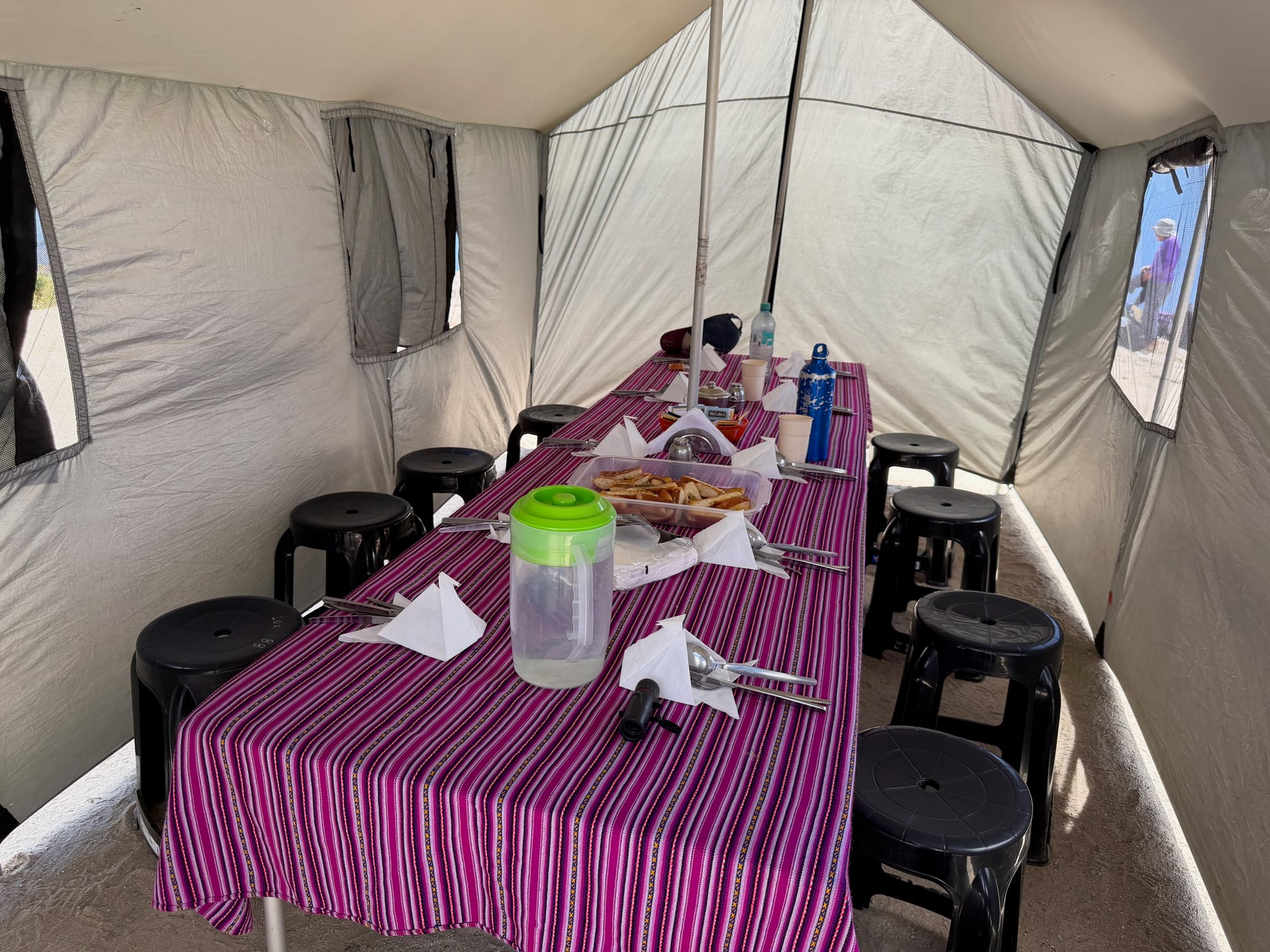
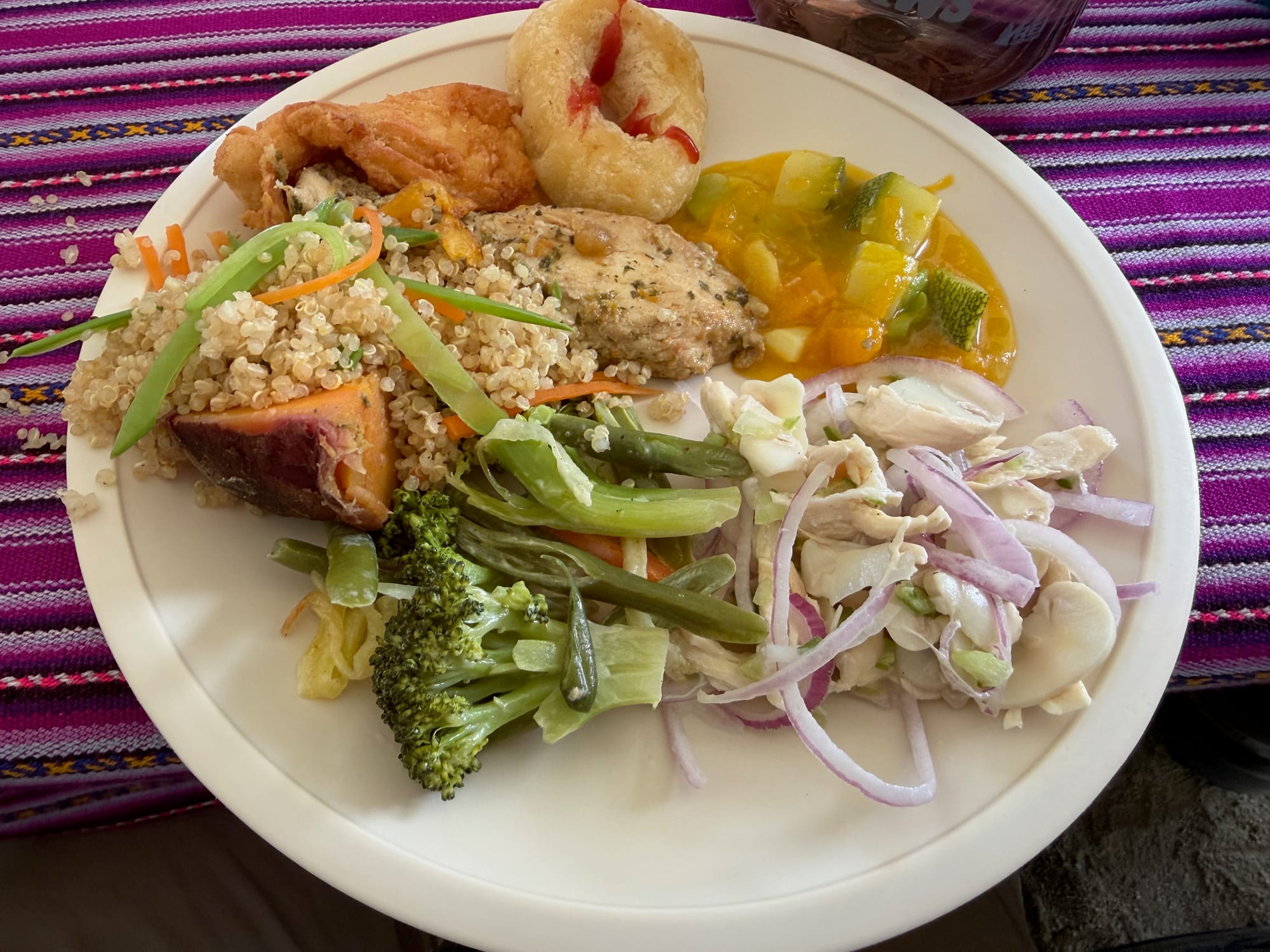
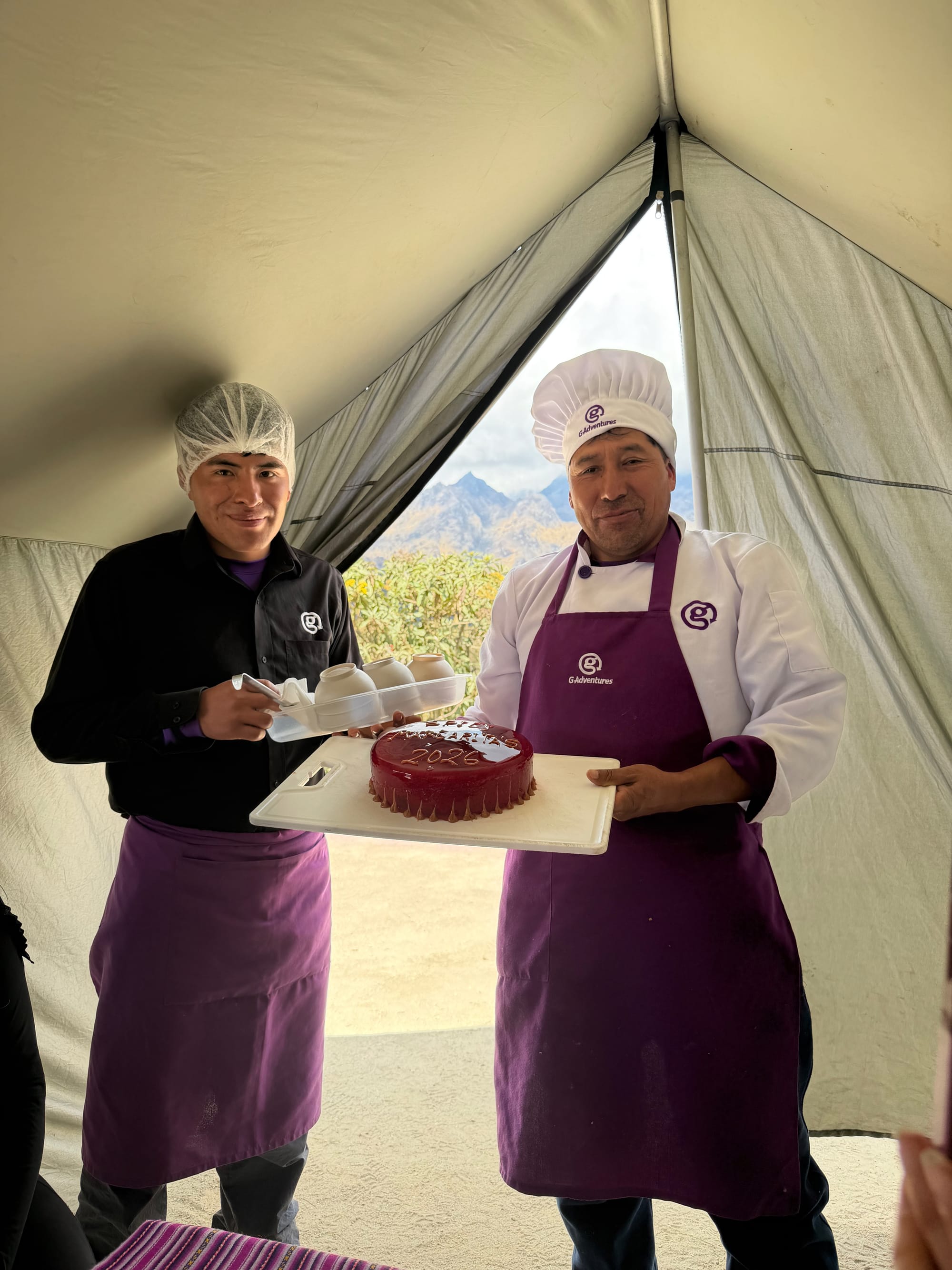
Our lunch feast, with cake!
The second bonus was a view of Machu Picchu. We would not reach Machu Picchu until tomorrow, but at least we could see our goal. And the third bonus was that we got cell phone service for the first time in over 2 days! Everyone checked in with friends and family. Greg sent texts and photos to show that he was alive, but he didn’t mention the altitude sickness so that they would not worry.
After a brief siesta, it was time to continue the descent into the jungle. Our guide Bryan said there were two options for the next segment: the classic Inca Trail, and a second path that was a bit longer but less steep. When Greg came to his senses, he joined Luke, Carrie and the assistant guide Carla on the longer trail. So the younger hikers took the steep, direct trail and the older hikers took the longer trail that followed the mountain ridge. With fewer rocks.
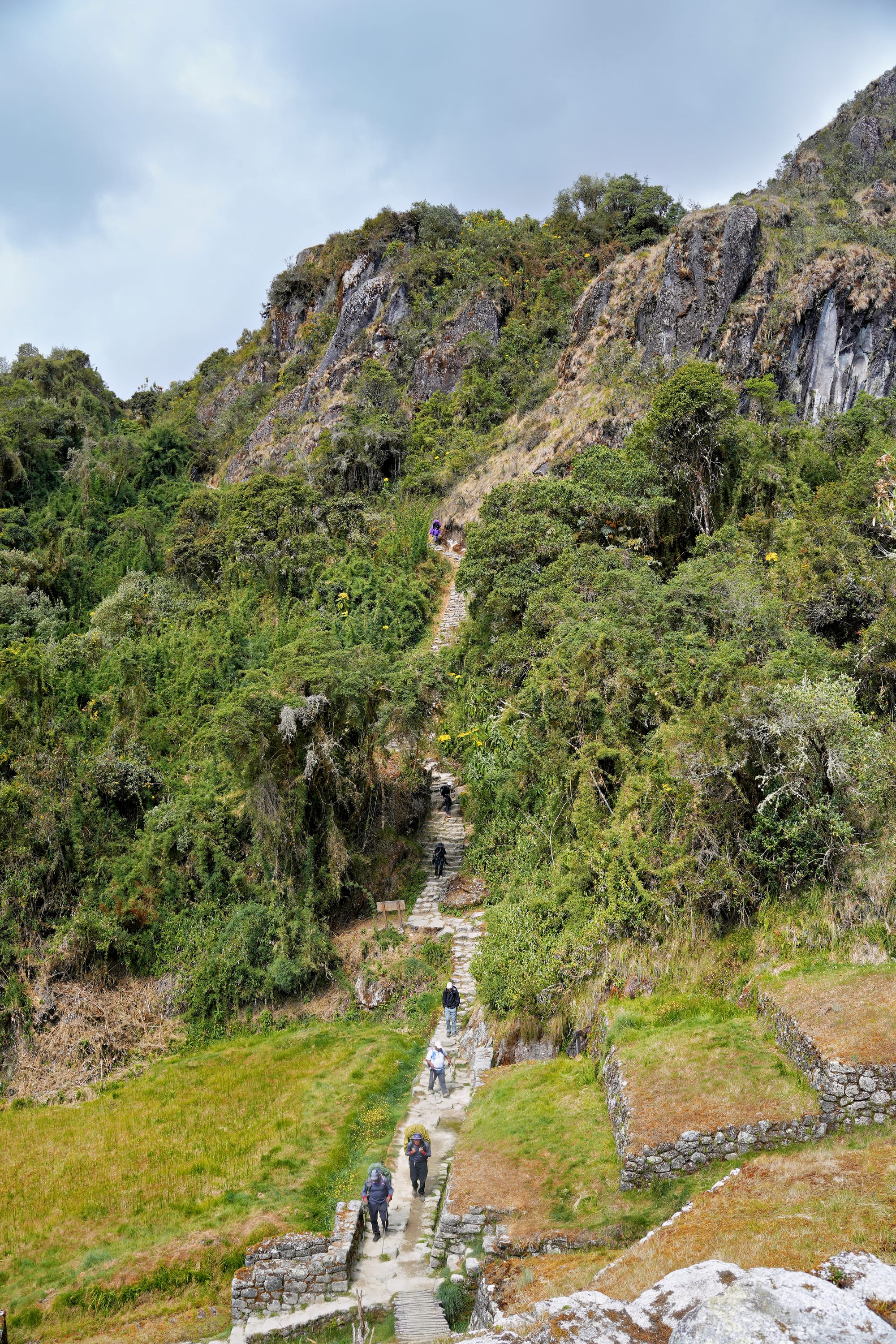
The flatter trail was great until we had to descend to the meeting point at the next Inca site: that final section of the trail had loose dirt, so we had to descend extremely carefully. Greg never fell, but he did have one moment where he had an unplanned sit. We expected to reach the Inca site ahead of the others, but in fact they beat us by about 15 minutes.
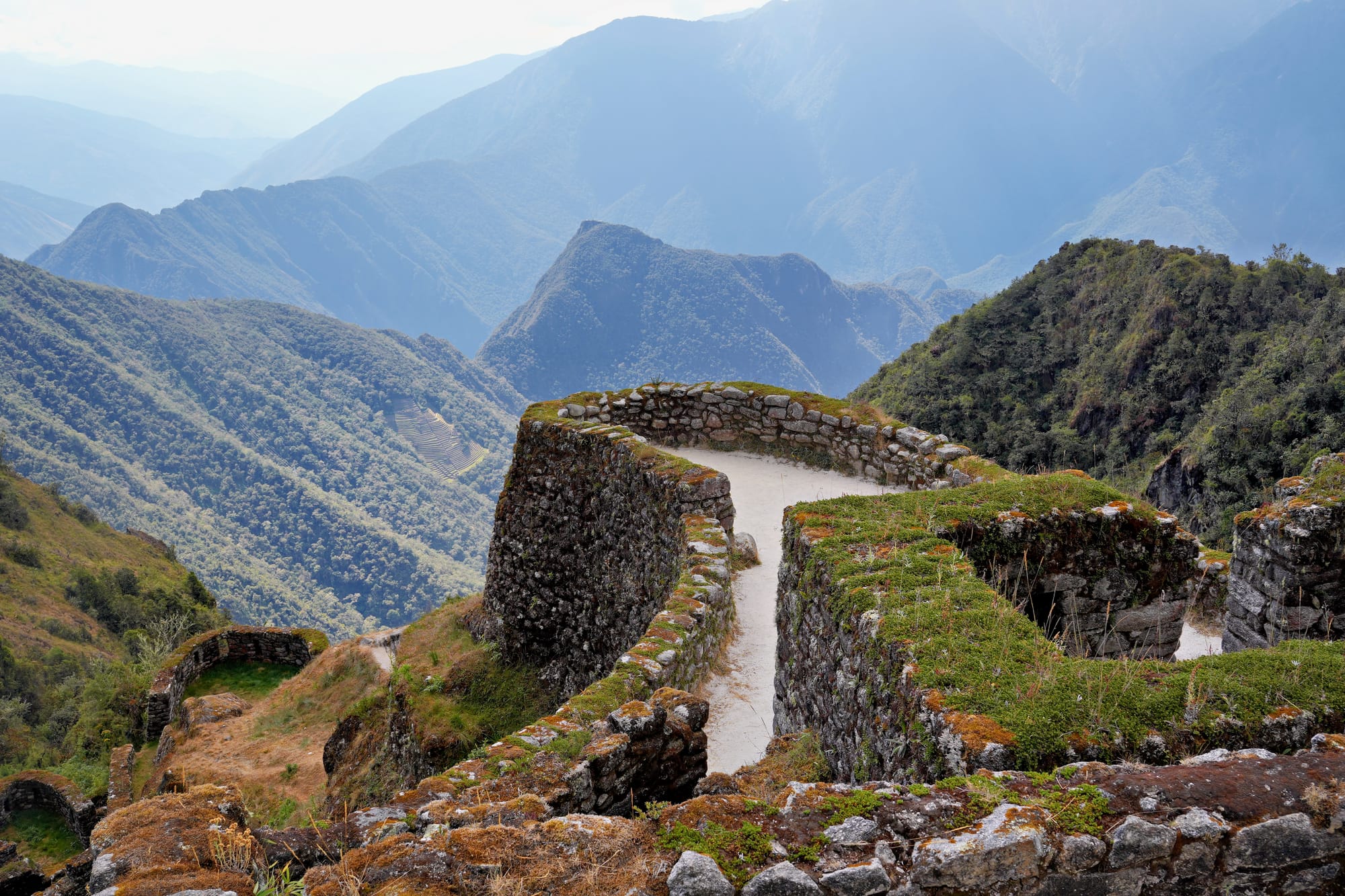
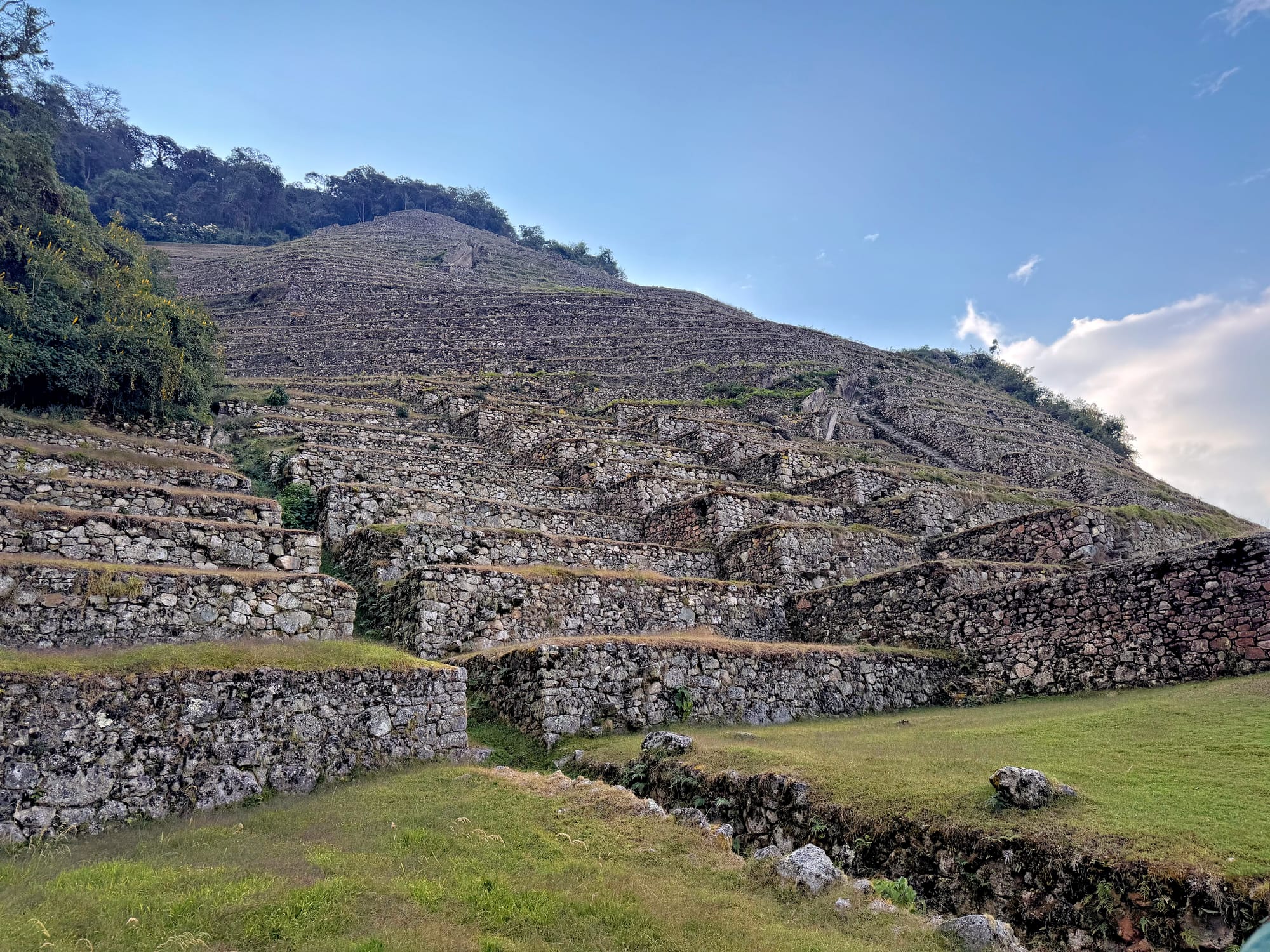
Some Inca sites from Day 3
From here, it would take about an hour to hike to the final campsite, just outside the first checkpoint for Machu Picchu. This campsite was small and crowded with many different tours. And the primitive toilets were disgusting. (Dear reader, you will need to use your imagination as this is a family-friendly blog). After dinner, we collected tips for the chef and porters. The hikers and staff crowded into the dining tent. Ash gave a brief speech to thank Wenceslao, our chef. Next, since Greg was the only one on the tour who could speak some Spanish, he gave a brief speech to thank our porters, saying that they were “muy fuerte” (very strong) and “muy simpático” (very nice), and that “nuestro viaje no es possible sin ustedes” (our trip is not possible without you). Hopefully they appreciated this gesture as much as we appreciated their hard work.
As the day finished, two more people from our tour got sick: one with altitude sickness (even at lower elevation), another with digestive issues. Greg avoided digestive illness by being paranoid about water, fresh produce and cleanliness. Sometimes, it pays to be a germaphobe.
Today was the longest hike of the trip, and we crossed a mountain pass almost as high as the highest one. Greg finished the day feeling very sore. Legs, feet and toes all ached. But the altitude sickness seemed to be over, which was a relief. The goal was in sight.
Statistics
Distance: 16 km / 10 mi
Elevation gain: 449 m / 1474 ft