There’s Copper in Them Thar Hills
Today we drove 58 miles on a gravel road to the town of McCarthy. It was a dry run for our upcoming drive on the Dempster Highway. Bumpy, mostly ungraded, but luckily we saw very few others on the road. We made it in one piece and have confidence in R2V2’s abilities on rough roads.
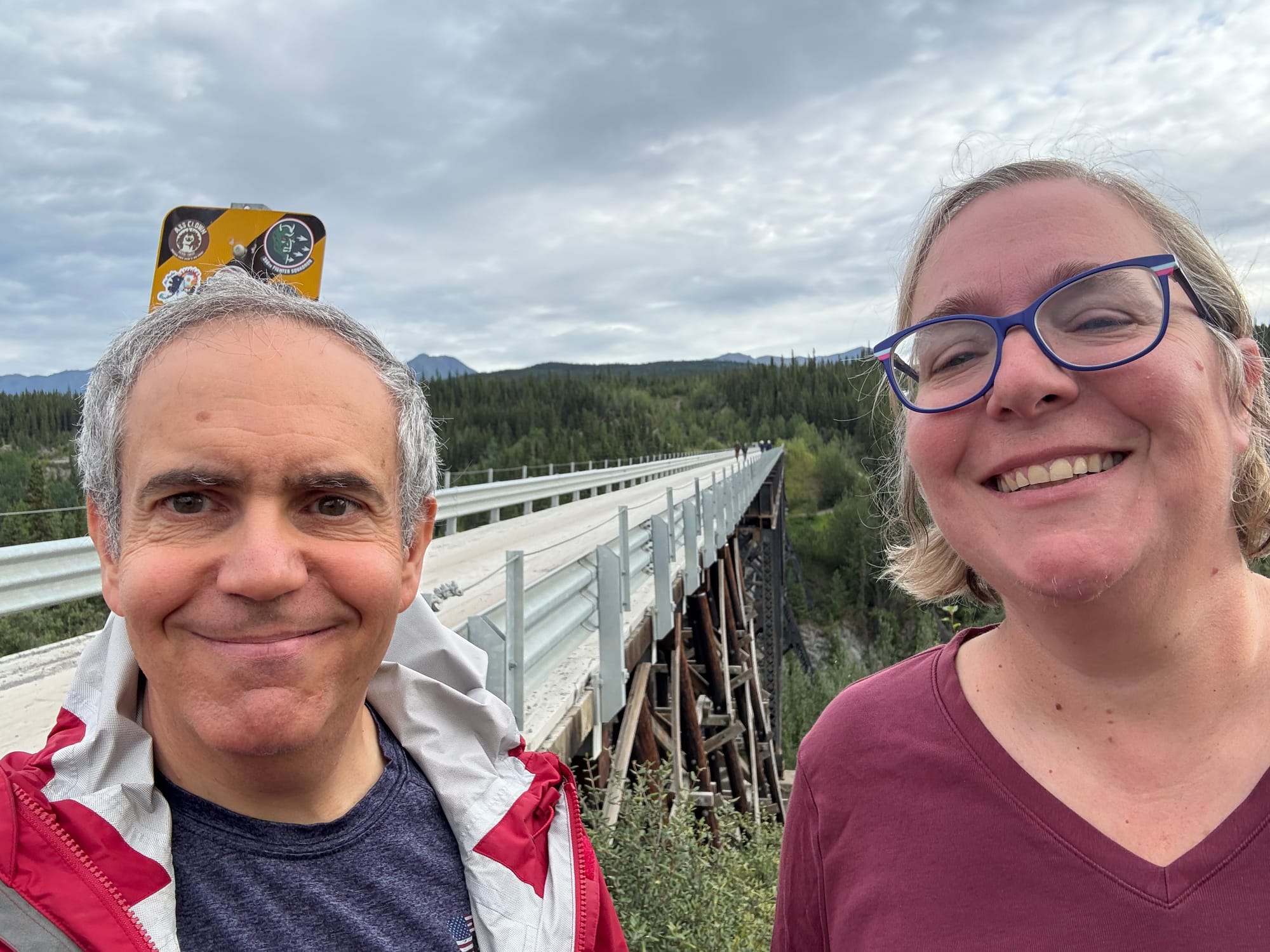
McCarthy is a town that was built up to support the copper mining operation in Kennecott, which is about five miles away. The road that we took today was originally the railroad route. Once you reach the river, you cannot drive the rest of way to McCarthy or Kennecott; you can either walk or pay for a shuttle bus.
McCarthy had everything a miner needed: shops, food, bars and brothels. After the mines closed, some people stayed in McCarthy for fishing and trapping. The town is now just a hub for tourists with three restaurants and a few B&Bs.
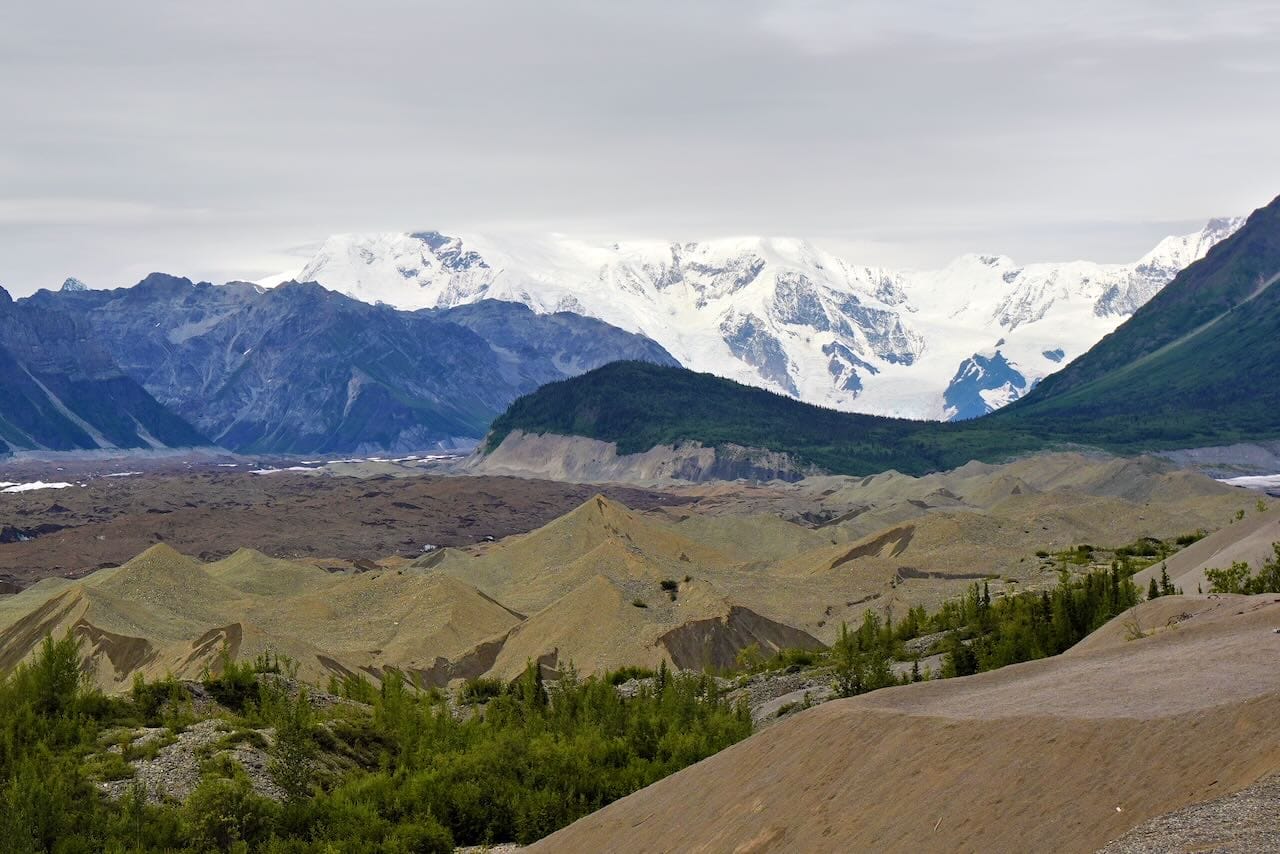
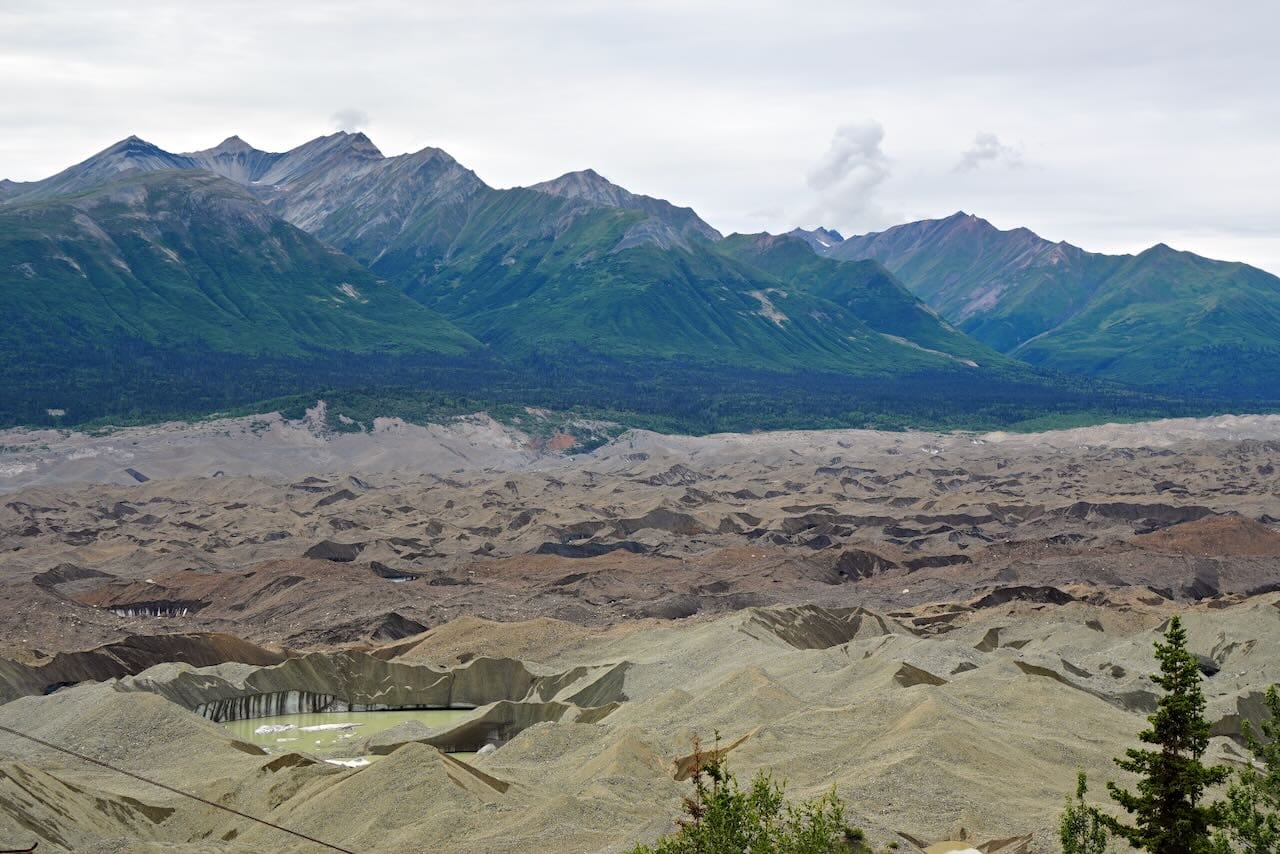
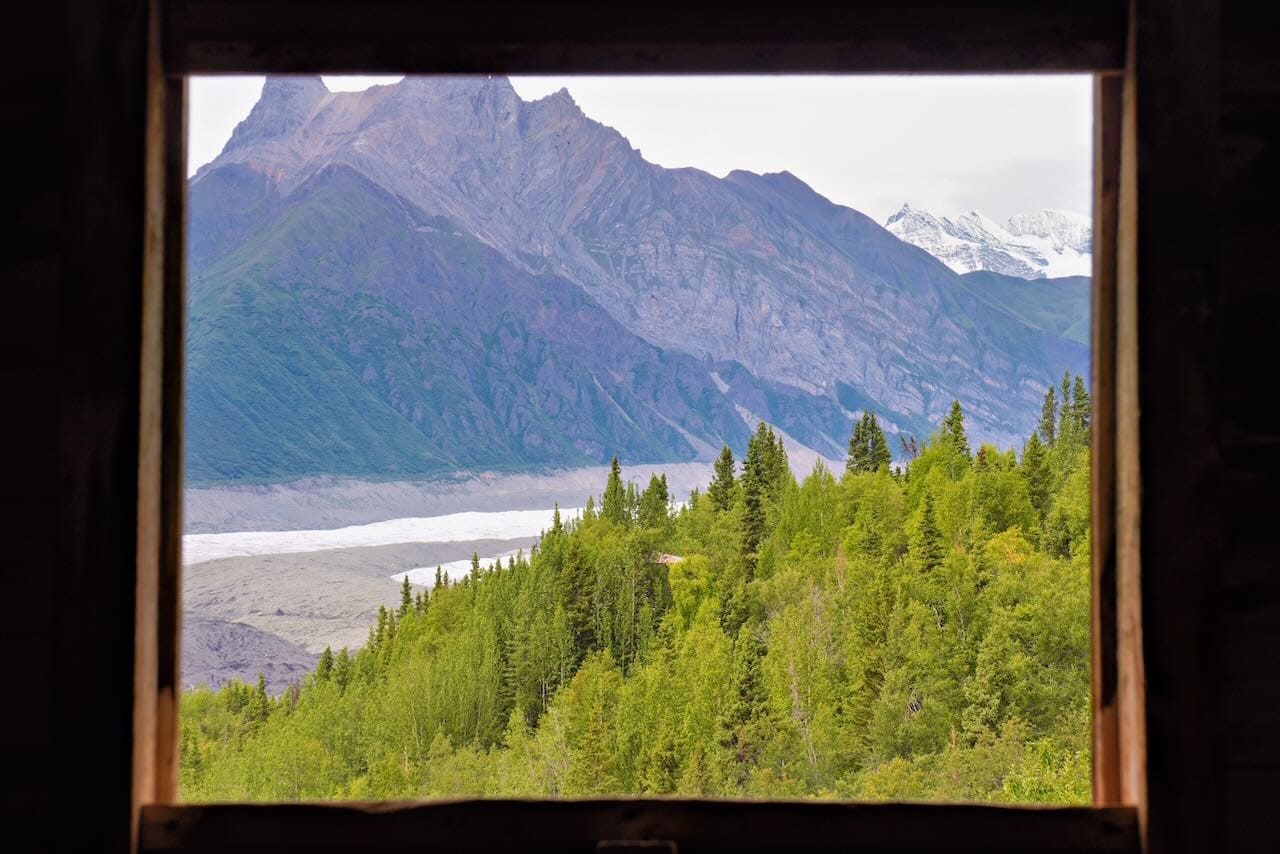
Views of the mountains and glacier from the mining town of Kennecott - the small brown hills in the foreground are actually glacier covered with moraine (glacier rocks)
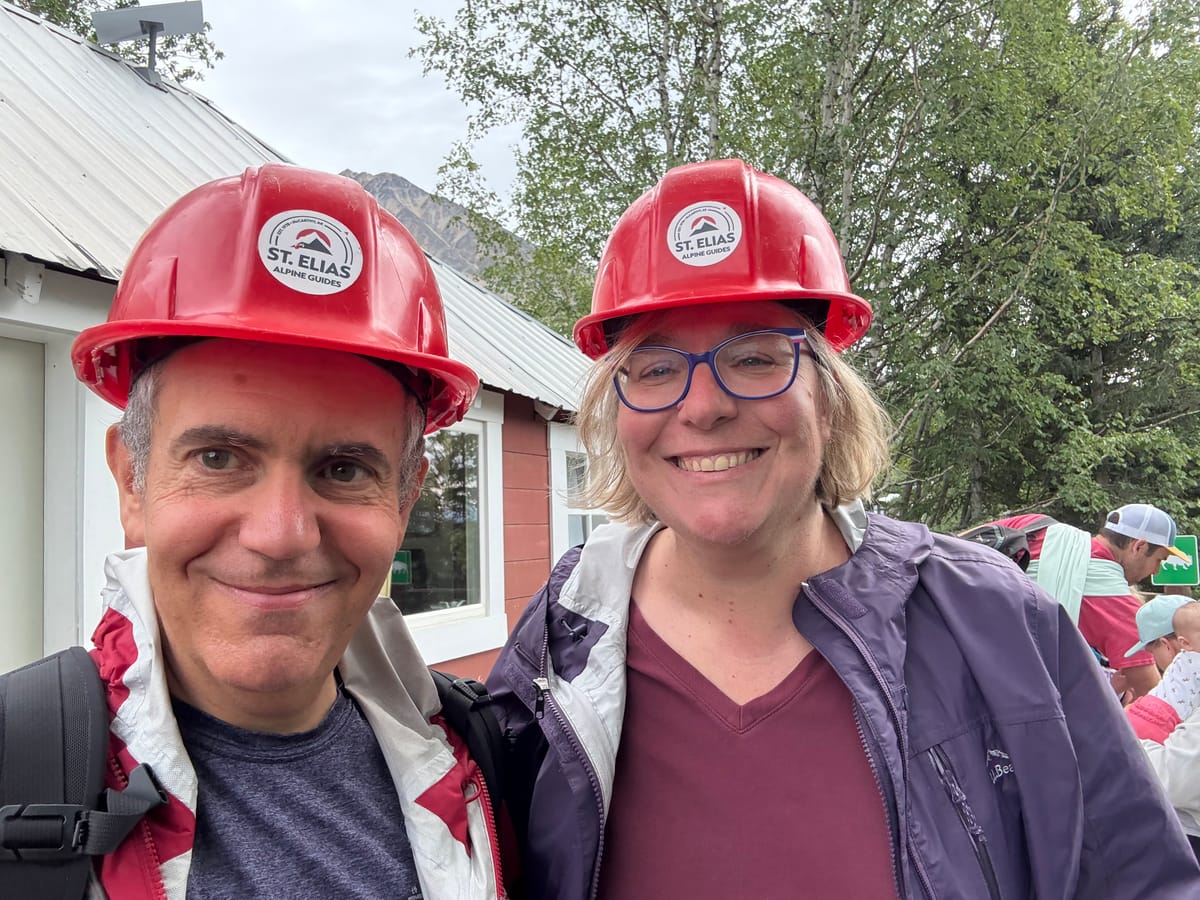
Today we took a tour of the mill used to separate the copper ore from the limestone. It is a 14-story building, the second largest timber building in North America (the largest is in Alberta). No cement was used to support the building. The mine ran from 1910 to 1938, when the lode became dry and the price of copper sank. The mine complex sat idle until the 1970s when tourists started visiting. The wooden buildings grew dilapidated from the harsh Alaska weather. In the 1980s the National Park Service took it over when Wrangell-St. Elias became a National Park. In the early 2000s, restoration work began, which is why we could take a guided tour of the mill. While there has been a lot of restoration, it isn’t in great shape. The mill is not open to tourists without an official guide, and we had to wear hard hats in the mill.
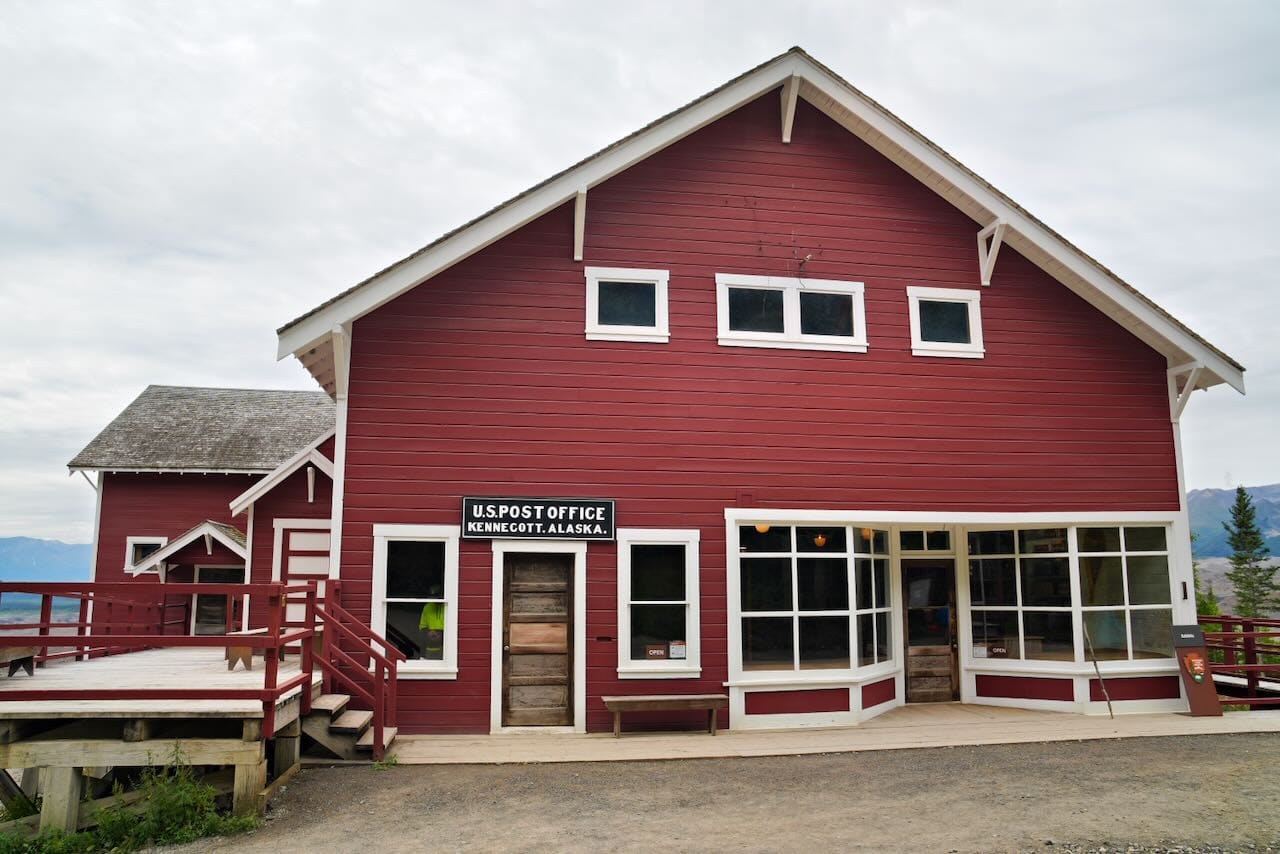
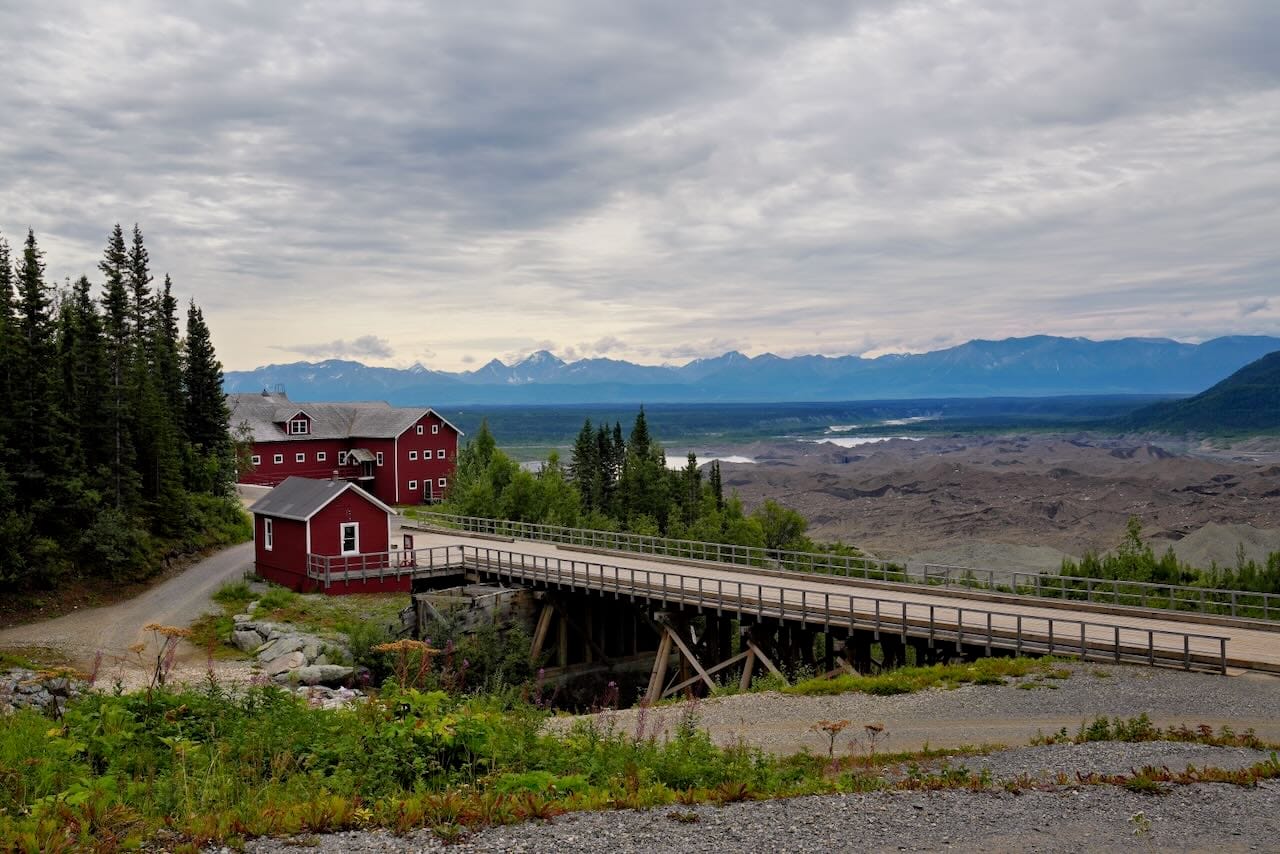
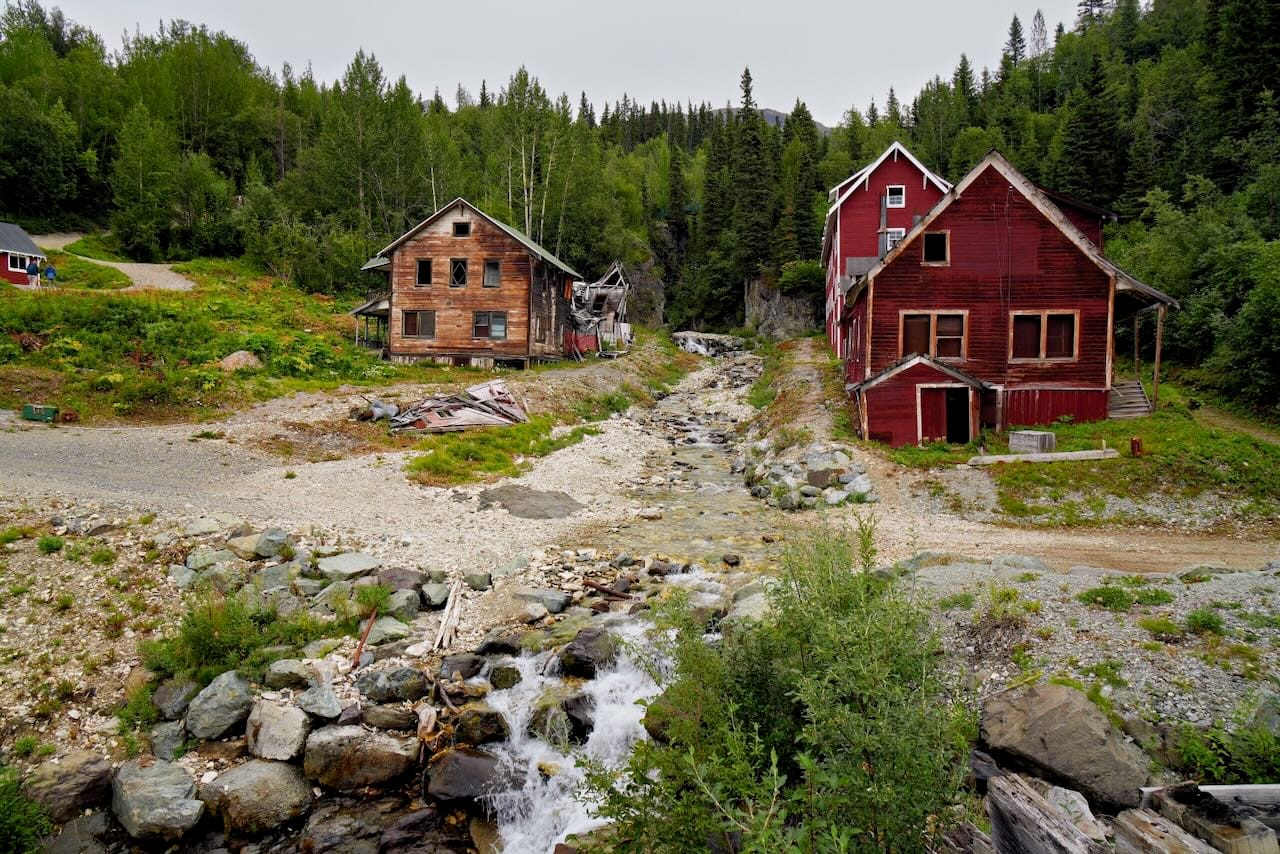
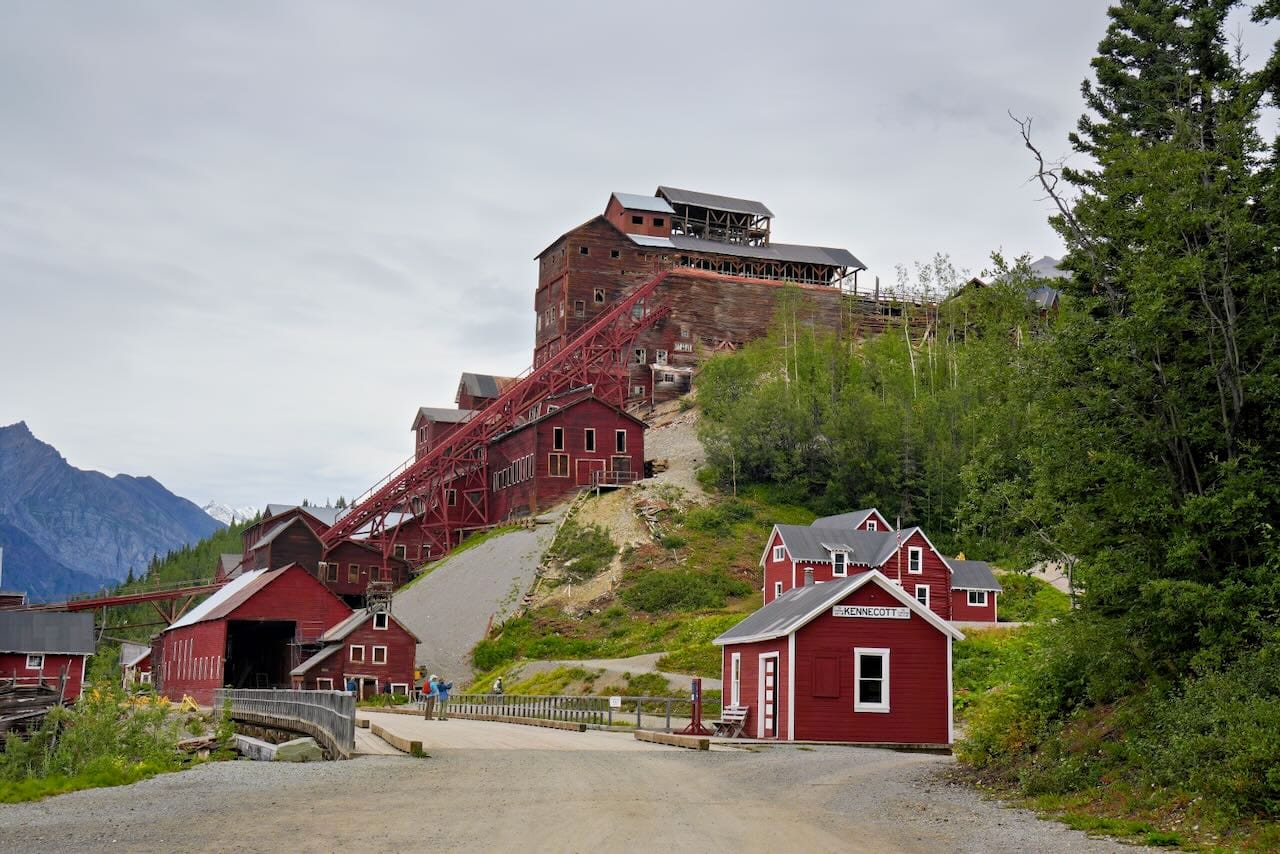
Some of the remaining buildings from the mining operation; they are painted red because that was the cheapest color
While we waited for our tour to start, a Park Ranger gave a talk about how people found this copper, on a mountain in the middle of nowhere in a hard to reach location. She explained that native tribes found copper nuggets in the streams and used the copper to make arrows and pots and other useful tools. The first westerners learned about the copper from the locals. A couple of men trying to make it rich discovered the ore. One was named Tarantula Jack. A perfect name for a miner! They found some copper on the mountain, then brought out experts to make sure that the operation was viable. They raised $100,000 from wealthy robber barons, ones you have heard of like Carnegie. They produced $400,000 worth of copper. Pretty good return on investment.
For our tour, we hiked to the top of the mill building then walked down the interior through all 14 stories. The steps were very narrow. We had to climb down backwards on a couple of staircases. If it were built today, it’s hard to imagine that OSHA would approve the work site. The floors were purposely on an angle, so that water would flow down. In a couple of places, Greg was overwhelmed by agoraphobia (fear of heights) and had to hold onto Amy and one other guest.
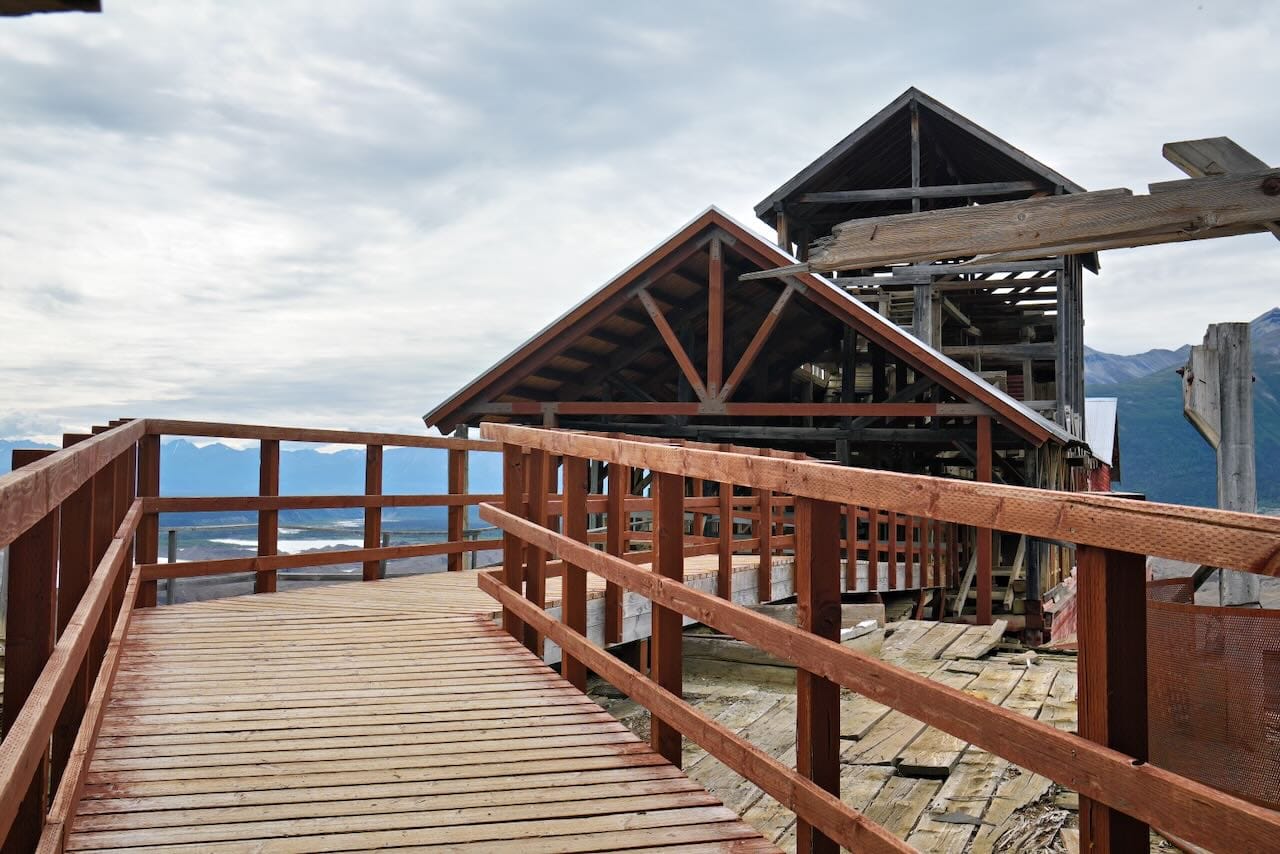
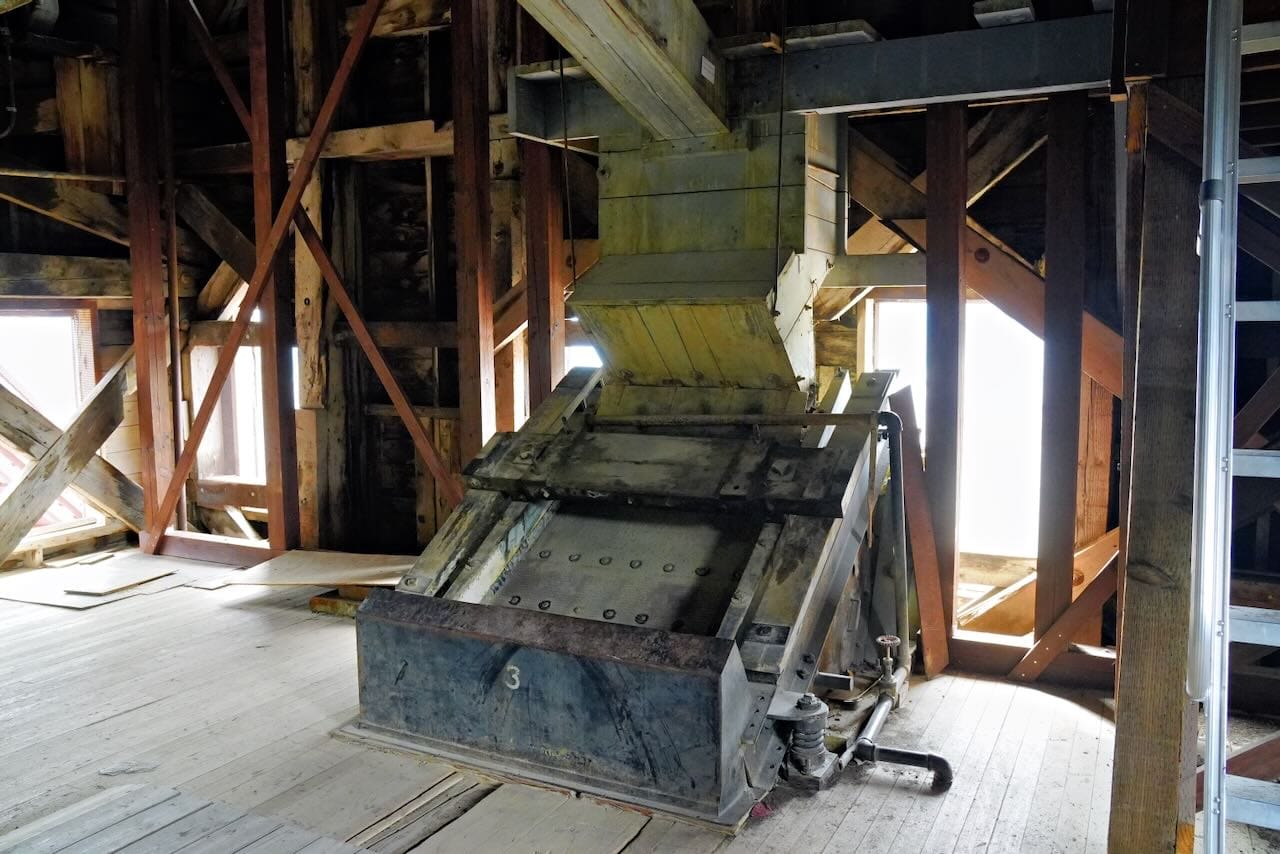
Parts of the mill
We learned how they got the rocks down from the mountain. They had two gondola systems that used gravity to run: the buckets from the top would be heavy with ore, which would lift the empty buckets back to the top. They had a photo of the men using the buckets as transport. They were standing on a bucket of rocks, holding onto the cable above. It looked precarious. Our guide told us that about 20 men died riding on the buckets. Not exactly a Disney ride.
Once the rock made it to the mill, there were three steps: crushing, sorting and packing. They crushed the rocks into the size of a pea. This allowed them to get separate the copper from limestone, which was waste. They sorted the ore depending on the amount of copper in it. The ones with less copper needed more processing. In later years, they used ammonia, which absorbed the copper to extract even more copper from the limestone.
We learned a lot about the community. The miners and processors were all men. They were not allowed to be married. If they fell in love with one of the women working in one of the support jobs, they would be fired. Only the managers were allowed to have families, so the local small school was exclusive for their children. They also used the school in the evenings to teach English to the Japanese employees who worked in the kitchen.
There was a lot of information that we absorbed today. We are really glad that we were able to take this tour.