Most Remote National Park in North America?!
Since Greg is still not fully recovered from his injury, he started the morning by kayaking instead of running. We’re really enjoying the ability to launch a kayak just steps from our vacation spot. While Greg was paddling, Amy started with outdoor yoga on our patio, a treat thanks to the mild weather.
Our big activity of the day was to visit Dry Tortugas National Park. Dry Tortugas is located about 70 miles west of Key West. In fact, the Florida Keys continue west past Key West, but these additional islands are smaller and further apart, so they weren’t settled. One exception is Dry Tortugas, which was a fort and later became a prison, before finally turning into a National Park. As a prison, it seems even more remote than Alcatraz, and it’s hard to imagine anyone escaping. It has a fascinating history involving Ponce de Leon, Audubon and even those involved with the assassination of Abraham Lincoln (obviously not at the same time!).
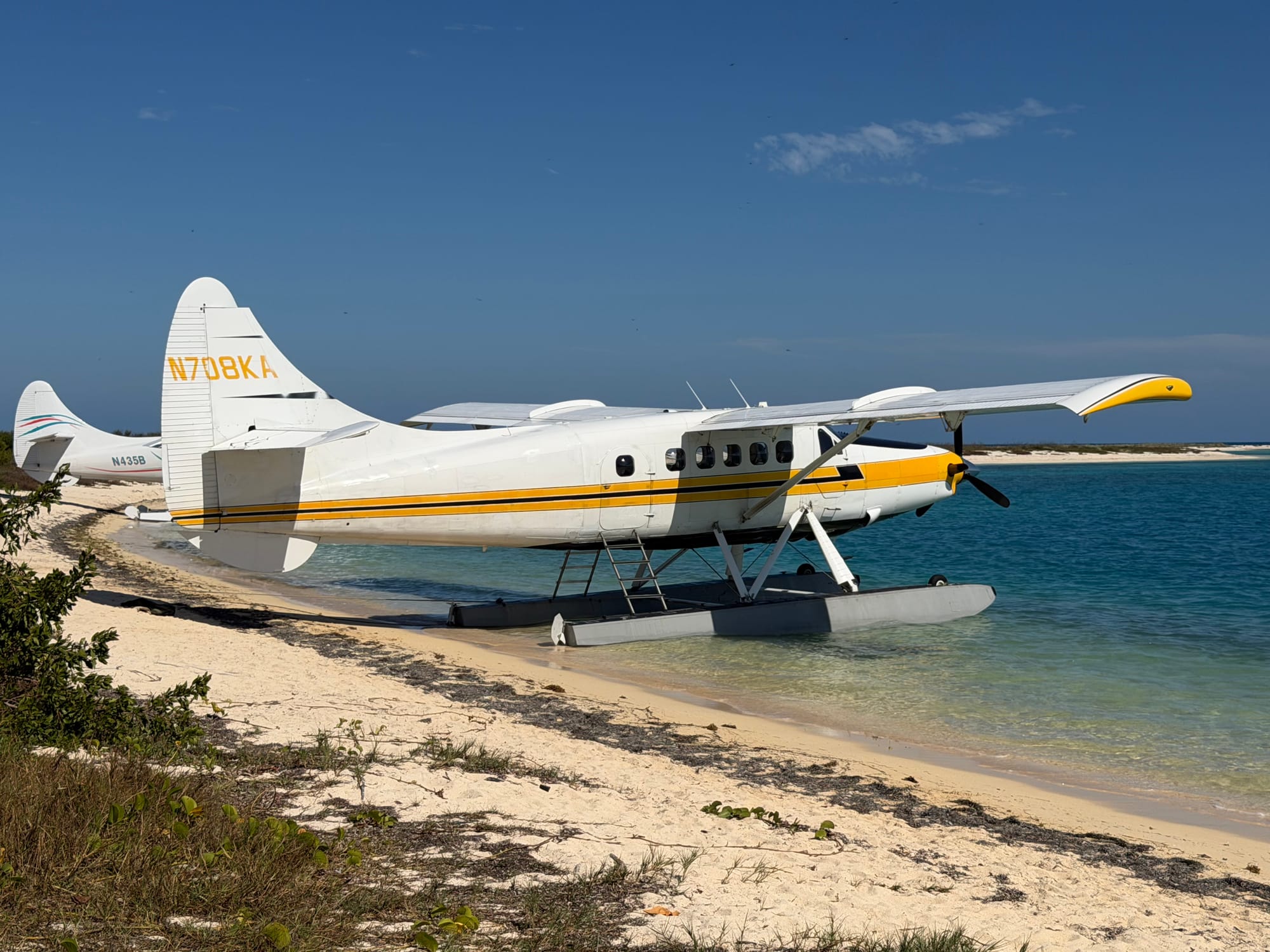
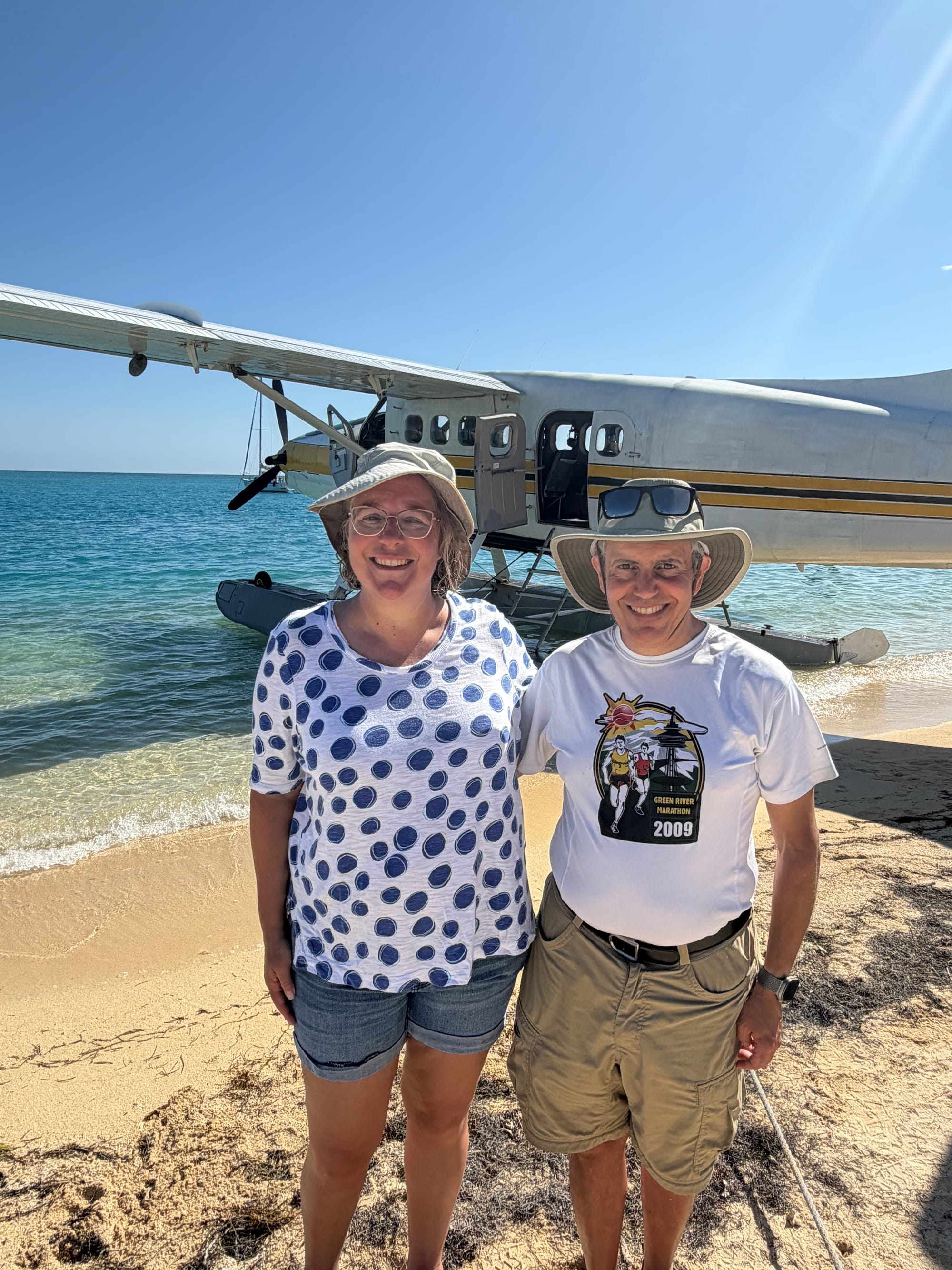
There are only 2 ways to get to Dry Tortugas: by boat or by seaplane. Of course we took the seaplane, though largely because the boat was sold out by the time we booked this trip. In fact, this was the only day we could get a reservation, and we worked our schedule around this trip to Dry Tortugas. A fringe benefit is that the park is not crowded at all. Like our visit last summer to Katmai National Park, the seaplane took off from a regular runway (at Key West airport), then landed in the water at Dry Tortugas. Even better, our plane was recently acquired from Seattle’s Kenmore Air, and it had the call sign and paint to match! (No more lettering, though).
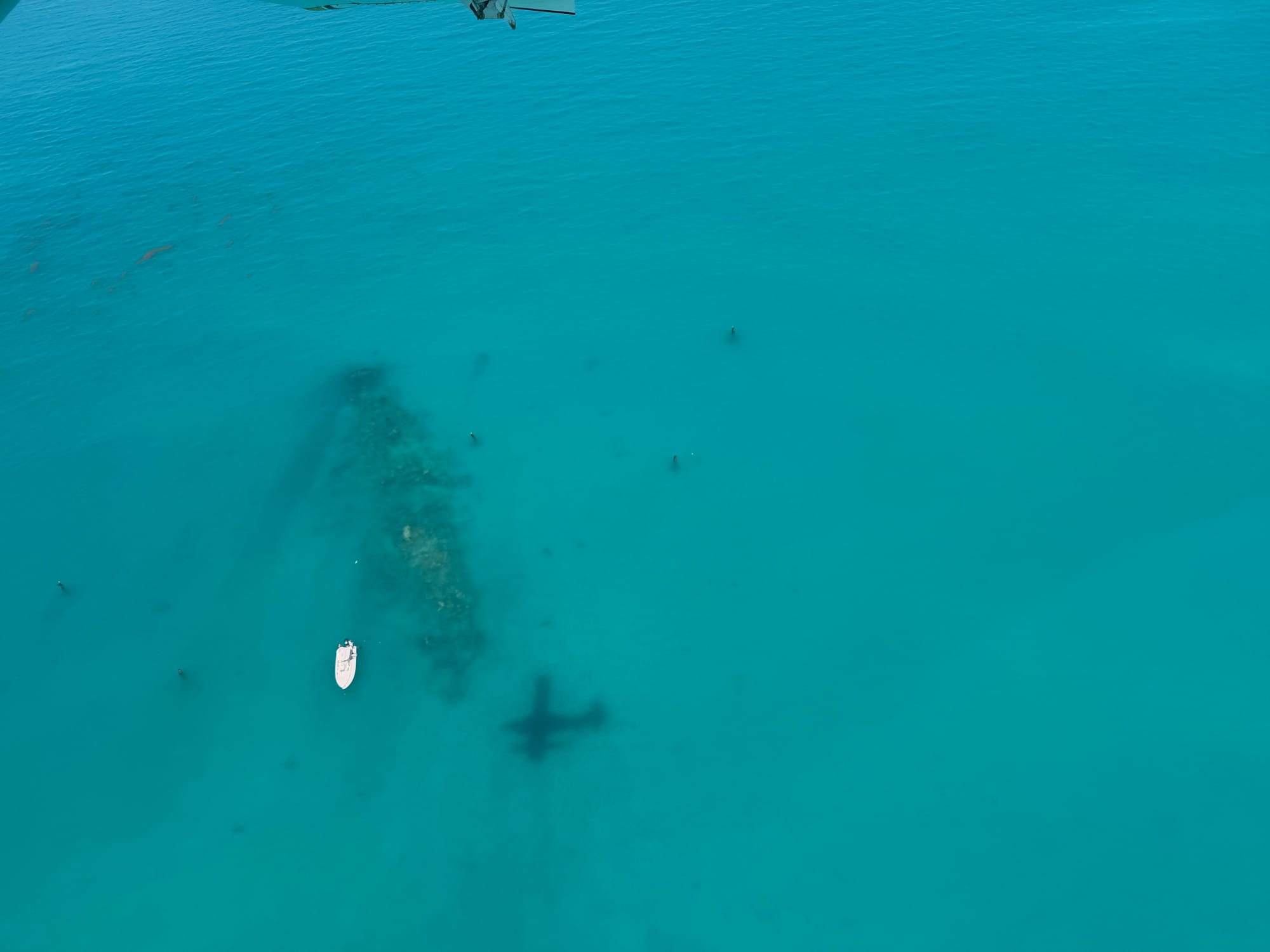
The plane flew just a few hundred feet above the water, and the pilot pointed out shipwrecks, small islands and lots of sea life: nurse sharks, dolphins and lots and lots of sea turtles. Well of course since the name Tortugas refers to turtles! Dry refers to the fact that there is no freshwater available - the only source of fresh water is collected rainwater.
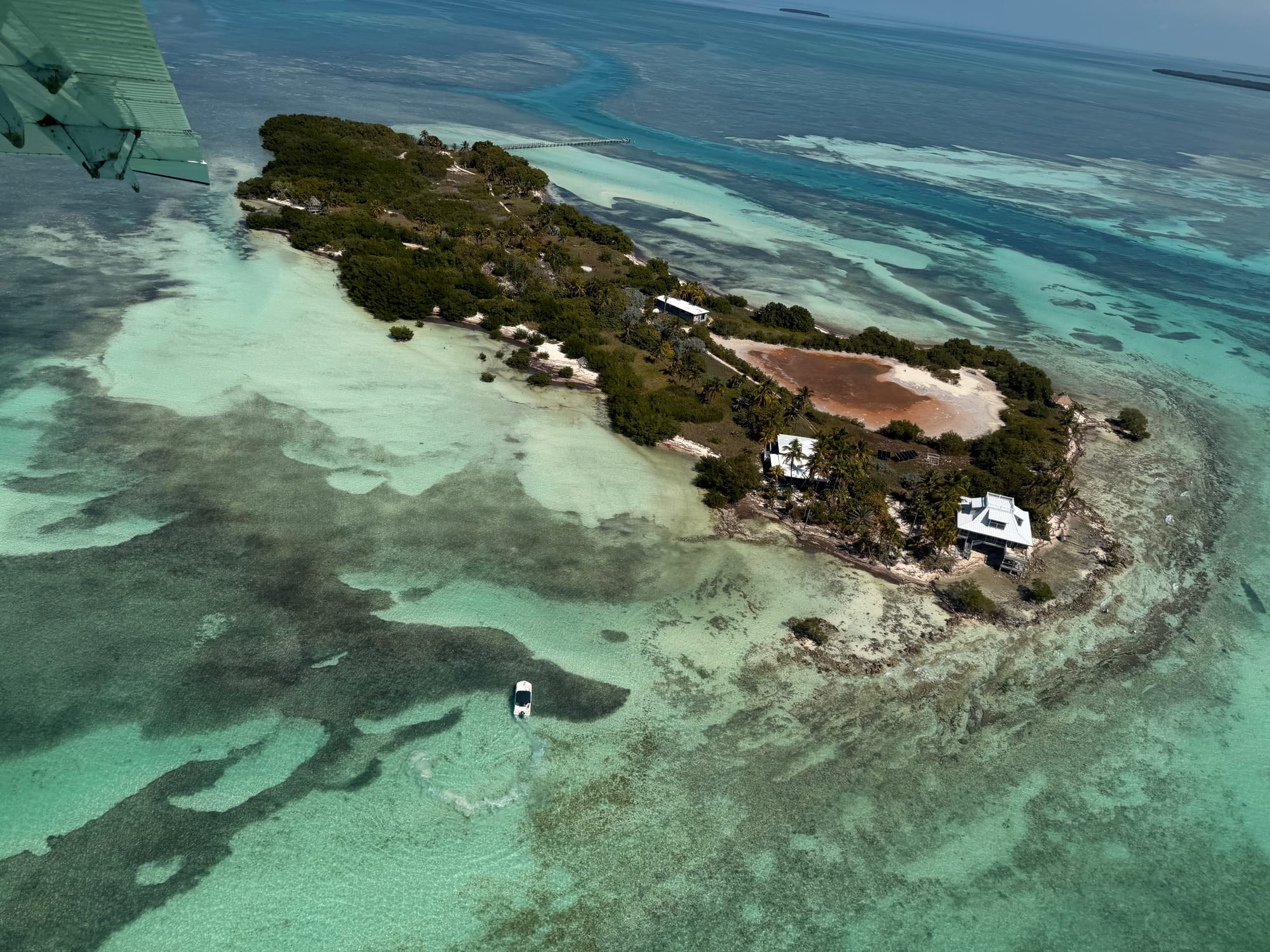
During our orientation before the flight, the video talked about how Dry Tortugas is the most remote National Park in North America. It is definitely remote, but most remote? What about Gates of the Arctic? Or Quttinirpaaq National Park in Canada near the North Pole? We‘d take that bet.
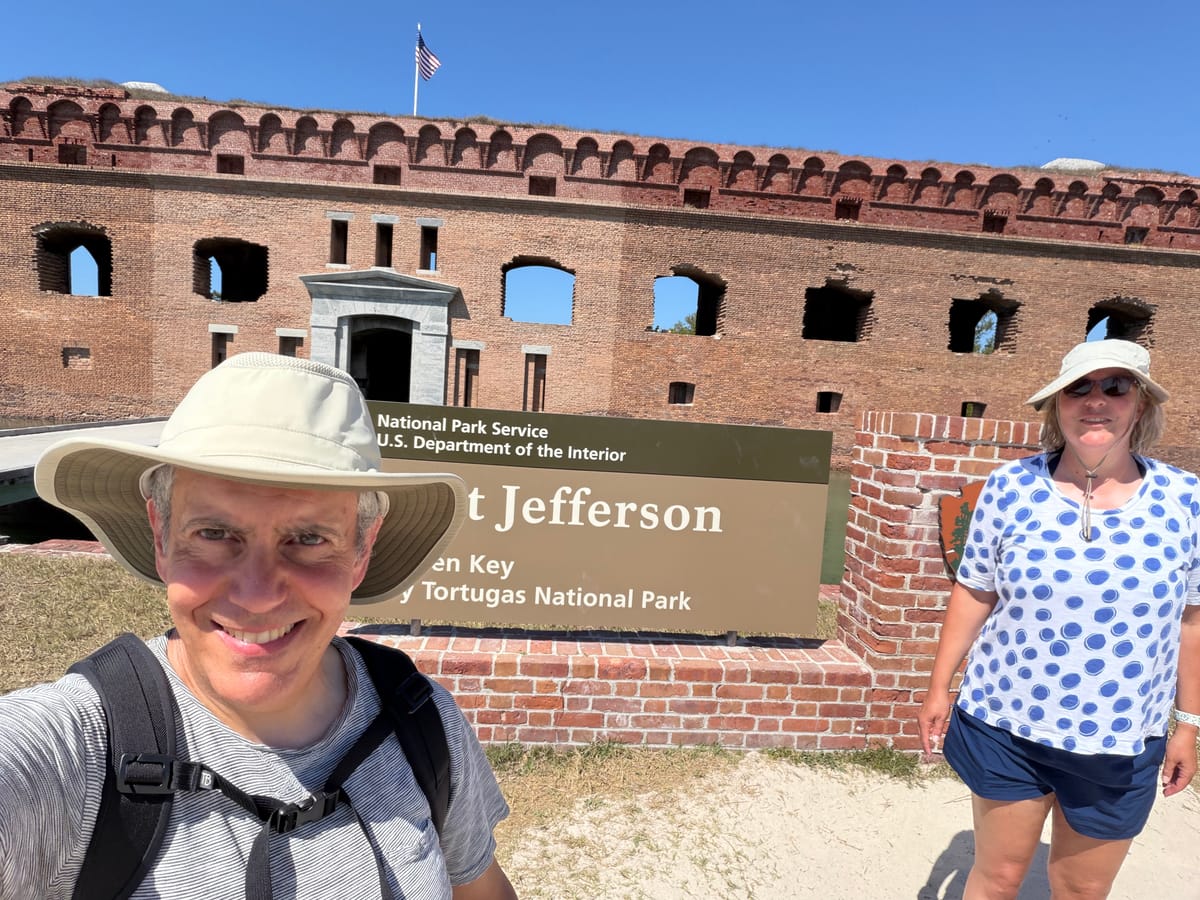
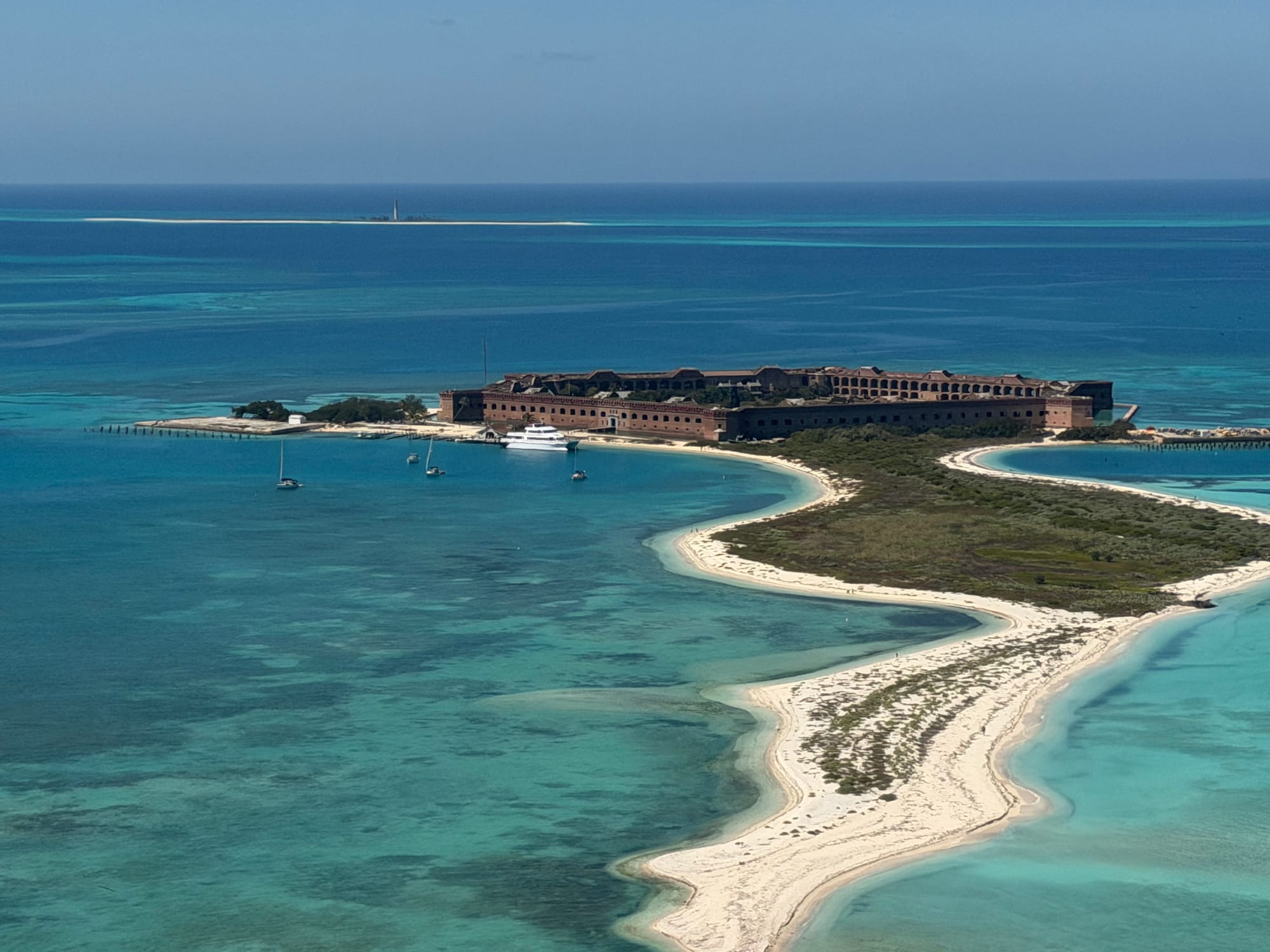
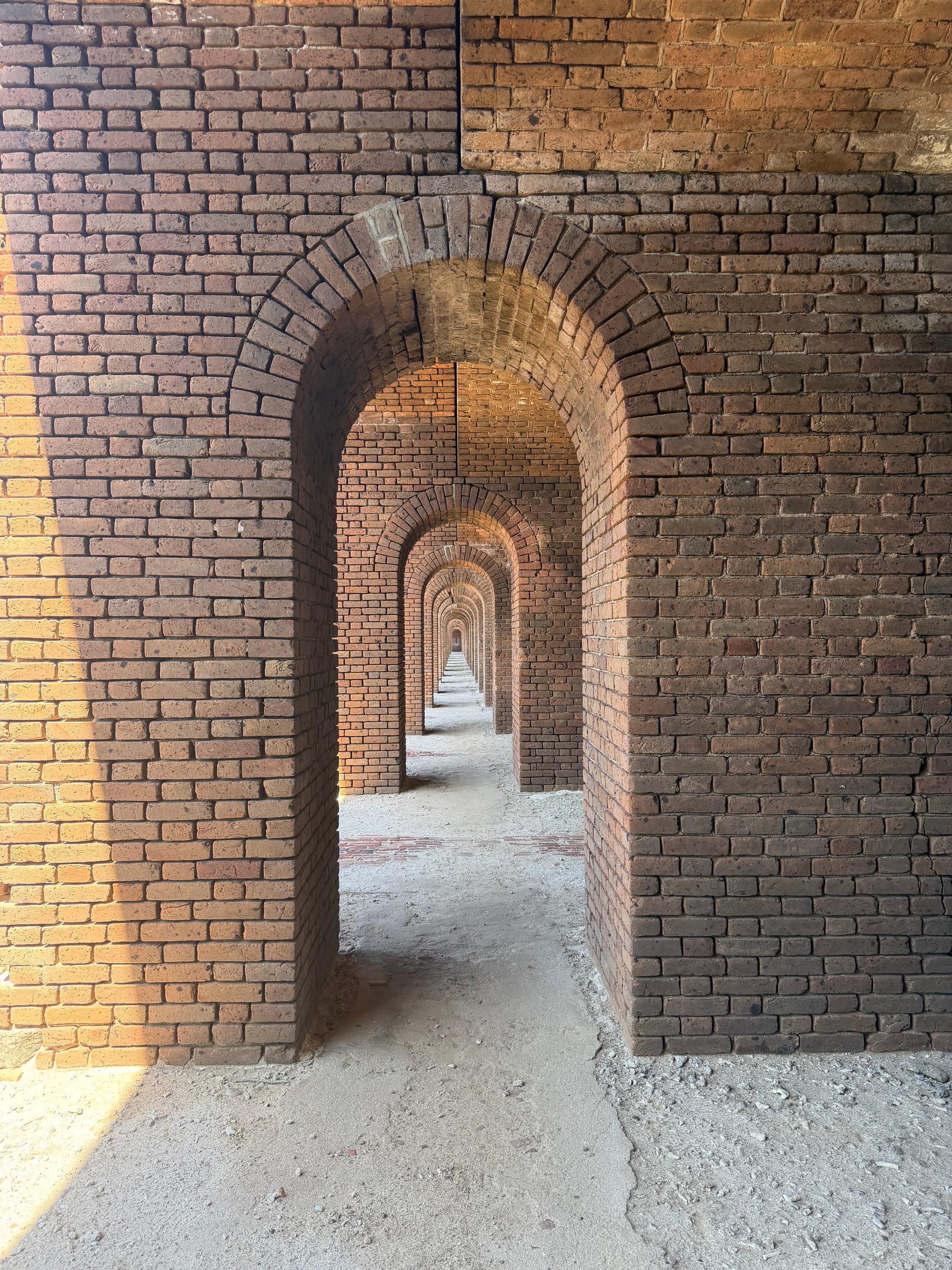
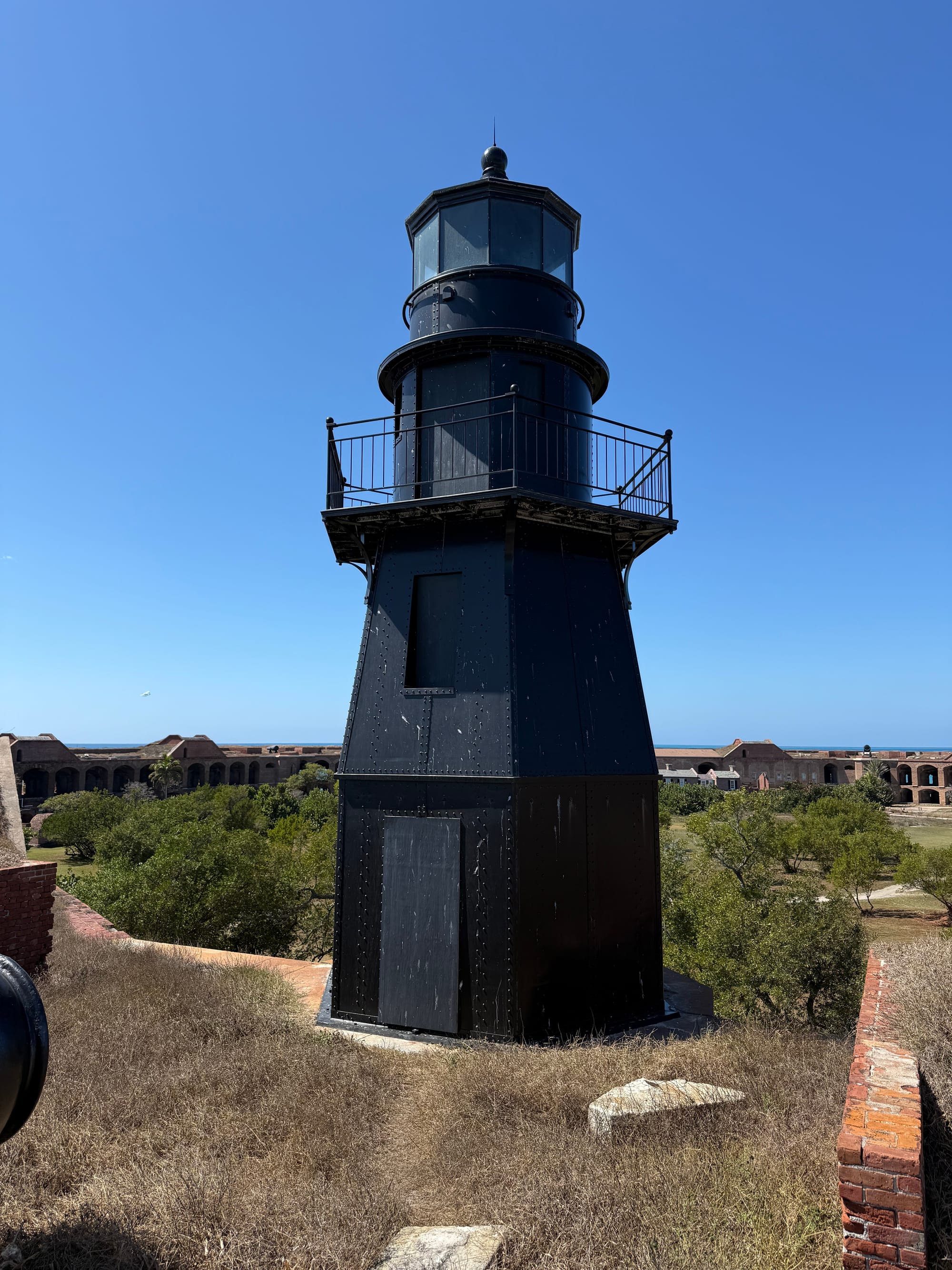
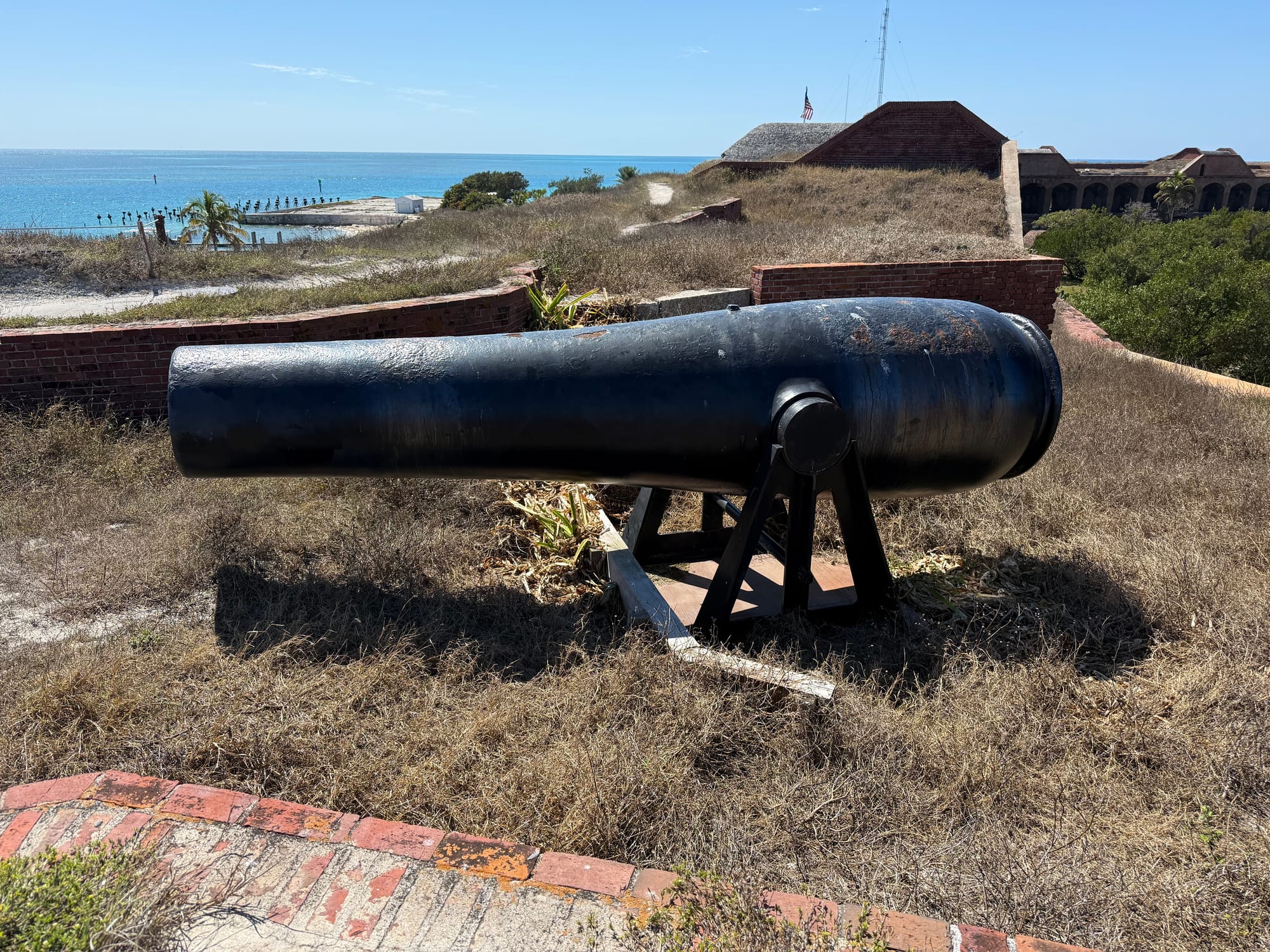
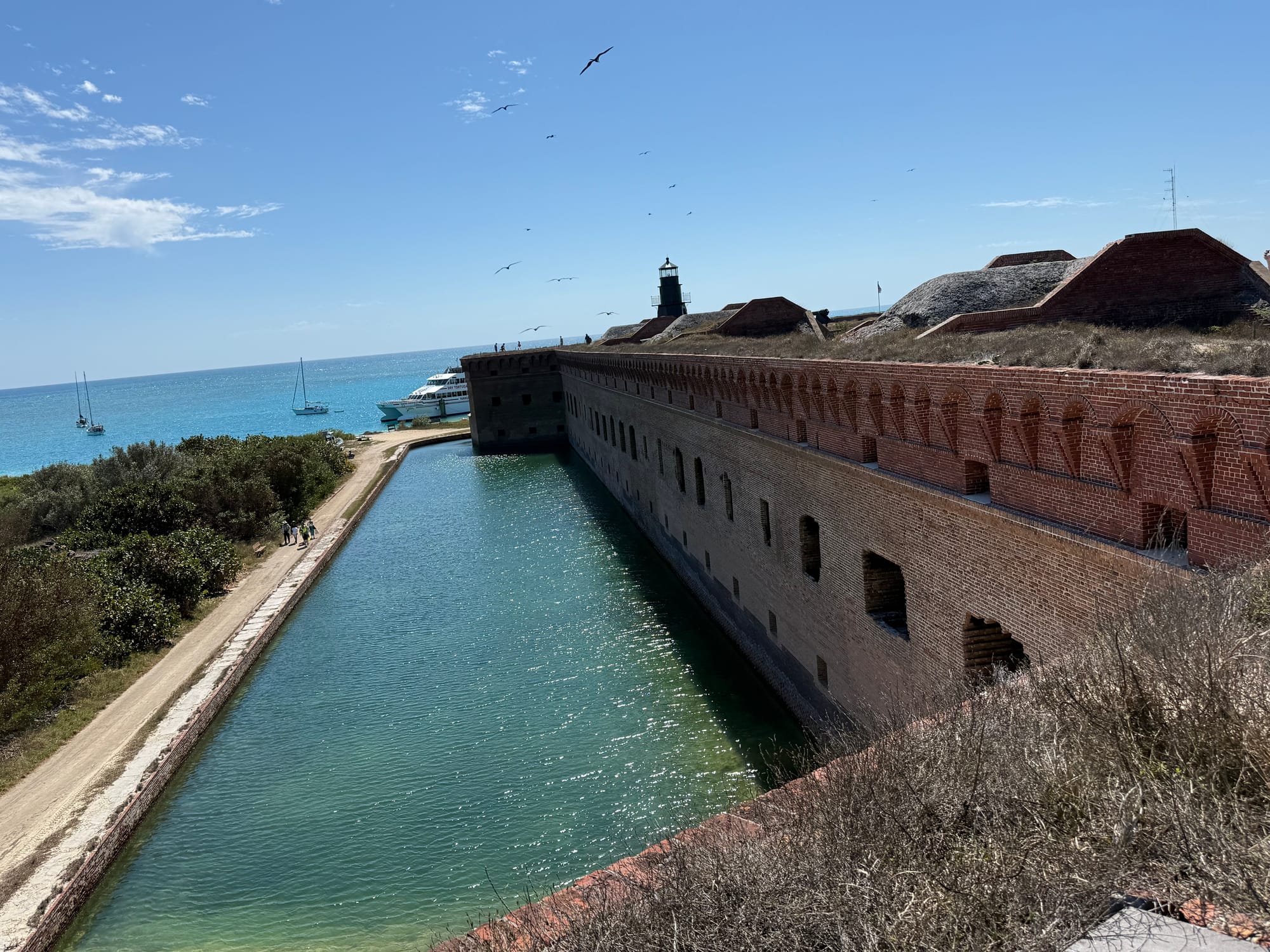
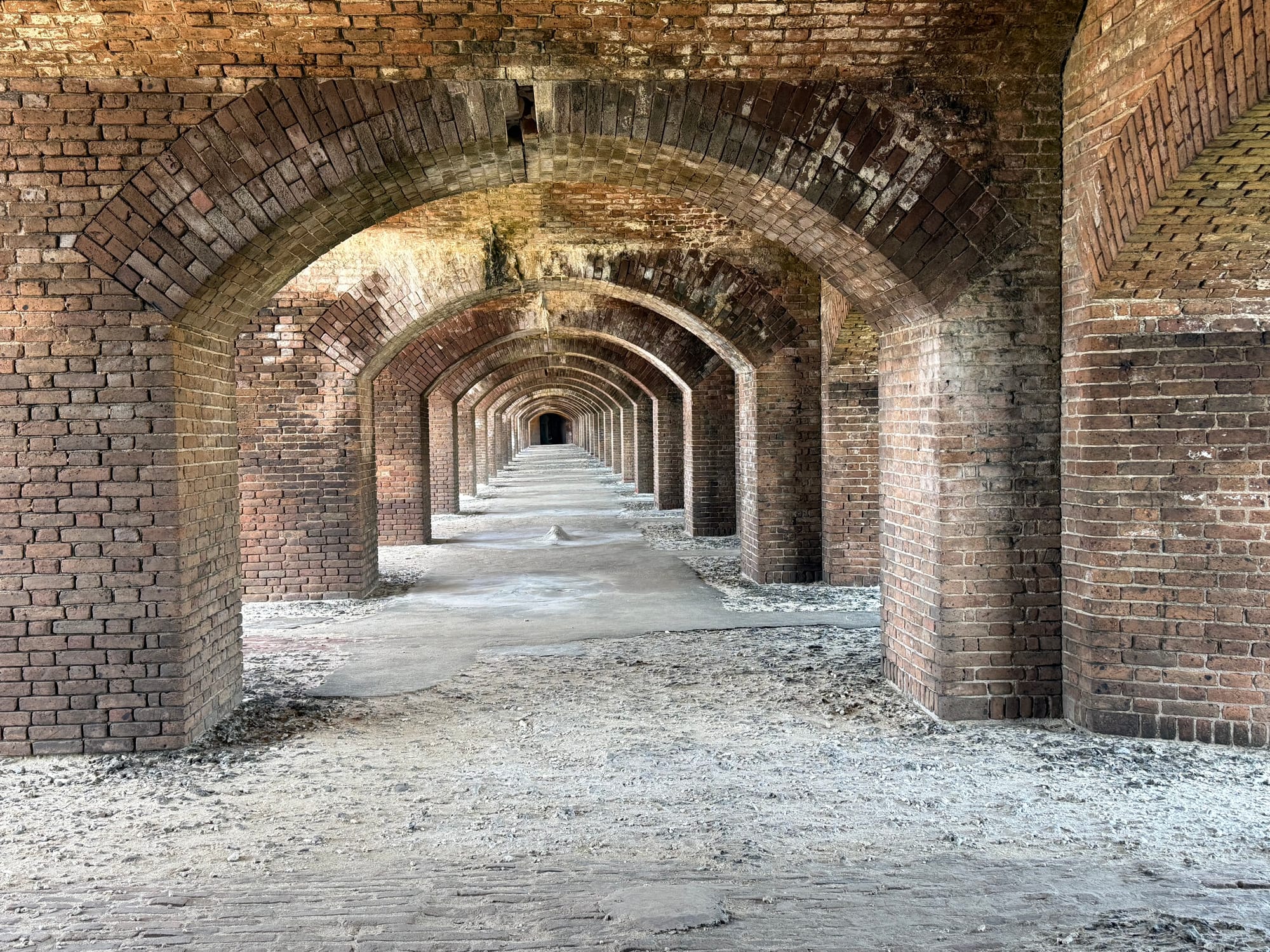
When we arrived, we started by exploring Fort Jefferson. We were warned that it hasn’t been preserved, so the floors are uneven and there are no guard rails. (Evidently, American accident attorneys haven’t discovered Dry Tortugas). But we managed to walk on the various levels, and up to the roof, which contains cannons. Oddly enough, the fort was built from bricks and is supposedly the largest brick structure in the western hemisphere. This is odd for two reasons. First, the bricks had to be transported by boat from the mainland. Second, masonry isn’t resilient to things like cannonballs! (It’s also why we don’t built buildings from bricks in earthquake zones, like the US west coast). Not what you want for a fortification!
The fort is also surrounded by a moat, which seems odd to have a moat around an island! The moat was built to withstand attacks, but also to help with storm surges, and to help with the tidal sewer flushing system. There were plenty of fish swimming in the moat. One could walk into the water, though knowing about the sewer system, maybe not the best idea.
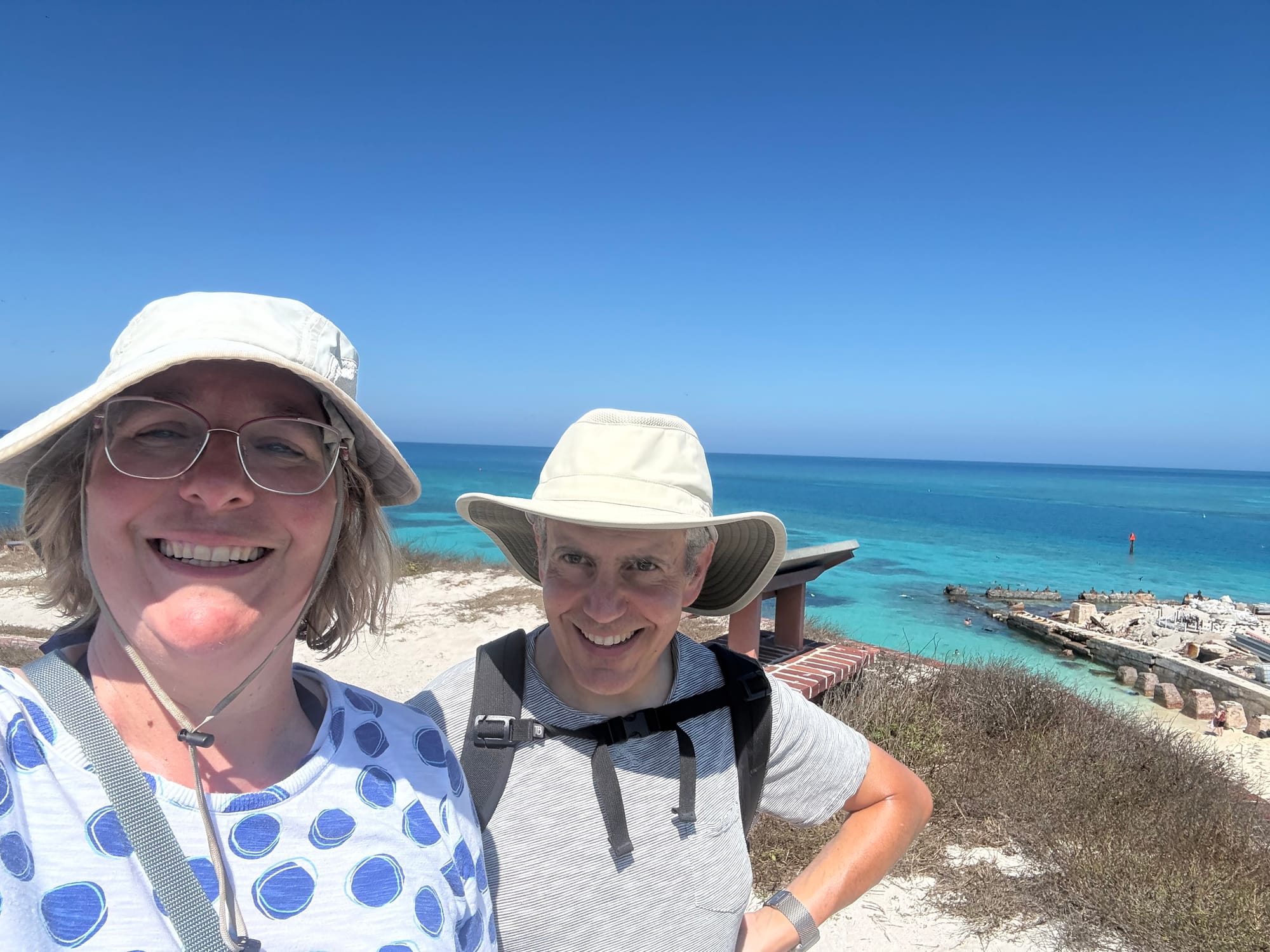
But the other appeal of Dry Tortugas is to go swimming and snorkeling. We were given snorkel gear by the tour operator. It was warm in the sun, but the water was refreshingly cool. I think we enjoyed that at least as much as visiting Fort Jefferson.