Dungeons & Dreidels
We started today by touring KKBE, Kahal Kadosh Beth Elohim, the oldest continually operating Jewish congregation in the USA. Before the tour started, we stopped at a French bakery nearby (of course!) that specializes in chocolate pastries (bien sûr!). Amy enjoyed a mocha and a piece of opera cake, while Greg enjoyed a hot chocolate and a pain au chocolat (chocolate croissant).
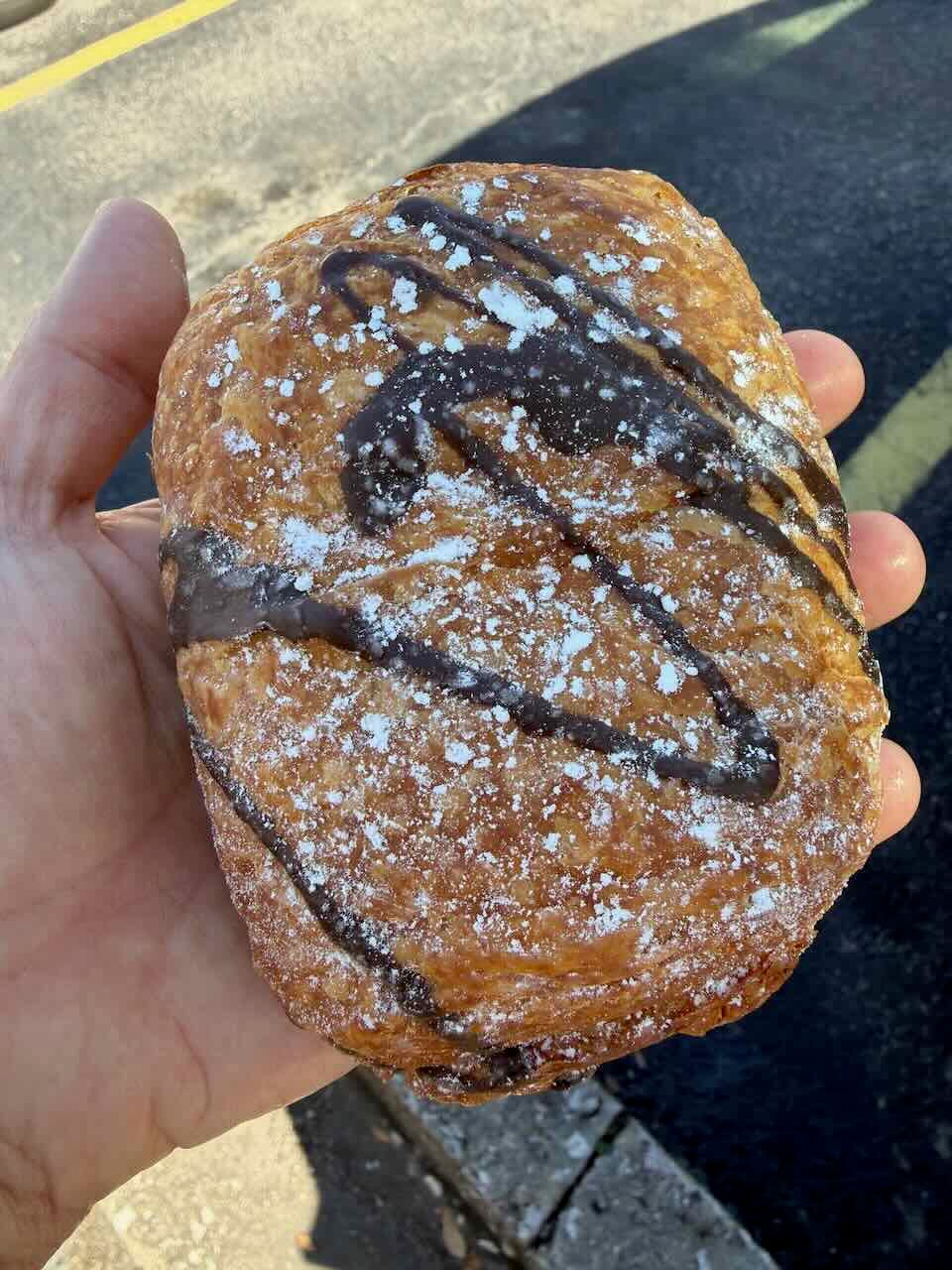
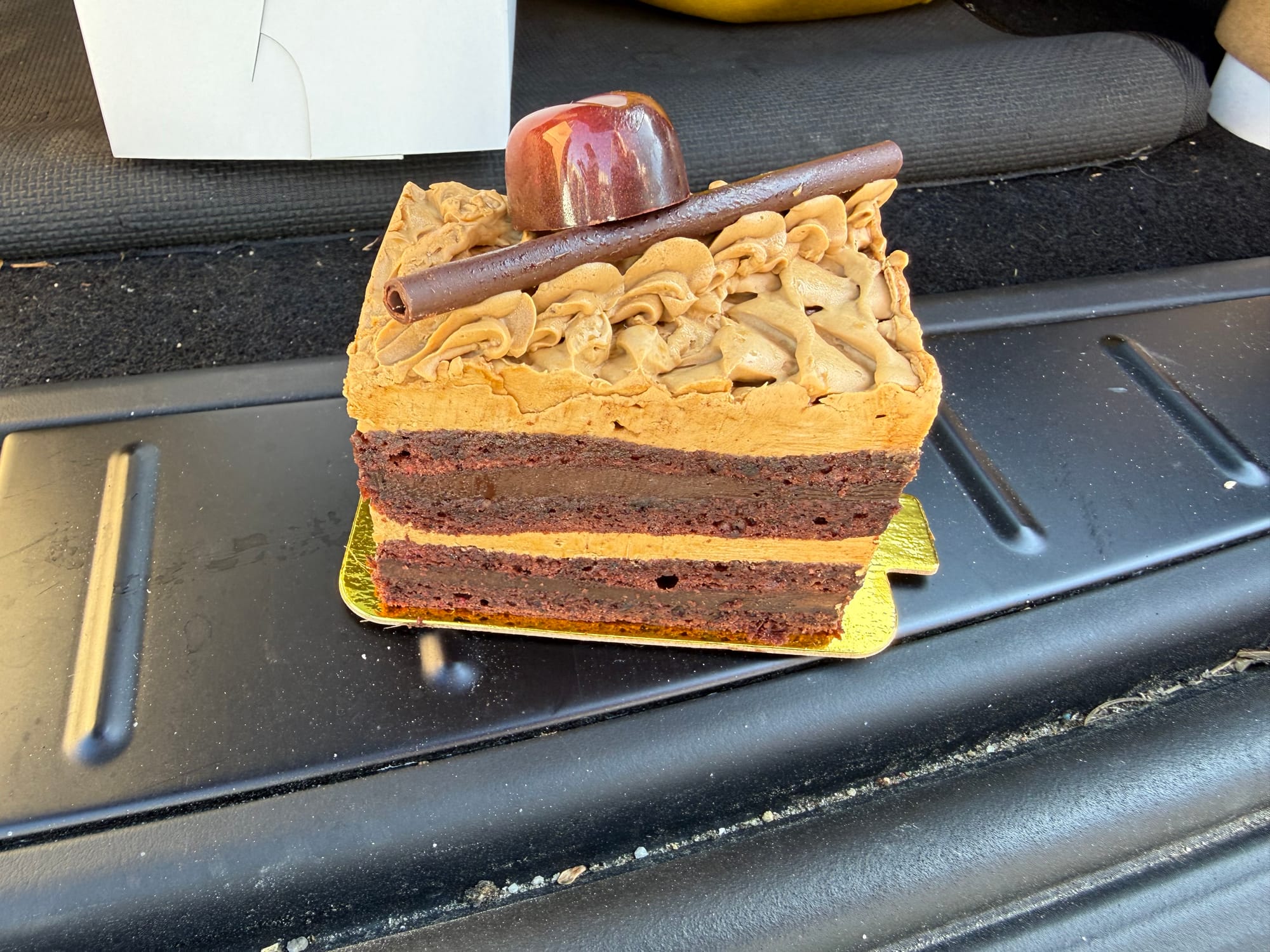
French chocolate pastry still tastes great when you have to eat it at the parking lot
Once we were properly fortified, we could start our tour of the synagogue. The building is in the center of Charleston, built in Greek revival architecture. However, we also learned that the original wood building burned down during a major fire in the city, so this is the second building for the synagogue. The building is gorgeous and the congregation has a fascinating history, becoming the first Reform congregation in the USA. We weren’t quite expecting to learn that the building and its bricks were built by slaves, but that shouldn’t be surprising considering the history of Charleston. During Sherman’s march through the South in the Civil War, the congregation learned how he burned Atlanta, so they decided to move their Torah and other important items to Columbia for safe keeping. However, Sherman burned Columbia instead of Charleston, and the artifacts were destroyed. In fact, it would have been safer to leave them in Charleston.
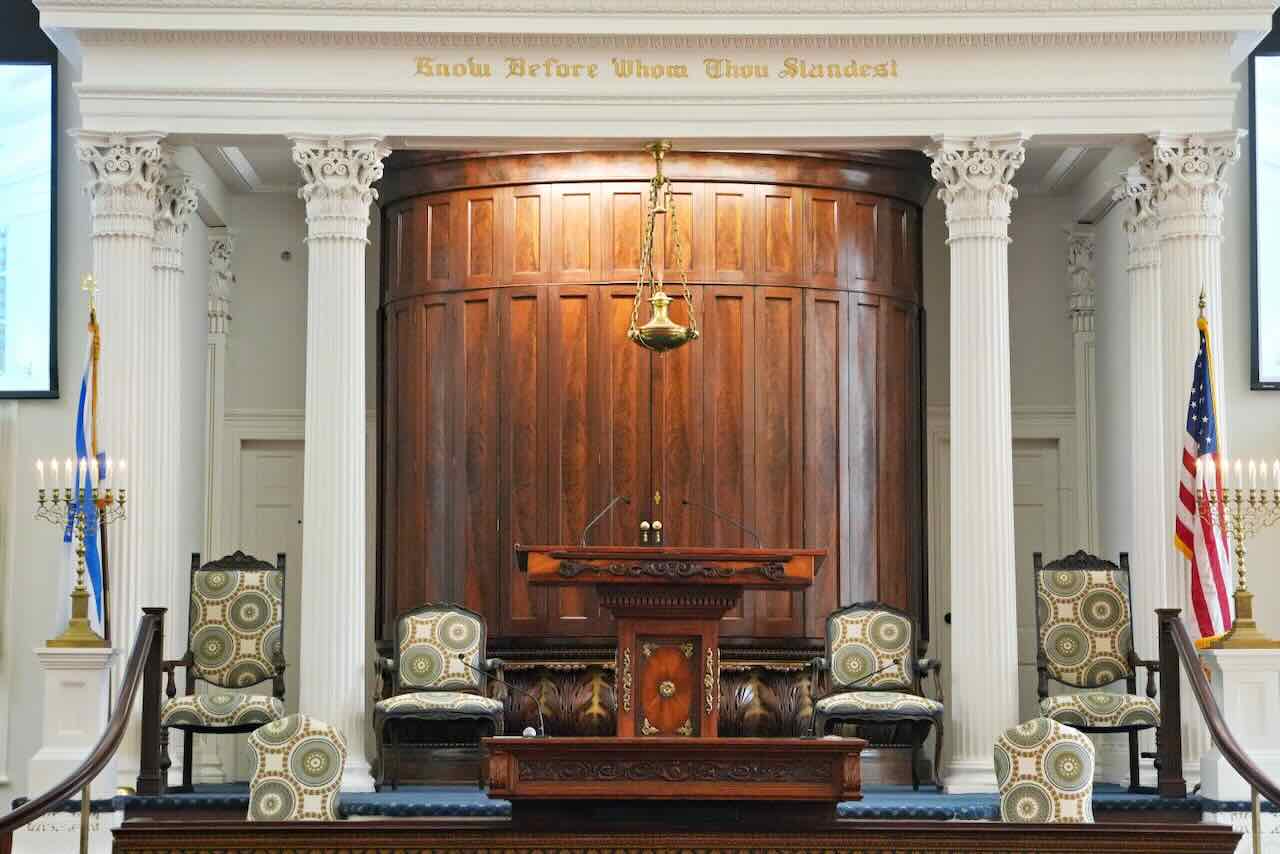
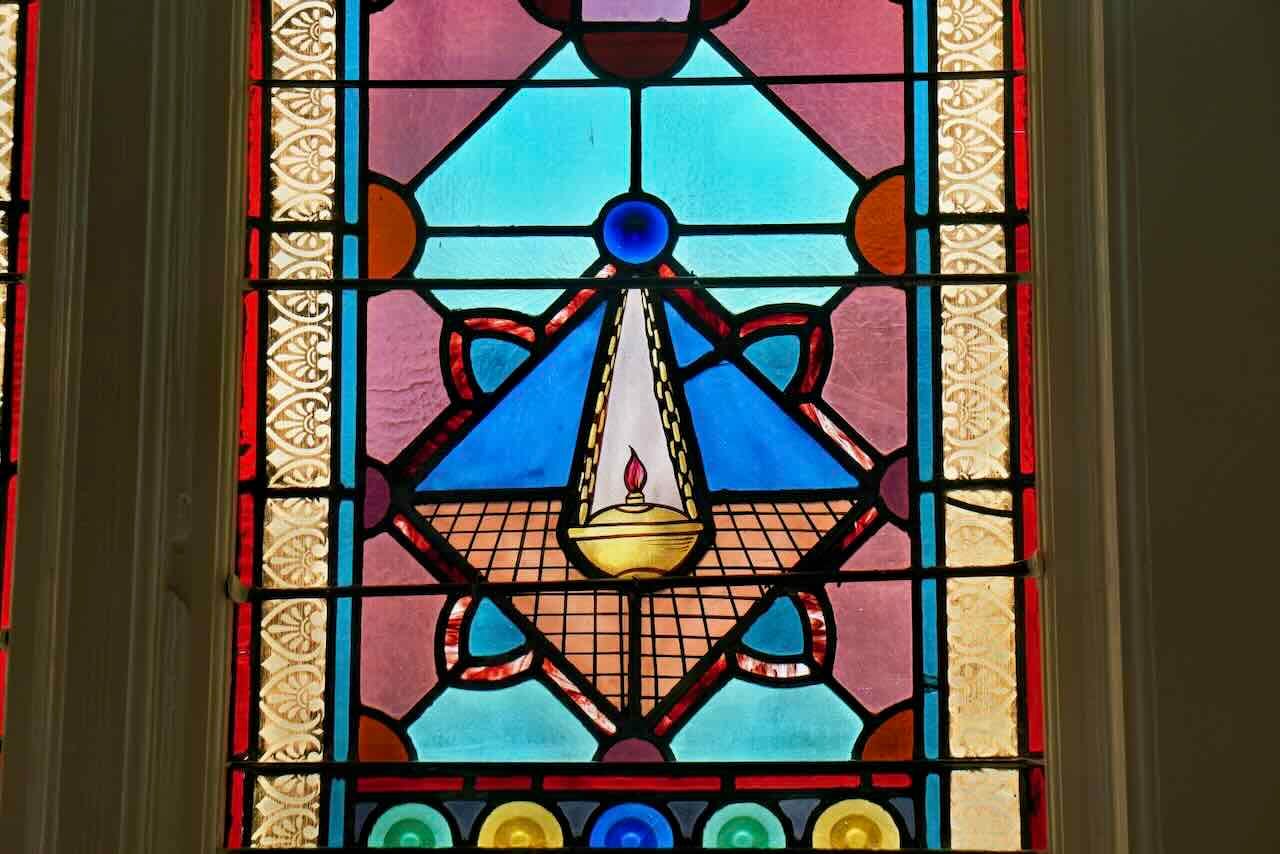
Views of the sanctuary
After leaving the synagogue, we walked to the Old Slave Mart. That building was built because at one point, an outdoor slave market was deemed unsavory, while an indoor one was acceptable. Out of sight, out of mind? We were a bit surprised that all the visitors and staff were white. Charleston was one of the centers of the slave trade in the USA, and this was a sober reminder of that.
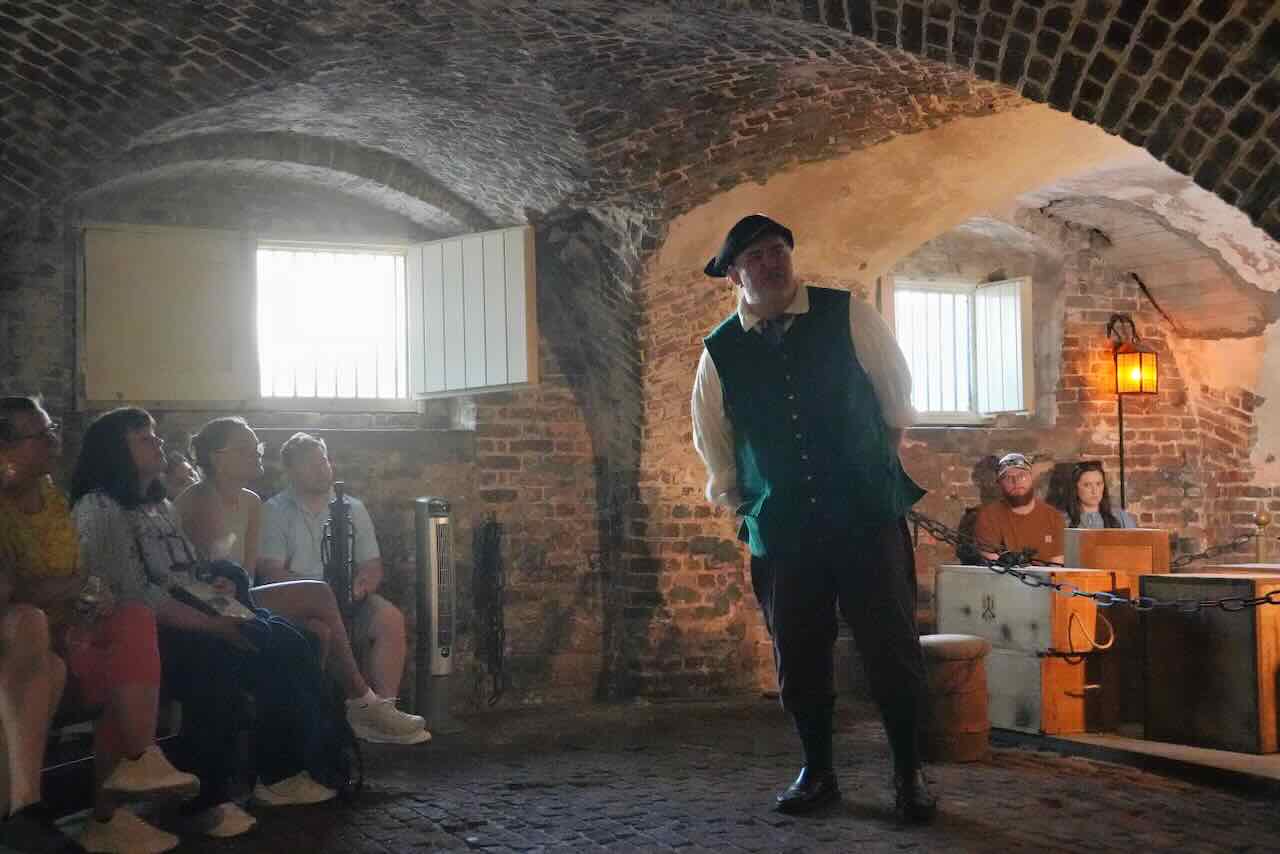
When we visited the Old Slave Mart, we were encouraged to get a combination ticket that also included the Old Exchange. That’s where South Carolina ratified the U.S. Constitution. More interesting was the dungeon, where British soldiers imprisoned American revolutionaries when Britain recaptured Charleston during the American Revolution. According to our costumed museum guide, if the British didn’t kill you, you probably died from malaria or yellow fever. Or you died of dysentery.
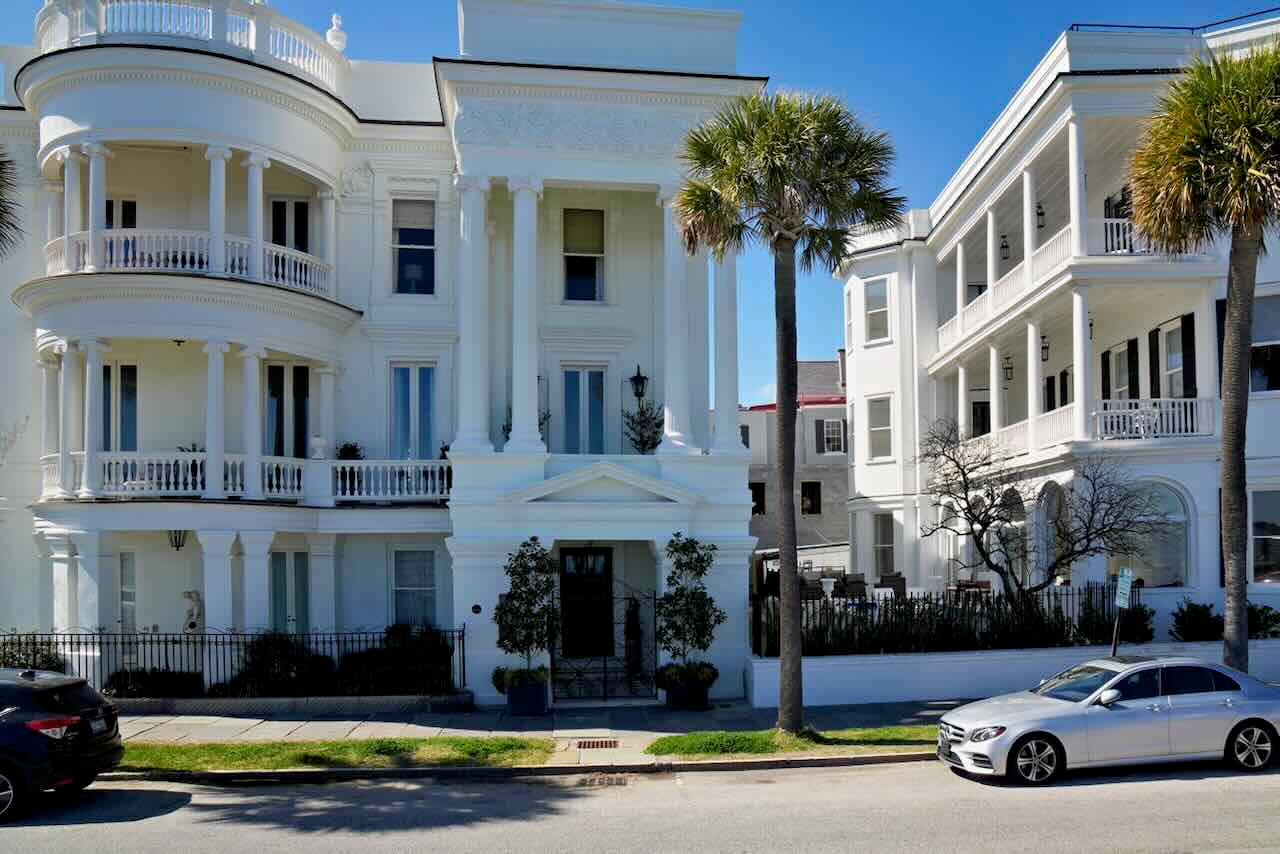
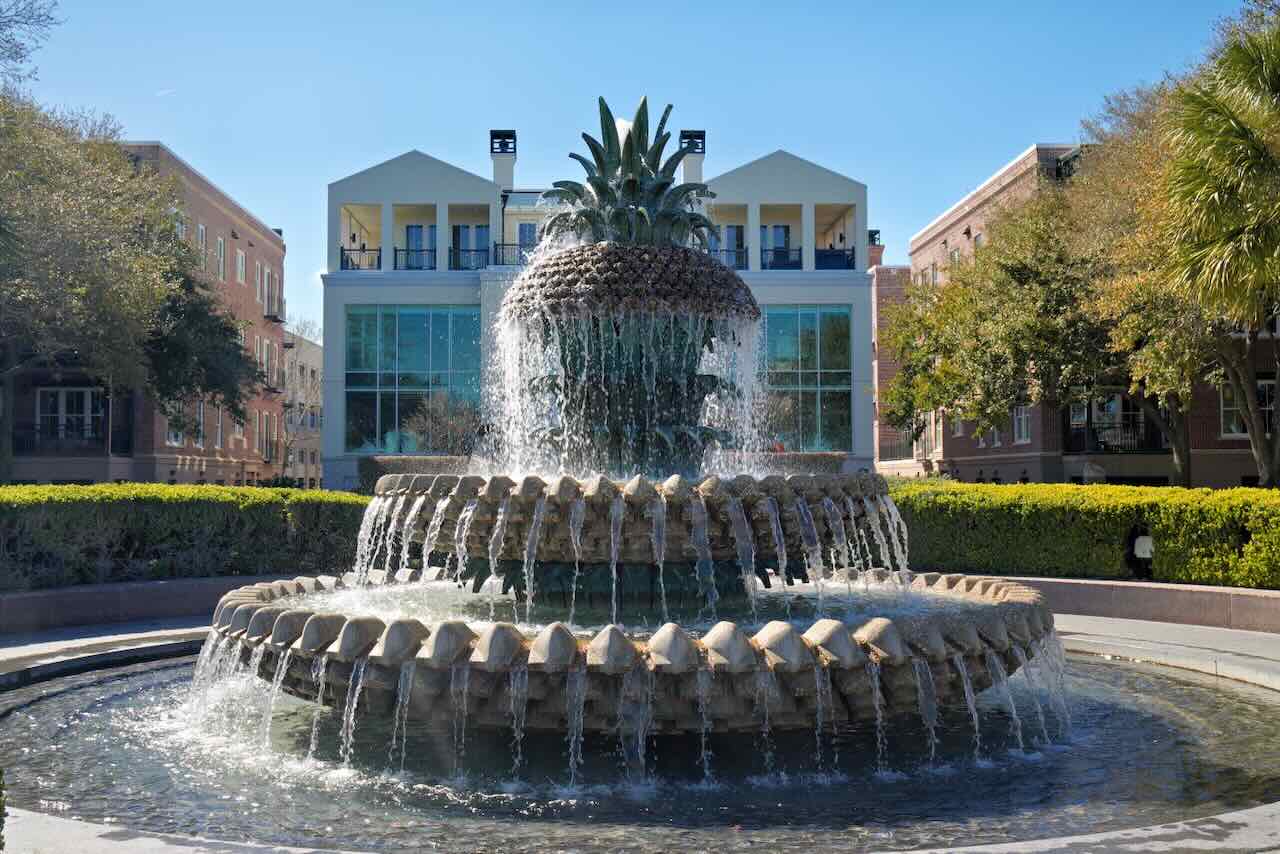
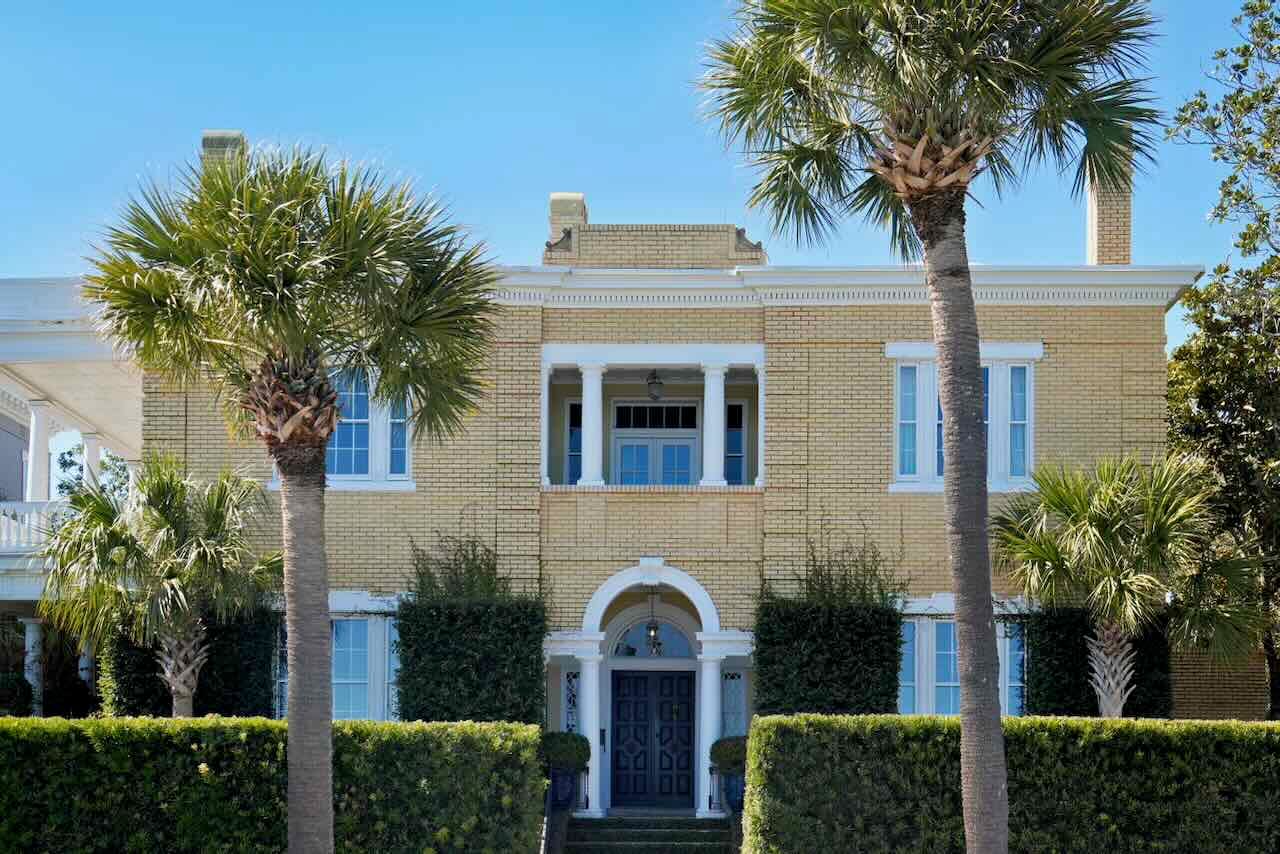
Afterwards, we took advantage of the perfect weather and walked along the waterfront to enjoy the views and the architecture. Greg reminisced of running along the waterfront when he visited Charleston on a company offsite almost exactly 8 years ago. We finished by walking through the old market. The woven baskets looked interesting, but we didn’t buy any souvenirs.