Anchorage, part 1
Yesterday, we arrived in Anchorage. Some of you (Phillipa…) noticed this from the map. Others (Mike…) noticed that we didn’t post an update yesterday. This was deliberate since who really wants to read something like “we drove, we bought diesel fuel, we ate”. OK, it was a bit more involved…
On Friday night, we went to our first restaurant dinner since (…checks notes…) Vancouver. Anchorage, as the biggest city in Alaska, has some nicer restaurants. We went to Simon & Seafort’s, an Anchorage institution for fish and steaks. Our son Ari was surprised to hear we didn’t order salmon. However, we could not pass up an opportunity for halibut cheeks!
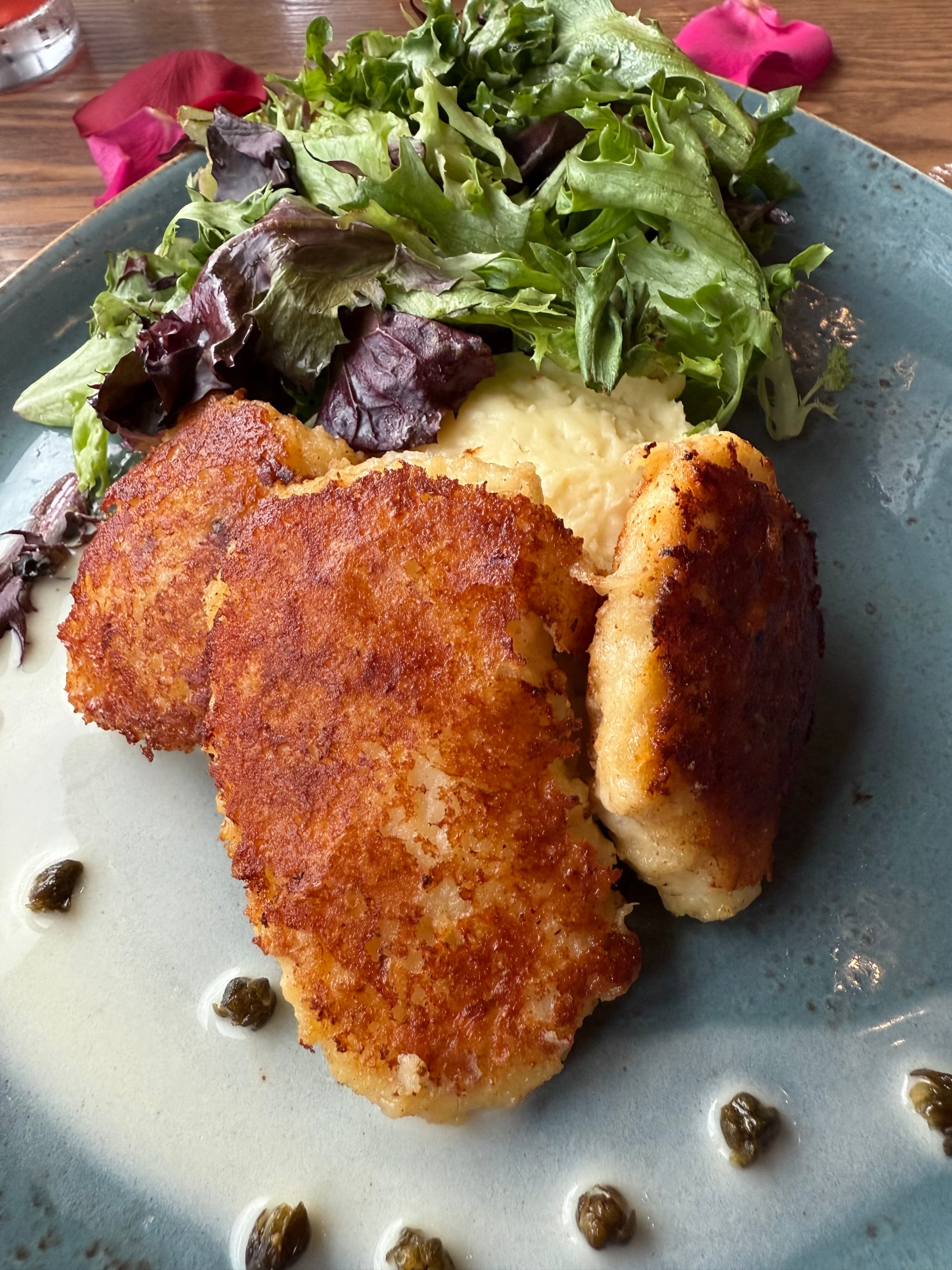
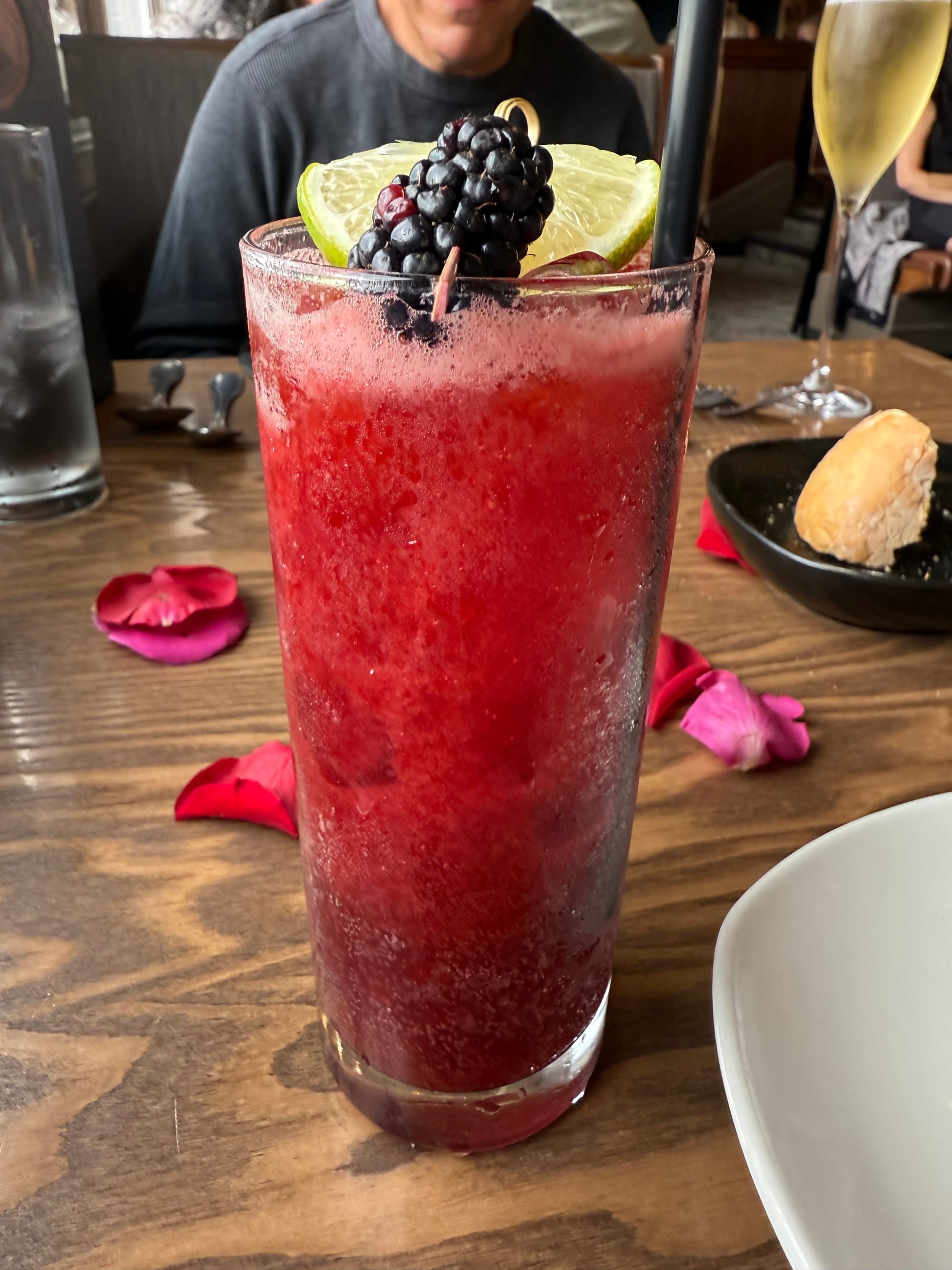
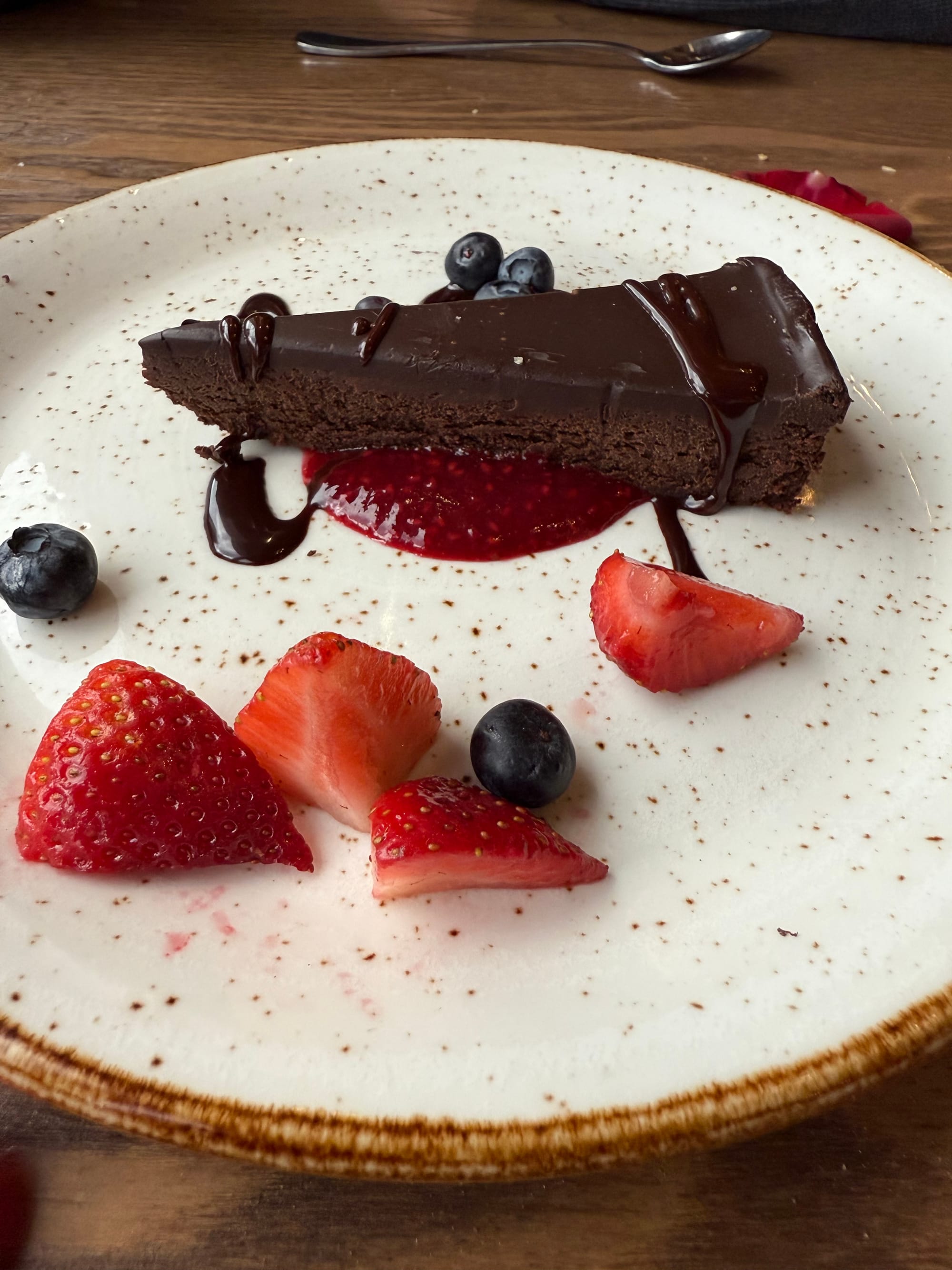
Friday's dinner, fulfilling the request for more food content
Before, while we waited for our reservation, we walked along the waterfront. We saw women and men jogging in red dresses. We initially thought it was something for Pride, but we later learned it was a charity event for Hash House Harriers (“a group of drinkers with a running problem…”).
Today, we did chores as we near the end of the first half of our Alaska adventures. But we also took time to visit the Alaska Native Heritage Center, a museum dedicated to native peoples of Alaska. Inside, there is a permanent collection and an exhibition stage. On the stage, we saw two performances. First, we saw some traditional dances. The dancers were mostly women, both young and old, while the musicians were mostly men. Following the dancers, a group of teens gave a demonstration of Alaska Native Games. The teens said the games were traditionally played during the winter, in order to maintain fitness. Some games are not just challenging but dangerous: one teen said he fell once and broke his tailbone!
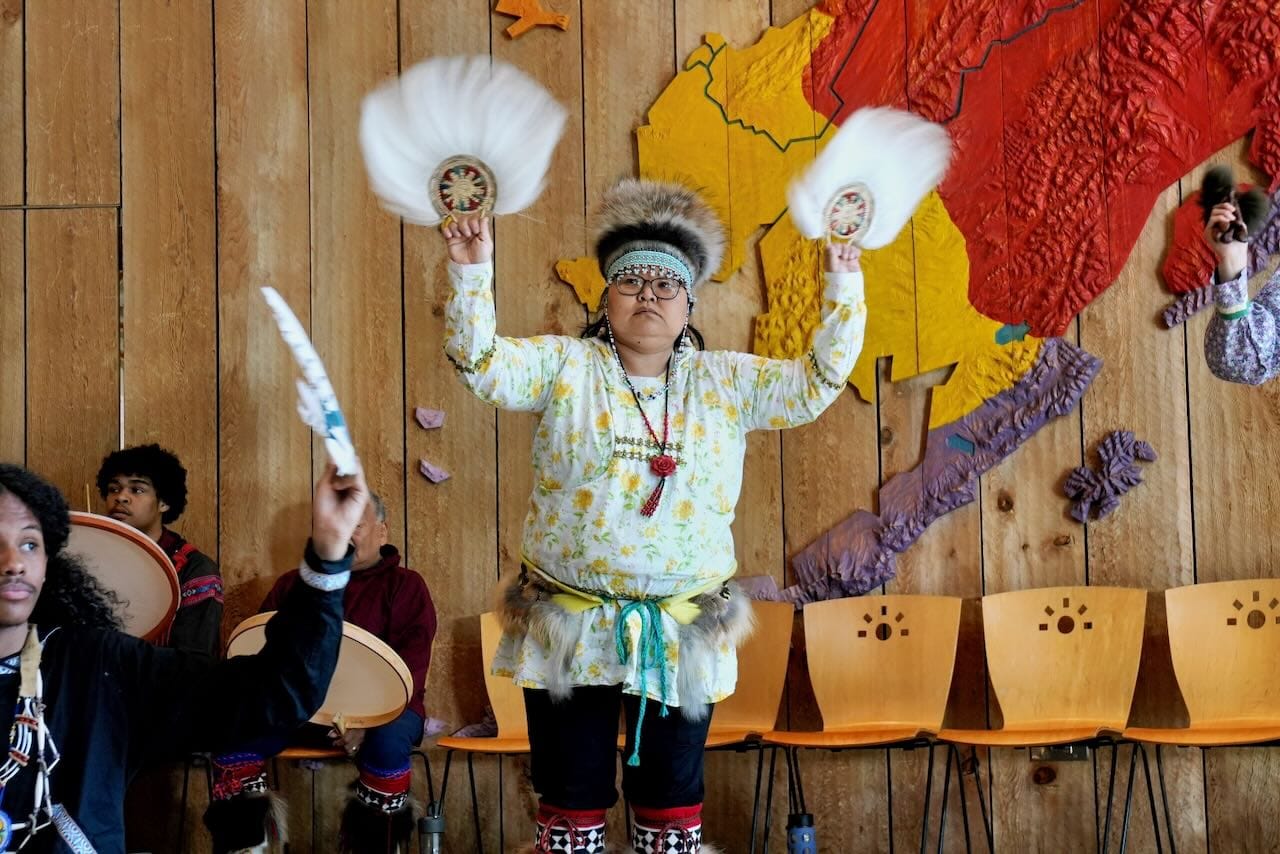
The permanent collection includes a section with graphic descriptions about the treatment of native peoples by Alaskan settlers. It's a painful but important story to tell. It gave us a lot to think about.
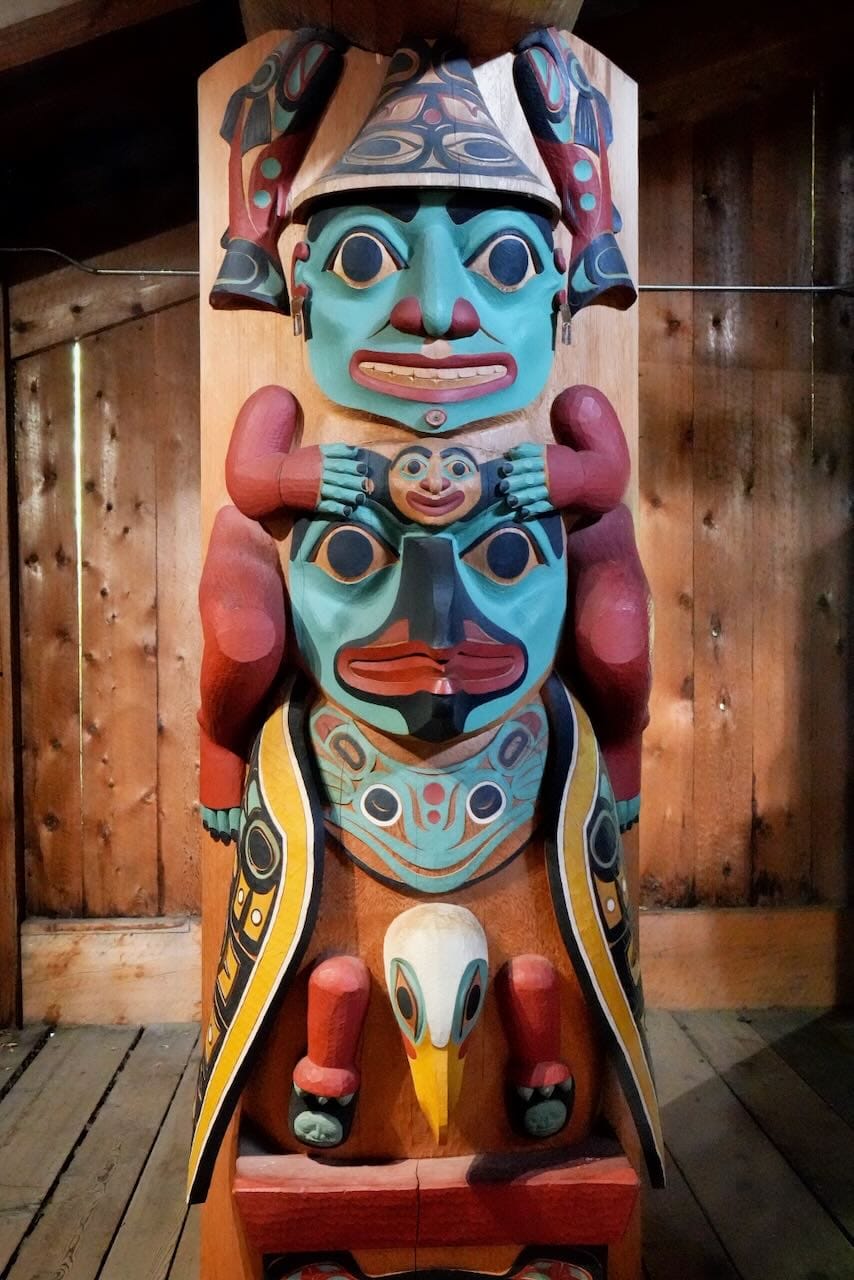
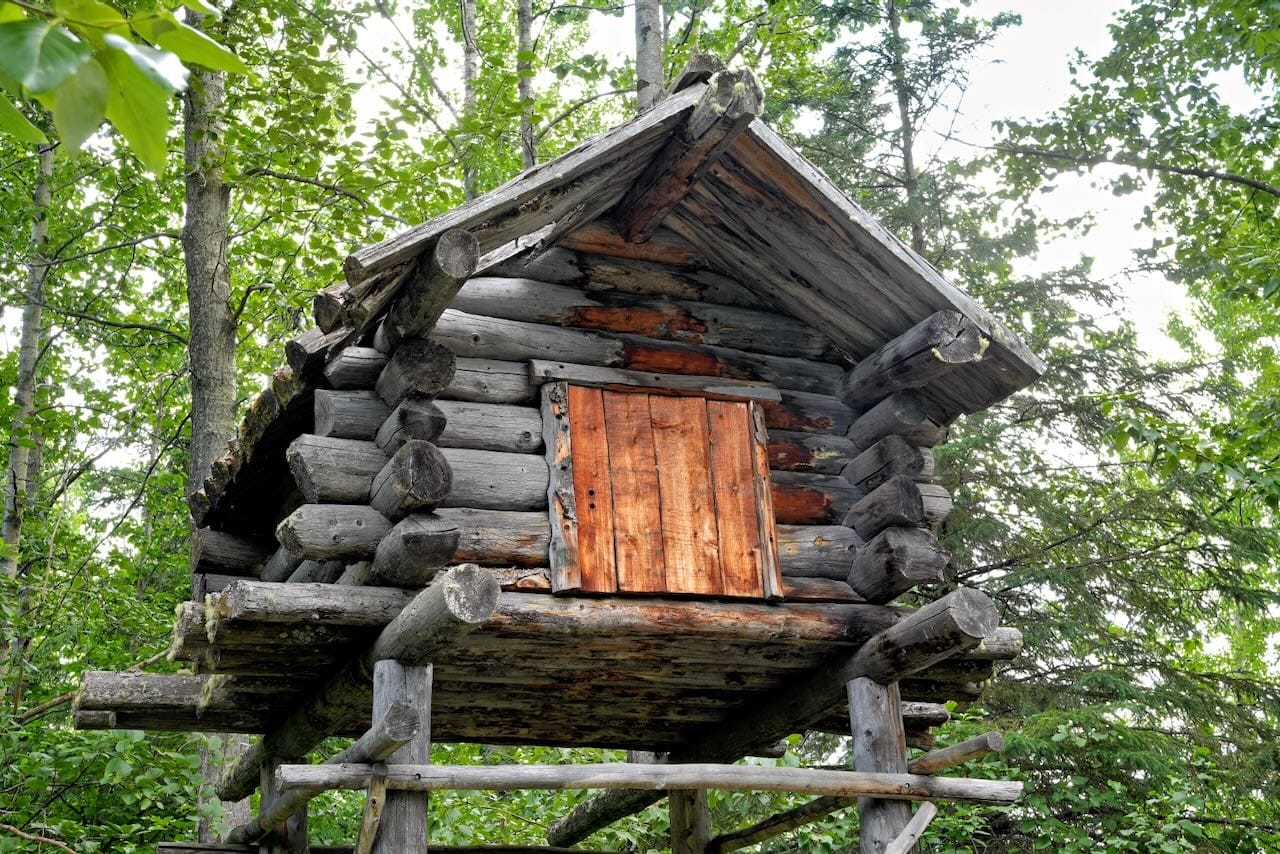
A key part of the museum is the village with traditional homes. This has 6 full-sized homes outside, representing traditional homes of peoples from different regions of Alaska. Two guides explained how the homes are built with materials that are readily available (like wood or earth) and to suit the climate of the area (wet, windy or extreme cold). Greg recognized one as similar to what we saw in Glacier Bay, and the guides explained that it was, in fact, for coastal Eyak/Tlingit/Haida/Tsimshian Clans. The homes also included artifacts such as clothing and tools. That was the highlight of the museum.
The museum also had about a dozen artists displaying their jewelry and other artwork. These items seemed really nice but we couldn't see a way to fit them into our lives.